SteadyCert
Domain 3 · IS Acquisition, Development & Implementation Card 1 / 46

CISA Domain 3: IS Acquisition, Development & Implementation — Free Visual Study Notes

Section 3.1 Must-know

Project Governance and Management

By the end of this card, you should be able to
Explain how governance structures, policies, and control mechanisms align IT projects with enterprise strategy and risk management objectives.
Scenario

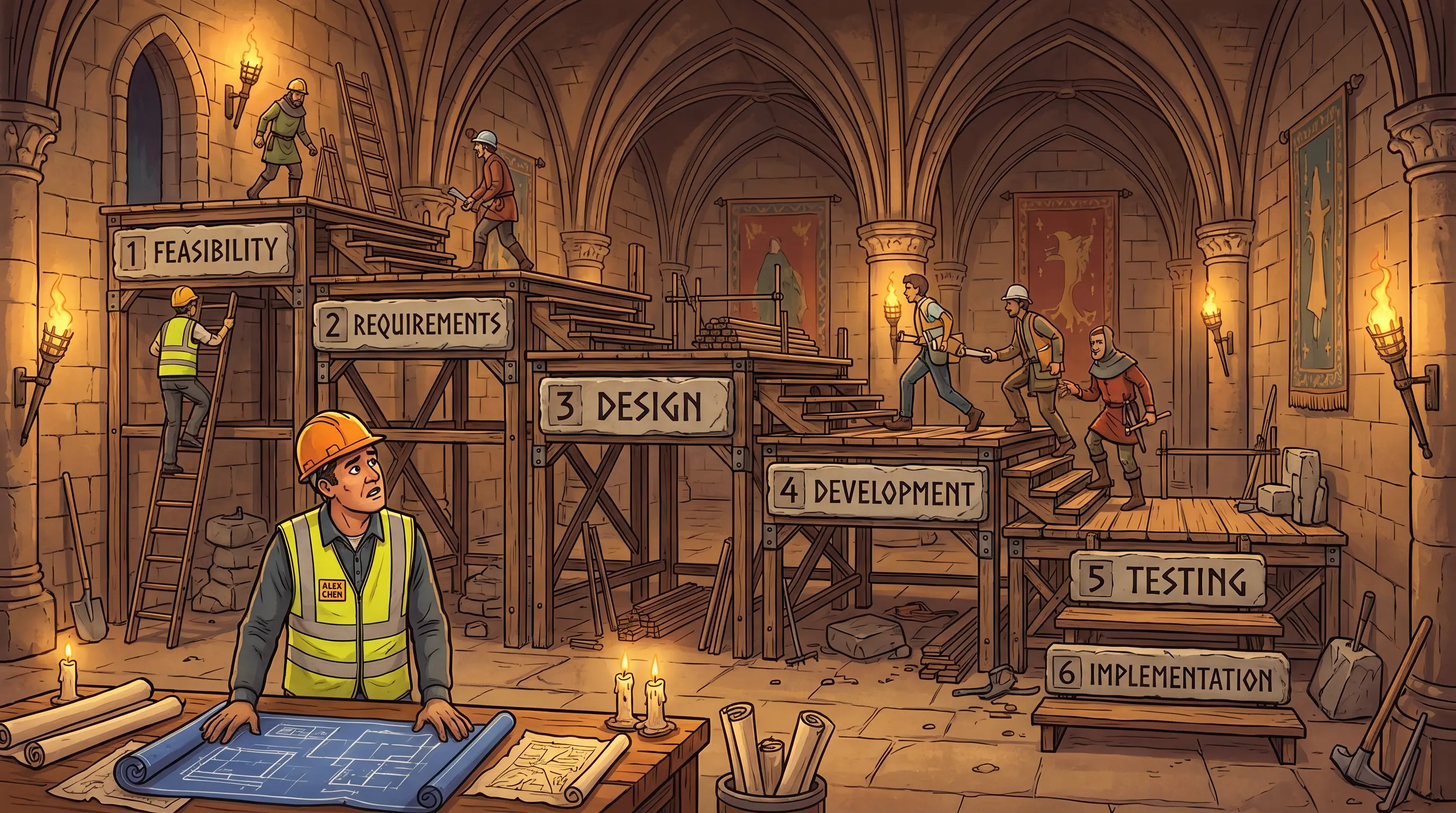
Meridian Corp's cloud migration dashboard shows green across every budget line, but the project is six weeks behind. Alex Chen pulls the steering committee minutes: no record of the standoff between Sarah Lin's infrastructure team and Devon Park's InfoSec group — a freeze over security baselines that has stalled three sprints. The governance framework documents deliverables, budget, and schedule meticulously. Sarah insists the project is 'on governance.' Alex must decide: is a framework that tracks only hard factors an adequate project governance control?

Project Governance and Management
3 blueprint scrolls = 3 factor types. Governance that reads only one scroll cannot steer the project.
How it works

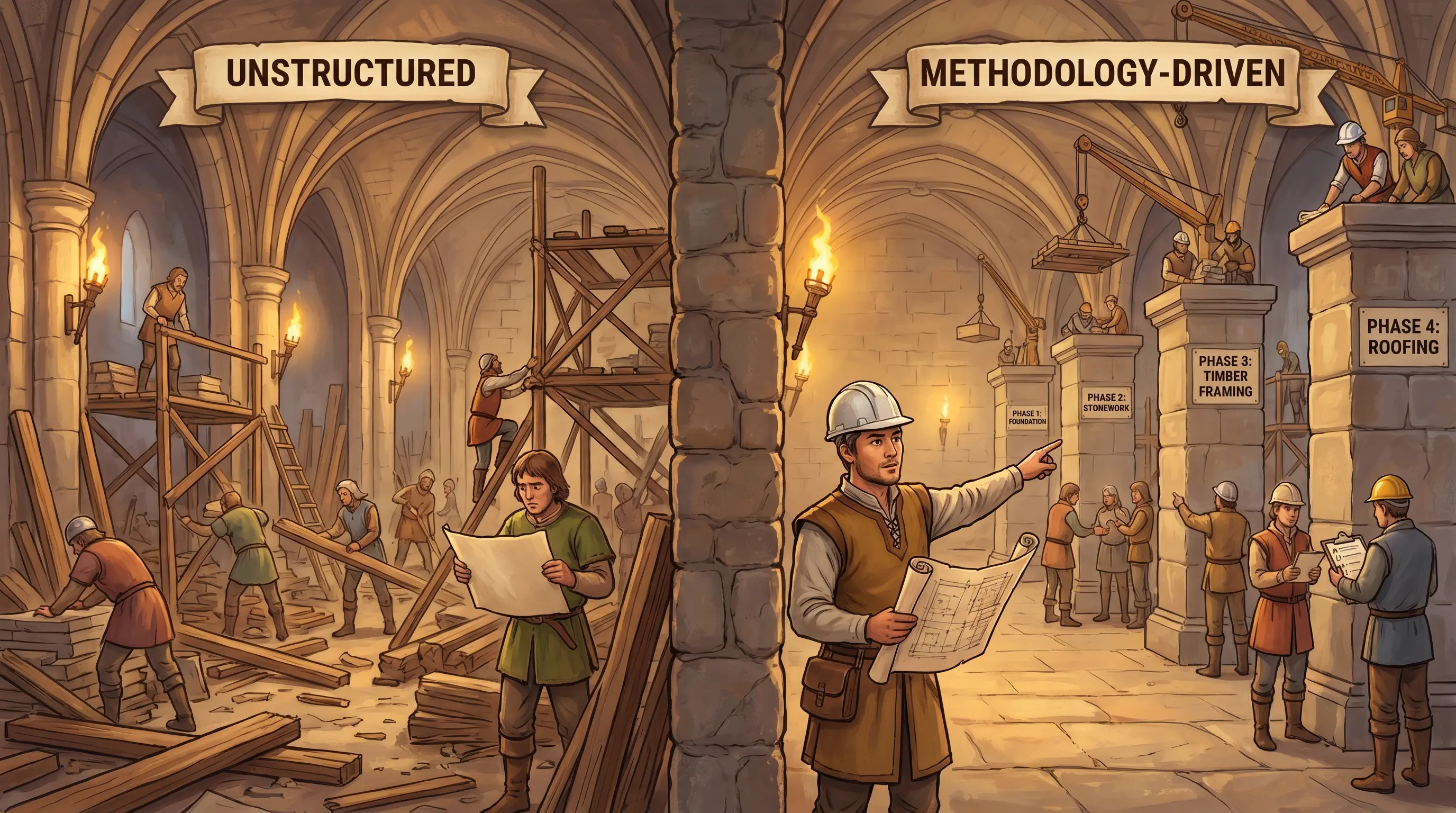
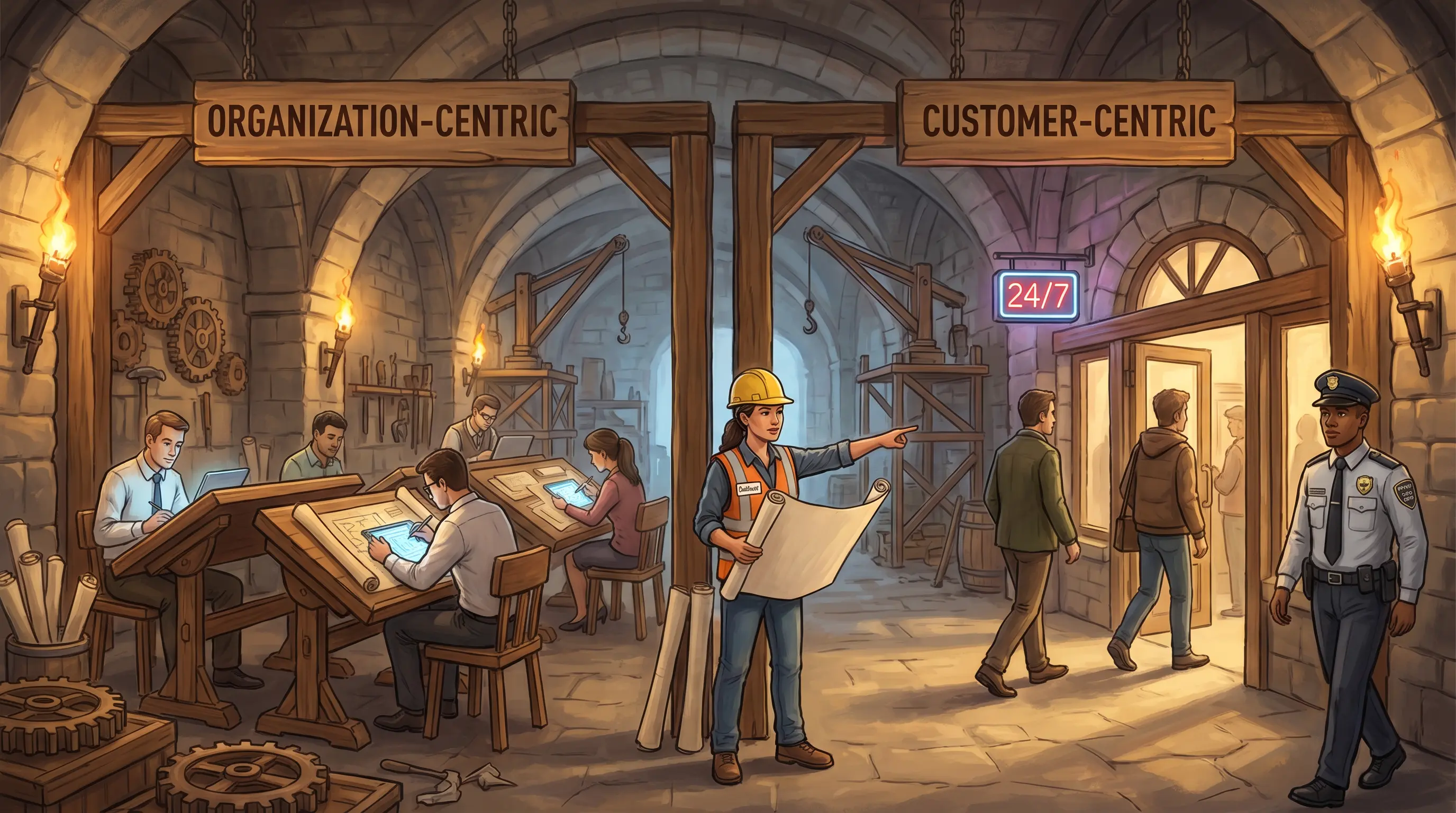
Project governance is the set of structures, policies, and control mechanisms that keep IT projects aligned with enterprise strategy and risk appetite. Effective governance tracks three categories of management factors. Hard factors are quantifiable: deliverables, quality targets, cost, and deadlines. Soft factors cover people dynamics: team communication, conflict resolution, leadership style, and cultural alignment. Environmental factors address the political landscape: managing stakeholder expectations, power dynamics within the sponsoring organization, and the ethical and social context surrounding a project. A project portfolio groups concurrent projects so leaders can identify shared objectives, manage resources, and resolve conflicts across initiatives. Without a governance structure that monitors all three factor types, any one of them can derail a project regardless of how healthy the budget report looks.

🧠 Mnemonic
H·S·E
Hard numbers, Soft people, Environmental politics — the three lenses every project governance framework must track.
At a glance
📊

Hard Factors

What can be measured directly?

  • Deliverables
  • Quality standards
  • Cost and budget
  • Deadlines and schedules
🤝

Soft Factors

What people issues affect delivery?

  • Team dynamics
  • Conflict resolution
  • Leadership effectiveness
  • Communication and cultural differences
🌐

Environmental Factors

What context shapes the project?

  • Stakeholder expectations
  • Political and power dynamics
  • Ethical and social considerations
  • Sponsoring enterprise culture
Try yourself

Meridian Corp's cloud migration project just missed its deadline for the third time. The PMO report covers budget and deliverables but says nothing about team dynamics, stakeholder politics, or regulatory pressure. As the IS auditor, what three categories of project management factors are missing from this picture?

— Pause to recall —
Hard factors (cost, quality, schedule), Soft factors (team dynamics, communication, leadership), Environmental factors (stakeholder expectations, political/power issues, ethics).

Effective project management requires attention to three distinct factor categories. Hard factors are measurable: deliverables, quality, costs, and deadlines. Soft factors are relational: team dynamics, conflict resolution, leadership, cultural differences, and communication. Environmental factors are contextual: the political and power landscape within the sponsoring enterprise, managing stakeholder expectations, and broader ethical and social issues. A governance framework that only tracks hard factors will miss the most common root causes of project failure.

Why this matters: CISA exam questions often test whether candidates recognize that project governance is broader than schedule and budget. Missing soft or environmental factors is a reportable gap in the project governance framework.
🎯
Exam tip

The exam expects auditors to identify governance gaps beyond budget tracking. If a scenario describes missed deadlines with no mention of stakeholder management or team issues, the correct finding points to inadequate coverage of soft and environmental factors.

📰Real World

The FBI's Sentinel case management system was originally budgeted at $425 million and contracted to Lockheed Martin in 2006, with a target completion date of December 2009. After years of poor execution — unrealistic schedules, inadequate cost estimates, and insufficient oversight of Lockheed Martin's delivery — the FBI took direct control of development in 2010, adopting an Agile/Scrum approach. Sentinel was fully deployed on 1 July 2012, approximately 2.5 years late and at a final cost of $451 million. The case illustrates how weak project controls and over-reliance on a single contractor can compound schedule and cost risk on major IT programmes.

See also: 2.2.2 3.1.2 1.3.6
Section 3.1.1 Must-know

Project Management Practices

By the end of this card, you should be able to
Describe the scope of project management as a business process and identify what initiates and closes the project management lifecycle.
Scenario

Priya Rao hands Alex Chen a thick binder for the MERIDIA-1 upgrade project. Alex pages through status reports, meeting minutes, and vendor invoices — all well-organized. But when Alex asks for the project charter, Priya raises an eyebrow: the project started two years ago on a verbal directive from Marcus Webb. There is no charter and no closure plan. Alex must determine: what does the absence of each document tell the auditor about the project management process, and are these separately reportable findings or one?

Project Management Practices
2 archways = start and end. Without both, the project management process has no boundary.
How it works

Project management is the structured application of knowledge, tools, and techniques to deliver a defined objective — meeting user requirements within budget and on schedule. As a business process, it has formal boundaries. The lifecycle begins when a project charter is created, which documents the project's objective, scope, sponsor, and key stakeholders. The process ends when formal project completion is documented and signed off. Between those bookends, project management encompasses planning, execution, monitoring, and control. An IS auditor reviewing a project should verify both boundary documents exist; their absence signals that the project was never formally authorized or properly closed.

🧠 Mnemonic
Charter → Complete
Every project management process runs from Charter (start authority) to Completion (close authority). No charter = no formal start. No closure = no formal end.
At a glance
📜

Project Charter

What kicks off a formal project?

  • Defines scope and objectives
  • Names the sponsor and PM
  • Authorizes project creation
  • First artifact IS auditor checks
⚙️

Execution & Control

How is work managed mid-project?

  • Applying knowledge, skills, tools
  • Meeting user requirements
  • Budget and schedule tracking
  • Quality and risk management

Project Completion

How does a project formally end?

  • Sign-off from project sponsor
  • Handover to support staff
  • Lessons learned documented
  • Resources formally released
Try yourself

An IS auditor reviews a Meridian Corp project file. The team has a detailed work plan and status reports, but there is no project charter and no formal closure document. What does this tell the auditor about the project management process boundaries?

— Pause to recall —
The project management process begins with the project charter and ends with formal project completion/closure. Both boundaries are missing — a finding.

Project management is the disciplined application of knowledge, skills, tools, and techniques to meet defined objectives: user requirements, budget, and schedule. As a formal business process, it has defined start and end boundaries. The process begins with the project charter — the authorization document that defines scope, sponsor, and objectives. It ends with documented project completion. When neither boundary artifact exists, the project lacks formal initiation authorization and a controlled close, which are material control gaps an IS auditor must flag.

Why this matters: The exam frequently presents scenarios where a project has activity but no formal initiation or closure. The correct auditor response is to identify the missing boundary documents, not to evaluate the work plan quality.
🎯
Exam tip

When an exam scenario describes active project work but no charter, the correct answer flags missing initiation authorization — not a planning deficiency. The charter is the legal start-line of the project management process.

See also: 3.1.8 3.1.13 3.2
Section 3.1.2 Must-know

Project Management Structure

By the end of this card, you should be able to
Distinguish the three project management organizational structures and identify how authority and control differ across each type.
Scenario

Alex Chen interviews Devon Park, the engineering lead running the data lake project, who explains that he cannot pull a DBA from Lila Okafor's team without Lila's sign-off — every resource request goes through the department head. Devon sets the sprint priorities but cannot enforce them. Alex checks the project charter: it names Devon as PM but does not grant him management authority over any team member. Alex must classify the organizational structure and determine whether the PM authority level represents a control gap worth reporting.

Project Management Structure
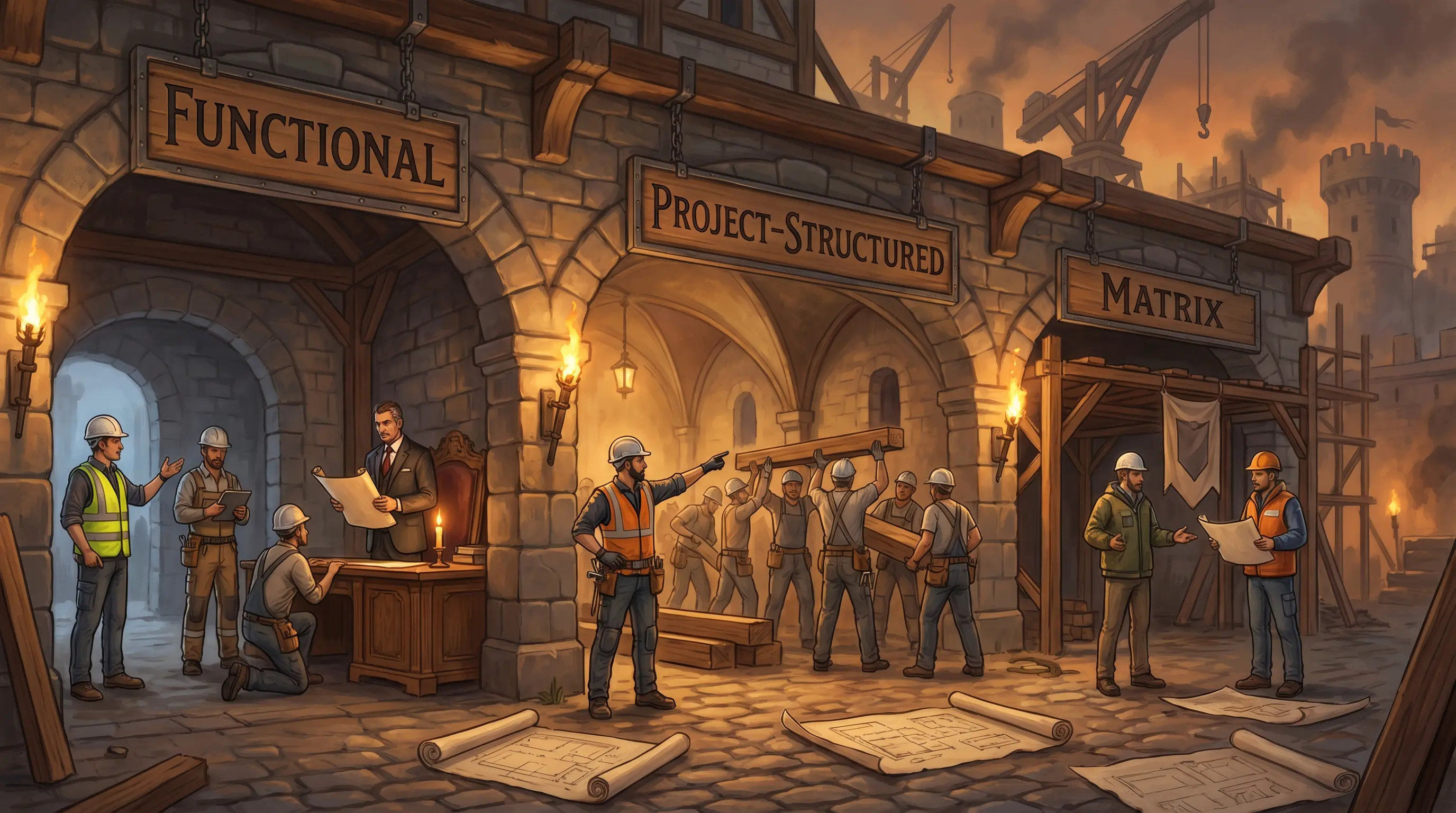
3 building bays = 3 authority structures. The foreman's power grows left to right.
How it works

Project management organizational structure determines how authority and control are distributed between project managers and functional department heads. In a functional structure, the project manager has no formal management authority; work is organized by department, and the PM can only advise. In a project-structured organization, the PM has full authority over a dedicated team, with department boundaries subordinated to project needs. In a matrix structure, authority is shared: functional managers retain HR control while the PM directs day-to-day task priorities. The degree of PM influence in a matrix varies from weak (mostly functional) to strong (mostly PM-led). Auditors verify that governance documents reflect the actual authority structure in use.

🧠 Mnemonic
F-P-M: Few, Powerful, Mixed
Functional = Few PM powers (advisory only). Project-structured = Powerful PM (full authority). Matrix = Mixed authority (shared between PM and functional heads).
At a glance
🏛️

Functional

Who holds authority?

  • Department heads hold authority
  • PM advises only
  • No formal PM management power
  • Weakest PM control
🏗️

Project-Structured

Who holds authority?

  • PM has full authority
  • Dedicated team assigned to project
  • Strongest PM control
  • Dept boundaries secondary
🔀

Matrix

Who holds authority?

  • Authority shared: PM + dept heads
  • Weak/balanced/strong subtypes
  • PM directs tasks; dept manages HR
  • Most common real-world structure
Try yourself

Meridian Corp's new data lake project has a PM who can assign tasks but cannot hire, fire, or directly manage anyone on the team — every resource decision goes to department heads. Which organizational structure is this, and what authority gap does the PM have?

— Pause to recall —
Functional structure. The PM has advisory authority only — no formal management authority over team members.

Three organizational structures define PM authority. In a functional structure, authority rests with department heads; the PM can advise peers and team members on what to do but cannot exercise formal management control — this is Meridian's situation. In a project-structured organization, the PM has full authority over team members dedicated to the project. In a matrix structure, authority is shared between the PM and functional managers, with the balance varying by subtype (weak, balanced, strong matrix). The IS auditor should confirm that the authority structure matches the governance documentation.

Why this matters: CISA exam questions often test which structure grants the PM formal authority. Functional = advisory only; project-structured = full authority; matrix = shared. Misidentifying the structure leads to wrong conclusions about accountability.
🎯
Exam tip

The exam loves the functional structure trap: a PM with a title but no authority is a functional structure finding, not a matrix one. The keyword 'advise only' always points to functional. If the PM can hire/fire, that's project-structured.

See also: 3.1.3 3.1.6 2.2.3
Section 3.1.3 Must-know

Project Management Roles and Responsibilities

By the end of this card, you should be able to
Identify the key roles in a project management structure — steering committee, project sponsor, project manager, and project team — and state each role's primary accountability.
Scenario

Marcus Webb chairs Meridian's project steering committee for the customer portal rebuild. The PM sends a change request through ServiceNow: the vendor wants to add a biometric login module, adding $200K and six weeks. Marcus discovers that Sarah Lin already approved it verbally. Alex Chen, observing the steering committee meeting, sees the project sponsor has authorised a major scope change without the steering committee — bypassing the formal approval chain. Alex must decide which role bears accountability for the unauthorised commitment and whether this is a governance control failure or an isolated procedural error.

Project Management Roles and Responsibilities
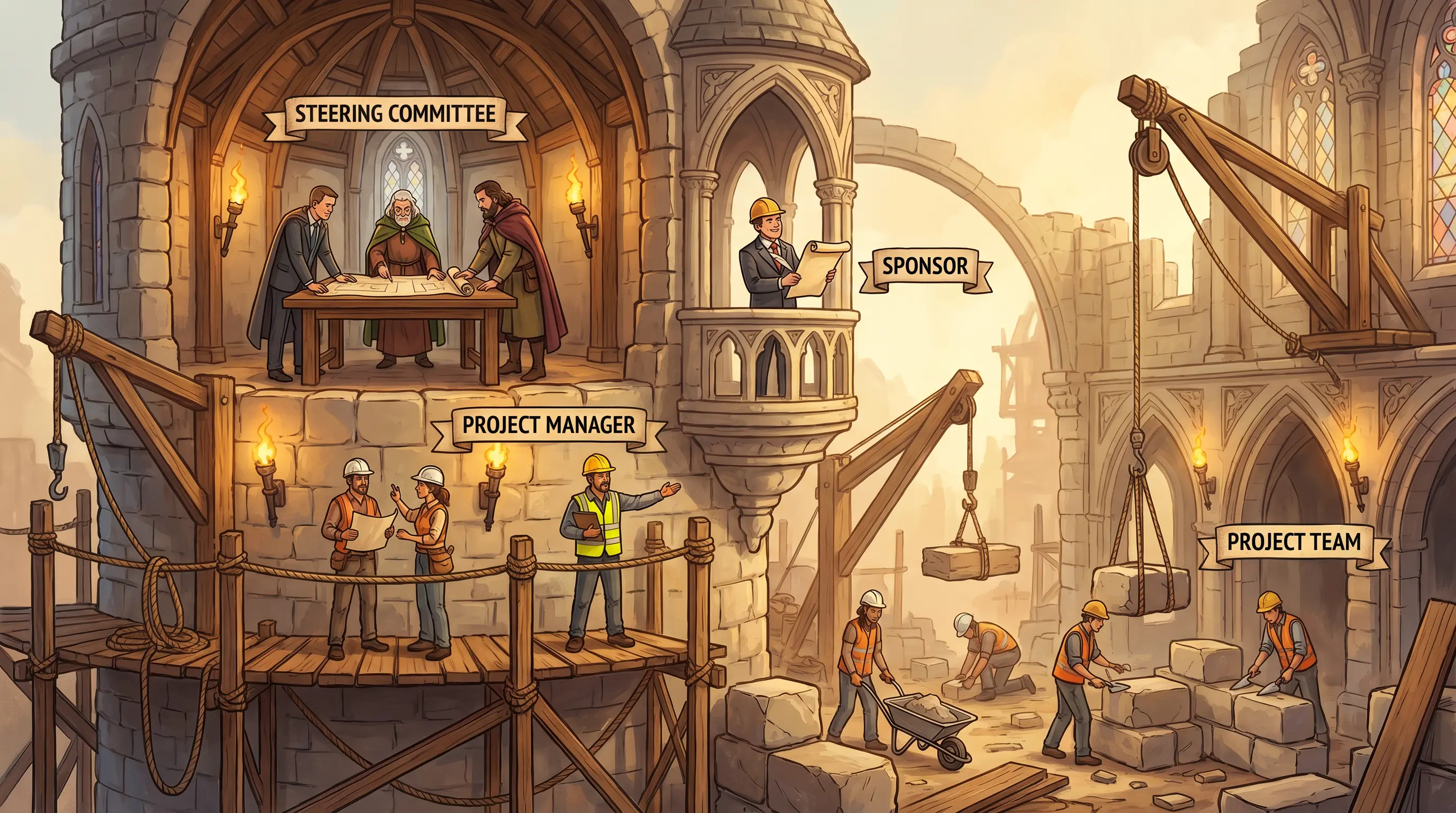
4 levels = 4 accountabilities. Steering committee holds ultimate responsibility at the top.
How it works

Project governance assigns distinct accountabilities to four key roles arranged hierarchically. The project steering committee sits at the top, providing strategic direction and holding ultimate responsibility for all project deliverables, costs, and schedules; it ensures that major stakeholders are represented in project decisions. Below it, the project sponsor champions the initiative at the executive level, owns the business case, and makes escalation decisions. The project manager handles day-to-day management: planning, executing, monitoring, controlling scope, budget, and schedule. The project team does the technical and functional work within the boundaries set by those above. An IS auditor verifies that each role has a named person, documented authority, and a clear handoff process between levels.

🧠 Mnemonic
S·S·M·T — top to bottom
Steering committee → Sponsor → Manager → Team. Authority and accountability flow downward; escalation flows upward.
At a glance
🏛️

Steering Committee

Who is ultimately accountable?

  • Overall strategic direction
  • Ultimate responsibility: deliverables, costs, schedule
  • Major stakeholder representation
  • Highest decision authority
👔

Project Sponsor

Who champions the business case?

  • Owns the business case
  • Executive-level escalations
  • Authorizes project funding
  • Approves changes at exec level
📋

Project Manager

Who manages day-to-day?

  • Daily planning and execution
  • Budget, schedule, scope control
  • Team coordination
  • Reports to steering committee
🔨

Project Team

Who does the technical work?

  • Technical and functional execution
  • Delivers work packages
  • Reports to project manager
  • Includes contractors/vendors
Try yourself

Meridian Corp's CRM project is over budget. The PM says the project sponsor approved scope creep in a side conversation with the vendor. As the IS auditor, which role is ultimately accountable for project costs and deliverables, and what control did that role fail to exercise?

— Pause to recall —
The steering committee is ultimately accountable for all project costs, deliverables, and schedules. The project sponsor, as the second-tier authority, champions the business case and makes executive-level decisions, but does not hold the steering committee's ultimate accountability.

In a well-governed project, four roles have distinct accountabilities. The project steering committee provides overall direction and ensures major stakeholder representation; it is ultimately responsible for all deliverables, costs, and schedules. The project sponsor champions the business case and secures executive-level decisions. The project manager handles day-to-day planning, execution, and control — tracking budget, schedule, and scope. The project team executes the technical and functional work. When a sponsor approves scope changes informally, that bypasses the steering committee's authority — a governance control failure.

Why this matters: The exam consistently tests who is 'ultimately accountable.' The steering committee (not the PM) owns that position. A sponsor who makes unilateral scope decisions without steering committee oversight is a control gap.
🎯
Exam tip

If an exam question asks who is 'ultimately responsible' for project outcomes, the answer is the steering committee — not the project manager, not the sponsor. The PM manages execution; the committee owns accountability.

See also: 3.1.2 3.1.12 2.2.2
Section 3.1.4 Must-know

Project Management Techniques

By the end of this card, you should be able to
Identify the primary quantitative project management techniques — Gantt charts, PERT, CPM, and earned value — and explain what each controls.
Scenario

Priya Rao spreads four documents across the conference table for Alex Chen's fieldwork review. A color-coded bar chart shows the MERIDIA-1 upgrade tasks month by month. A web of boxes and arrows has one path highlighted in red — the tasks that, if late, delay the whole project. A statistical table shows three time estimates per task. A fourth document compares budgeted cost of work scheduled against actual costs incurred. The project manager walks in and asks Alex which of these identifies tasks that cannot slip without pushing the end date. Alex must name all four techniques and answer the question.

Project Management Techniques
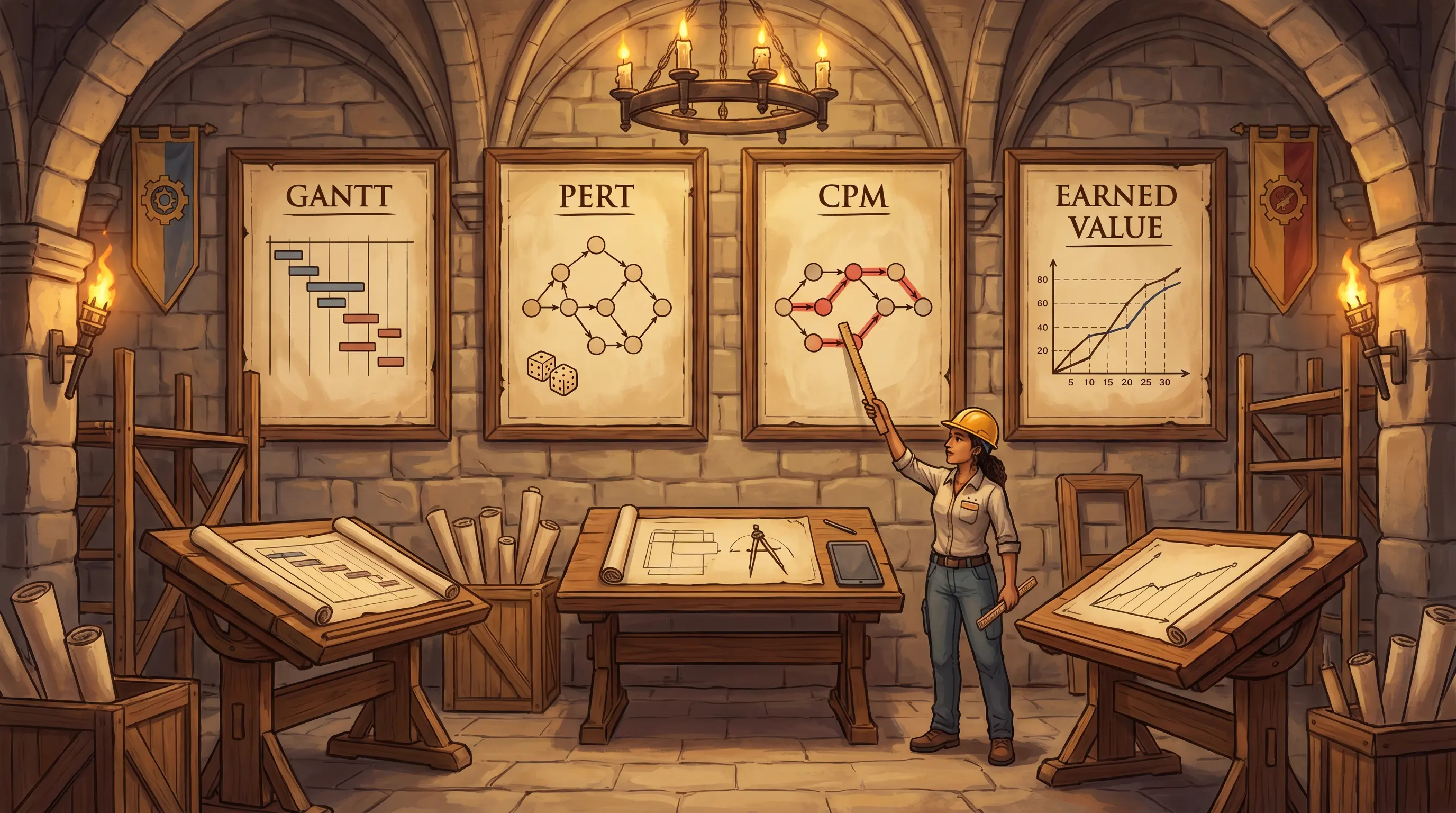
4 framed charts = 4 control lenses. Each answers a different project management question.
How it works

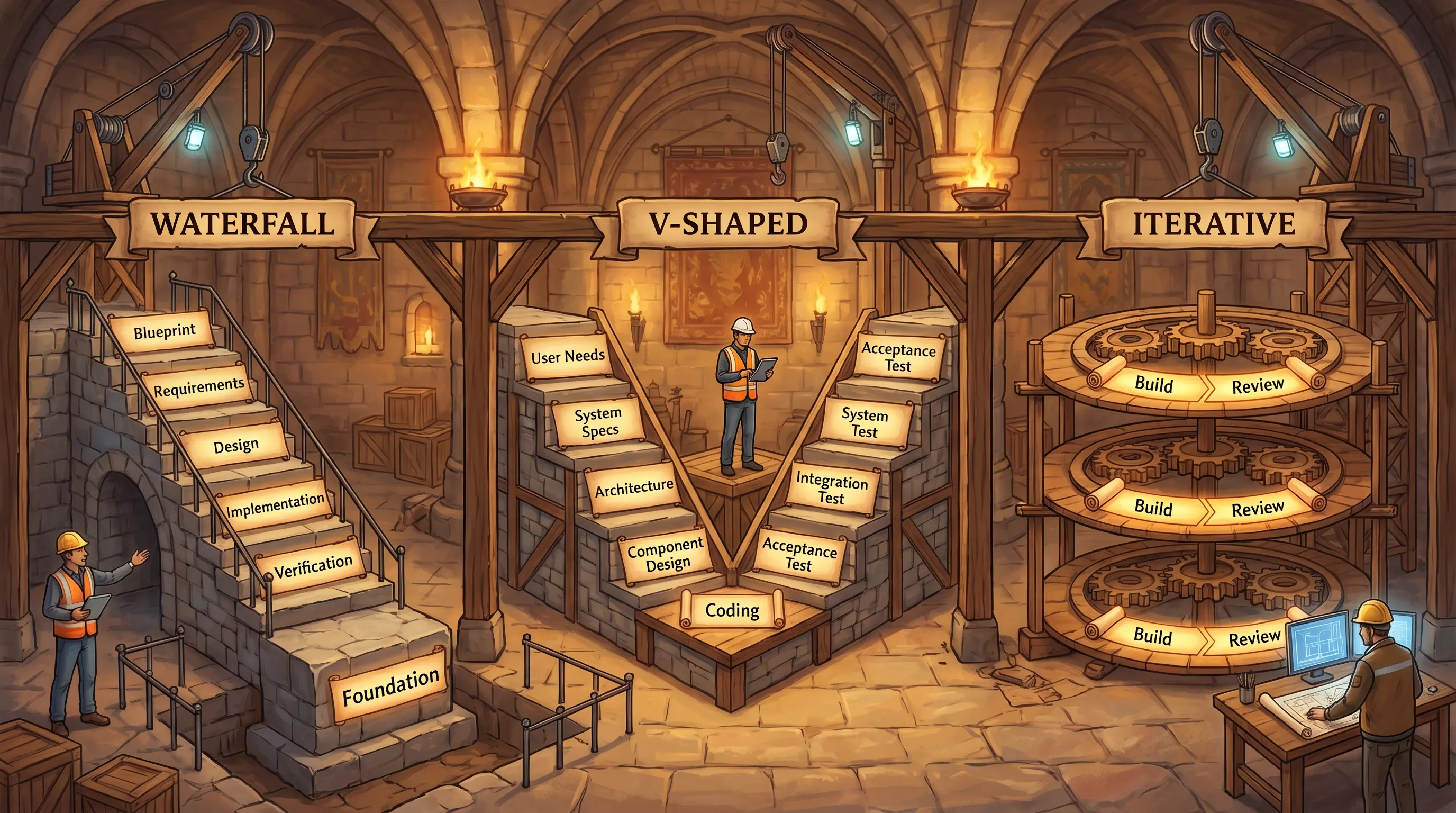
Project management techniques provide systematic ways to plan, track, and control time and resources. A Gantt chart is a bar-format timeline that maps tasks against a calendar, making schedule slippage visible at a glance. PERT (Program Evaluation and Review Technique) uses a network of task dependencies and three-point duration estimates — optimistic, pessimistic, and most likely — to model schedule uncertainty. The Critical Path Method (CPM) identifies the sequence of dependent tasks with zero float; delay on any critical-path task delays the entire project. Earned Value (EV) analysis provides an integrated cost-schedule status by comparing what was budgeted for completed work against what was actually spent. IS auditors use these techniques to evaluate whether project controls can detect and report deviations early.

🧠 Mnemonic
G-P-C-E
Gantt = timeline bars. PERT = probabilistic estimates. CPM = Critical path (no-slip tasks). Earned Value = cost vs. completion reality check.
At a glance
📅

Gantt Chart

What does it show?

  • Tasks as horizontal bars
  • Planned vs. actual timeline
  • Simple visual schedule
  • Best for status reporting
🎲

PERT

What problem does it solve?

  • Uncertain task durations
  • 3-point estimates (O/M/P)
  • Network-based
  • Early-phase planning
🔴

CPM

What must never slip?

  • Longest dependency chain
  • Zero-float tasks
  • Any delay = project delay
  • Focus for risk management
💹

Earned Value

Are we getting value for money?

  • BCWS, BCWP, ACWP
  • Schedule variance (SV)
  • Cost variance (CV)
  • Integrated cost-schedule view
Try yourself

Meridian's data warehouse project is behind schedule. The PM shows you a bar chart of planned versus actual task timelines, a network diagram showing task dependencies with the longest path highlighted, and a report comparing budgeted cost of work scheduled against actual costs spent. Name the technique each document represents.

— Pause to recall —
Bar chart = Gantt. Network diagram with longest path = CPM (Critical Path Method). Budget vs. actual cost report = Earned Value.

Gantt charts display task timelines as horizontal bars, making schedule progress immediately visible. PERT (Program Evaluation and Review Technique) is a network-based statistical method that estimates task duration using optimistic, pessimistic, and most-likely estimates, useful when durations are uncertain. CPM (Critical Path Method) identifies the longest dependency chain through the project — the critical path — where any delay directly delays the project. Earned Value (EV) analysis compares budgeted cost of work scheduled (BCWS), budgeted cost of work performed (BCWP), and actual cost of work performed (ACWP) to quantify schedule and cost variances simultaneously.

Why this matters: The exam tests recognition of which technique answers which question. Gantt = 'Are we on schedule?' PERT = 'How long will uncertain tasks take?' CPM = 'What tasks cannot slip?' EV = 'How much did we spend versus how much work did we complete?'
🎯
Exam tip

If an exam scenario gives you a network diagram with a highlighted longest path, that is CPM — not PERT. PERT uses probabilistic duration estimates; CPM uses deterministic ones. Earned Value is the only technique that combines cost and schedule into a single metric.

See also: 3.1.10 3.1.12 3.1.11
Section 3.1.5 Must-know

Portfolio/Program Management

By the end of this card, you should be able to
Distinguish between a project portfolio and a program, explain the role of the Project Management Office (PMO), and identify why portfolio-level oversight matters to IS auditors.
Scenario

Janet Holloway chairs the quarterly portfolio review at Meridian. She slides the dashboard to Alex Chen: twelve active initiatives, three of which share the AWS budget envelope and a common objective of retiring legacy infrastructure. A separate report from the PMO covers methodology compliance across all twelve initiatives but makes no content decisions for any one of them. Marcus Webb asks Alex to identify what the three legacy-retirement initiatives collectively represent, what the twelve-initiative collection represents, and what role the PMO occupies in this structure.

Portfolio/Program Management
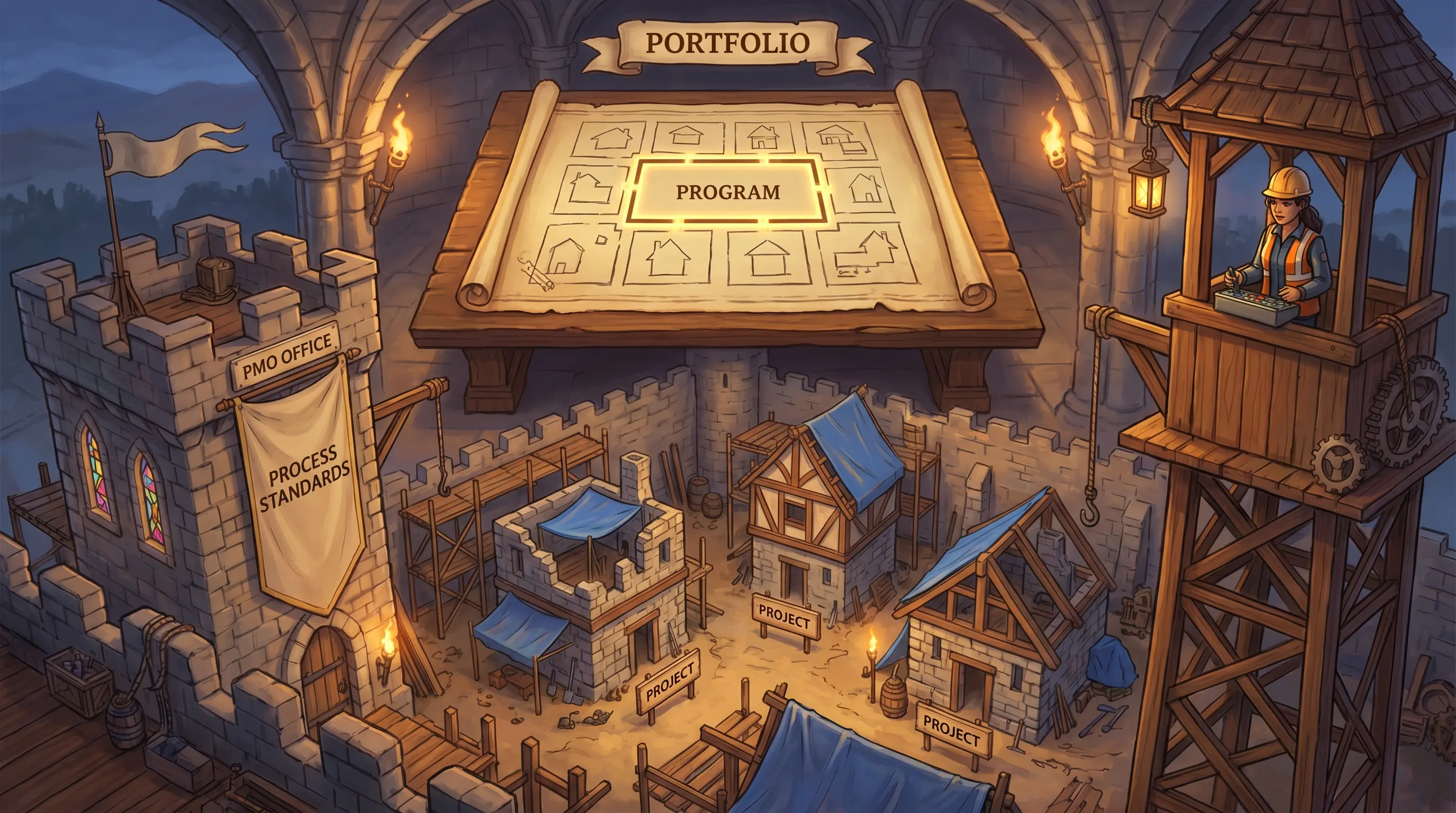
Portfolio holds programs, programs hold projects. The PMO governs the process — not the product.
How it works

Portfolio management provides enterprise-level visibility into all concurrent IT initiatives, enabling leaders to identify overlapping objectives, allocate shared resources, and manage risk across the full body of work. A program is a structured grouping of related projects that share common strategies, objectives, budgets, or schedules, allowing coordinated management of interdependencies that individual project teams cannot see. The Project Management Office (PMO) establishes and enforces the processes, templates, and reporting standards that projects and programs must follow, but it does not direct project content or make delivery decisions. IS auditors treat the PMO as a governance control — its existence, charter, and scope of authority are audit-relevant artifacts. Weak portfolio governance is often a leading indicator of resource conflicts, duplicated investments, and unmanaged interdependency risk.

🧠 Mnemonic
P > P > P
Portfolio > Program > Project. Each level is a subset of the one above. PMO governs the process at all three levels without running any one of them.
At a glance
🗂️

Portfolio

What is the broadest view?

  • All projects at a given time
  • Strategic resource allocation
  • Cross-project risk visibility
  • Aligned to enterprise goals
📦

Program

What links related projects?

  • Common strategies/objectives
  • Shared budget or schedule
  • Coordinated interdependencies
  • Subset of the portfolio
🔨

Project

What is the individual unit of work?

  • Defined scope and deliverable
  • Named sponsor and PM
  • Finite start and end
  • Reports up to program or portfolio
🏛️

PMO

What does the PMO govern?

  • Process standards and templates
  • Methodology compliance
  • Cross-project reporting
  • Does NOT manage content
Try yourself

Meridian Corp is running twelve IT initiatives simultaneously. Three of them share the same cloud migration objective and the same AWS budget pool. One oversight body governs the processes used across all twelve, but does not make content decisions for any individual initiative. Identify the three structural terms that apply here.

— Pause to recall —
The twelve initiatives together form the portfolio. The three cloud projects with shared objectives form a program. The oversight body is the PMO.

A project portfolio is the full set of projects an enterprise is executing at any given time; it provides a top-level view for resource allocation, risk identification, and strategic alignment. A program is a subset of the portfolio — a group of related projects bound by common strategies, objectives, budgets, or schedules that benefit from coordinated management. A Project Management Office (PMO) governs the project management processes and standards across the portfolio but does not typically make content or delivery decisions for individual projects. IS auditors use the PMO as the primary source of cross-project documentation and governance evidence.

Why this matters: The exam expects candidates to distinguish portfolio (all projects), program (related cluster), and PMO (process governance body). A common distractor conflates the PMO with an operational team that manages project content — it does not.
🎯
Exam tip

Exam distractors often say the PMO 'manages projects.' It does not — it governs the process of managing projects. If a question says the PMO is making delivery decisions, that is a control design deficiency.

See also: 3.1.6 3.1.2 2.2.2
Section 3.1.6 Must-know

Project Management Office

By the end of this card, you should be able to
Explain the PMO's role as a permanent governance structure for project portfolio management, and distinguish between auditing project content versus procedural aspects.
Scenario

Twelve project status slides fill the screen in Meridian Corp's project room. Alex Chen stacks the decks and notices three teams have requested the same two network engineers for overlapping sprints. Priya Rao taps the whiteboard: no single unit owns cross-project resource allocation or portfolio-level reporting. Alex must determine what structure should exist to resolve these conflicts and articulate the four objectives it would need to fulfil to be auditable.

Project Management Office
PMO = portfolio process owner. Four objectives on the stone plaque: Optimize → Prioritize → Coordinate → Transfer. The auditor checks the ledger, not the blueprints.
How it works

A Project Management Office is a permanent organizational unit that owns the project and program management process across an enterprise. Its role is procedural: it sets standards, maintains methodology, and produces portfolio-level reporting. It does not manage individual project content. The four objectives of project portfolio management are optimizing portfolio-level results (not individual project results), prioritizing and scheduling projects, coordinating resources across projects, and enabling knowledge transfer. A mandatory project portfolio database records owner, schedule, objectives, type, status, and cost for every active project. Typical portfolio reports include bar charts of project status, profit-versus-risk matrices, and progress graphs. An IS auditor reviews the PMO's procedural controls — existence of standards, currency of the portfolio database, quality of reporting — rather than evaluating the technical content of individual projects.

🧠 Mnemonic
OPCK
Optimize portfolio → Prioritize and schedule → Coordinate resources → Knowledge transfer — the four PMO portfolio objectives.
At a glance
🏛️

PMO Purpose

What does a PMO own?

  • Permanent organizational structure
  • Project/program management process
  • Standards and methodology
  • Portfolio-level governance — not project content
🎯

4 Portfolio Objectives

What are the four PMO portfolio management objectives?

  • Optimize overall portfolio results
  • Prioritize and schedule projects
  • Coordinate resources (internal & external)
  • Transfer knowledge across projects
🗄️

Portfolio Database

What must the portfolio database contain?

  • Project owner
  • Schedules and timelines
  • Objectives and project type
  • Status and cost
🔍

Auditor Scope

What does the IS auditor review?

  • PMO procedural controls
  • Portfolio database completeness
  • Quality of portfolio reports
  • Process — not individual project content
Try yourself

Twelve concurrent IT projects at Meridian Corp share a limited pool of network engineers, and three teams have scheduled the same two engineers for overlapping sprints. No single unit owns portfolio-level resource conflict resolution or cross-project reporting. What organizational structure is missing, and what four portfolio-level objectives should it own?

— Pause to recall —
A permanent Project Management Office (PMO) responsible for: (1) optimizing portfolio results, (2) prioritizing and scheduling projects, (3) coordinating resources, and (4) transferring knowledge across projects.

A PMO is a permanent organizational structure that owns project and program management processes. It focuses on procedural standards and portfolio-level governance, not on individual project content. Its four portfolio management objectives are: optimizing the results of the overall project portfolio (not individual projects), prioritizing and scheduling projects, coordinating internal and external resources, and facilitating knowledge transfer across projects. The PMO also maintains a project portfolio database containing owner, schedules, objectives, project type, status, and cost — and produces portfolio reports such as bar charts, profit-versus-risk matrices, and progress graphs.

Why this matters: CISA exams test that the PMO governs process and portfolio, not project content. Candidates confuse the PMO's portfolio optimization role with individual project management. The auditor's job is to audit the PMO's procedural controls, not to manage the projects themselves.
🎯
Exam tip

The most common exam trap is confusing the PMO's portfolio optimization objective (maximize overall portfolio value) with individual project success. The PMO cannot and should not manage project content — that is the project manager's domain. A second trap: when asked what the PMO 'focuses on,' the correct answer is process and standards, not deliverables. Wrong answers will suggest the PMO approves technical designs or manages project budgets directly.

See also: 3.1.5 3.1.2 2.2.2
Section 3.1.7 Must-know

Project Benefits Realization

By the end of this card, you should be able to
Explain the purpose of benefits realization management and identify the three on-delivery requirements and the auditor's role in verifying value achievement.
Scenario

Meridian's digital lending platform closed its project file on time and under budget. Six months later, Alex Chen is assigned a post-launch review. Alex asks for the benefits realization report. There is none. No baseline was captured before launch, no benefit metrics were defined, and no tracking mechanism exists. The business case promised a 20% reduction in loan processing time. Alex must determine what dimension of project value was never set up to be measured and whether the absence of a benefits tracking mechanism is a reportable finding.

Project Benefits Realization
3 markers = 3 delivery requirements. Project close is only the first two — value must continue.
How it works

Benefits realization management ensures that IT-enabled investments deliver the value they promised, not just that projects finish. Three delivery requirements must be met: capabilities should arrive on time, respecting schedule and time-sensitive market or regulatory windows; they should be delivered within the approved budget; and IT services and assets must continue to generate measurable business value after go-live. Meeting the first two requirements closes a project. Meeting the third is what makes the investment justified. IS auditors verify benefits realization by checking that a pre-launch baseline was established, that benefit metrics are defined and tracked, and that a formal review process exists to compare actual outcomes against the original business case projections.

🧠 Mnemonic
OBC — On time, Budget, Continues
Benefits realization requires On-time delivery, Budget adherence, and Continued value after launch. All three must be measurable.
At a glance

On Time

What schedule dimension matters?

  • Delivery schedule met
  • Regulatory deadlines respected
  • Market timing preserved
  • Time-sensitive requirements honored
💰

Within Budget

What financial control is required?

  • Approved budget respected
  • Cost overruns are a value leak
  • TCO tracked post-launch
  • Variance must be explainable
📈

Continued Contribution

How is long-term value verified?

  • Pre-launch baseline captured
  • Benefit metrics defined
  • Post-go-live tracking mechanism
  • Compared to original business case
🔍

Auditor's Role

What does the auditor verify?

  • Baseline exists before launch
  • Metrics are defined and tracked
  • Realization review scheduled
  • Findings if benefits unverifiable
Try yourself

Meridian's digital lending platform launched eight months ago. The project closed on schedule and within budget, but the IS auditor is still reviewing it. What dimension of value delivery is the auditor now assessing that project closure did not address?

— Pause to recall —
Continued value contribution after delivery. Benefits realization extends beyond go-live to verify that IT-enabled investments are delivering the promised measurable business value over time.

Benefits realization management ensures that IT investments fulfill three delivery requirements: capabilities must be delivered on time (meeting schedule and regulatory deadlines), within budget, and IT services must continue to contribute value after delivery. Coming in on time and on budget is necessary but not sufficient — the IS auditor also evaluates whether the promised benefits are materializing in operations. This requires a baseline captured before go-live, defined benefit metrics, and a post-delivery tracking mechanism. Without these, the organization cannot demonstrate that the investment achieved its stated value.

Why this matters: The exam tests whether candidates recognize that project success is not equivalent to benefits realization. A project can be delivered on time and on budget and still fail to deliver business value — the audit must reach beyond project closure.
🎯
Exam tip

The exam often presents projects that closed on time and budget but have no measurable benefits. The correct auditor finding is missing benefits realization tracking — not a project management failure. Benefits realization is an operations-phase control, not a project-phase control.

See also: 3.8 3.2 3.1.13
Section 3.1.8 Must-know

Project Initiation

By the end of this card, you should be able to
Describe the key artifacts of project initiation — the project charter, terms of reference, and project initiation document — and identify what formally authorizes a project to begin.
Scenario

Alex Chen opens the fieldwork binder for the treasury management system. The project is four months old and has spent $340K. Alex asks Lila Okafor, the technical lead, for the project charter. Lila hands over a two-sentence email from Marcus Webb saying 'Go ahead.' No objectives, no named stakeholders, no defined scope, no formal PM assignment. Alex must decide: does this email constitute adequate project initiation authority, and if not, what specific elements are missing?

Project Initiation
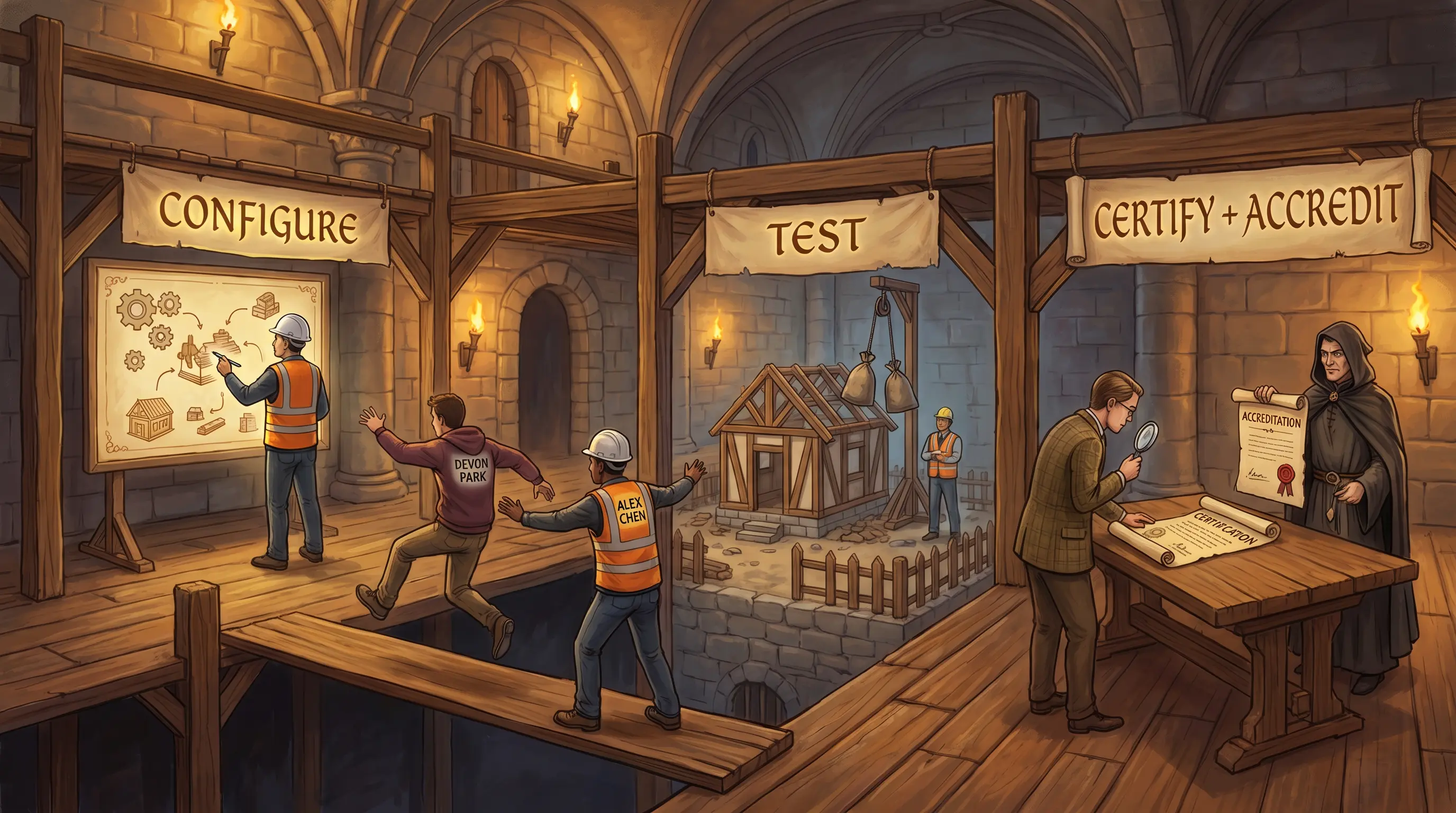
3-step flow: Gather → Charter → Authorize. The gate stays closed without the signed PID.
How it works

Project initiation is the formal process of gathering, documenting, and approving the information needed to authorize a project. The process begins when a project manager or sponsor compiles a terms of reference or project charter that captures the project's objectives, the intended stakeholders of the resulting system, the name of the project manager and sponsor, and initial scope. This documentation is formalized into a project initiation document (PID) or project request document (PRD). When an authorized decision-maker approves the PID or PRD, the project is formally sanctioned to proceed. Without an approved initiation document, any project activity — spending, resource assignment, or vendor engagement — occurs without sanctioned authority, which is a material control gap for IS auditors.

🧠 Mnemonic
Gather → Charter → Authorize
Initiation flows: Gather information → Write the charter/PID → Get formal authorization. No authorization = no project.
At a glance
📋

Information Gathering

What must be gathered first?

  • Project objectives
  • Key stakeholders
  • Named PM and sponsor
  • Initial scope definition
📜

Charter / PID / PRD

What document captures this?

  • Project charter (terms of reference)
  • Project Initiation Document (PID)
  • Project Request Document (PRD)
  • Structured, not just email

Formal Authorization

What makes the project official?

  • Approved PID or PRD
  • Named authorizing executive
  • Sanctioned scope and budget
  • Pre-requisite to any spending
🔍

Auditor Check

What does the auditor verify?

  • PID/PRD exists and is signed
  • Authorization predates spending
  • Named PM and sponsor present
  • Signed email alone is insufficient
Try yourself

Meridian's new treasury management system has been in development for four months and has spent $340K. The IS auditor asks for the authorization document that allowed the project to start. The PM hands over a signed email from the CFO. What document should have existed, and what three elements must it contain to constitute adequate project initiation?

— Pause to recall —
A signed email is not adequate. A formal project initiation document (PID) or project request document (PRD) — or a project charter — should exist, documenting objectives, stakeholders, sponsor, and PM. This is the formal authorization to begin.

Project initiation begins when a project manager or sponsor gathers the information needed to request project approval. That information is formalized in a terms of reference or project charter, which states the project's objective, identifies key stakeholders, names the PM and sponsor, and defines initial scope. The output — a project initiation document (PID) or project request document (PRD) — is then approved by the appropriate authority. Approval of the PID or PRD is the formal authorization for the project to begin. Without it, the project lacks sanctioned authority, and any subsequent spend or resource commitment is unapproved.

Why this matters: The PID/PRD is a key auditor checkpoint. Without it, the project was never formally authorized. A signed executive email is not a substitute — it lacks the structured content (objectives, stakeholders, PM, scope) that the initiation document must contain.
🎯
Exam tip

The most common initiation finding: the project started before the PID was approved, or the 'charter' is an informal email. Always verify that the initiation document is structured, complete, and formally approved — not just that some executive gave a verbal or written go-ahead.

See also: 3.1.1 3.2 3.1.3
Section 3.1.9 Must-know

Project Objectives

By the end of this card, you should be able to
Explain how SMART project objectives are defined using an Object Breakdown Structure and a Work Breakdown Structure, and describe what an IS auditor reviews to assess project objective clarity.
Scenario

Priya Rao hands Alex Chen a project charter for Meridian Corp's API gateway rollout. The stated objective: 'Deliver a better integration layer.' No success metric, no deadline, no owner per work package. Alex opens the project folder looking for an Object Breakdown Structure and a Work Breakdown Structure. Neither exists. Marcus Webb is waiting for Alex's assessment of whether the objectives definition is adequate to govern a $2.1M project. Alex must identify which structural tools are missing and explain what each was supposed to produce.

Project Objectives
OBS (left) = what you build. WBS (right) = how you work. Every work package needs an owner's seal. SMART objectives precede both.
How it works

Project objectives are specific action statements that operationalize broader project goals. Every objective must satisfy the SMART criteria: Specific (unambiguous), Measurable (quantifiable), Attainable (achievable given constraints), Realistic (relevant to the goal), and Timely (time-bound with a deadline). An Object Breakdown Structure (OBS) decomposes the solution into its component parts and their relationships in a hierarchical format; it is particularly useful when deliverables are intangible. After the OBS is established, a Work Breakdown Structure (WBS) is created to structure all tasks required to build the OBS components. The WBS consists of work packages — the smallest controllable units — each with a distinct owner. The WBS serves as the central communications tool and forms the baseline for cost and resource planning. An IS auditor examines whether both structures exist, are current, and have work package owners assigned.

🧠 Mnemonic
SMART → OBS → WBS
Define objectives as SMART, then decompose the solution into an Object Breakdown Structure, then decompose the work into a Work Breakdown Structure.
At a glance
🎯

SMART Criteria

What five qualities must a project objective have?

  • Specific — unambiguous
  • Measurable — quantifiable
  • Attainable — achievable
  • Realistic — relevant to the goal
  • Timely — time-bound deadline
🌳

Object Breakdown Structure

What does an OBS show?

  • Components of the solution (not tasks)
  • Hierarchical relationships between components
  • Useful for intangible deliverables
  • Precedes the WBS in planning sequence
📋

Work Breakdown Structure

What does a WBS show?

  • Tasks to build OBS components
  • Work packages with distinct owners
  • Process-oriented, organized in phases
  • Baseline for cost and resource planning
🔍

Auditor Review

What does the IS auditor check?

  • Objectives are SMART and documented
  • OBS covers all solution components
  • WBS work packages have assigned owners
  • WBS forms documented cost/resource baseline
Try yourself

Meridian Corp's cloud migration project has a stated goal of 'improving system performance.' The IS auditor asks for the project objectives document and receives a single slide with no success metrics, no deadlines, and no work package owners. What two structural decomposition tools should the project have produced from its objectives, and what does the absence of each prevent?

— Pause to recall —
Objectives must be SMART (Specific, Measurable, Attainable, Realistic, Timely). An Object Breakdown Structure (OBS) decomposes the solution components; a Work Breakdown Structure (WBS) decomposes the work tasks. Both should be documented.

Project objectives are specific action statements that support project goals; every goal has one or more objectives. Objectives must meet the SMART criteria: Specific, Measurable, Attainable, Realistic, and Timely. The Object Breakdown Structure (OBS) represents the individual components of the solution and their relationships hierarchically — it is especially valuable for intangible deliverables. The Work Breakdown Structure (WBS) is then derived from the OBS and structures all tasks into manageable work packages (WPs). Each WP must have a distinct owner and clear completion criteria. The WBS is process-oriented and forms the baseline for cost and resource planning.

Why this matters: CISA exams test that objectives must be SMART and that both OBS and WBS are required planning artifacts. Candidates confuse OBS (what we are building) with WBS (what work we will do). The WBS — not the OBS — is the baseline for cost and resource estimation.
🎯
Exam tip

The key distinction examiners test: the OBS shows what is being built (solution components), the WBS shows what work will be done (tasks). Confusing the two is the most common wrong answer. A second trap: the WBS — not the project charter or Gantt chart — is the baseline for cost and resource planning. If an exam question asks what tool a project manager uses to negotiate detailed objectives with the sponsor, the answer is the WBS.

See also: 3.1.10 3.1.1 3.1.8
Section 3.1.10 Must-know

Project Planning

By the end of this card, you should be able to
Identify the key elements of an IS project plan and distinguish among the four cost-estimation methodologies used for IS development projects.
Scenario

Marcus Webb drops a four-page project plan on Alex Chen's desk and asks whether the $4M estimate for Meridian Corp's core banking integration is defensible. Alex checks the methodology section: the PM used a prior project of similar scope as the sole basis, adjusted for scope differences. No parametric model, no bottom-up decomposition, no three-point sensitivity analysis. Marcus asks: is analogous estimating sufficient for a $4M project, and what is missing?

Project Planning
Four estimation scrolls: Analogous (fastest) → Parametric (statistical) → Bottom-up (most accurate) → Three-point (handles uncertainty). The auditor asks: which method, and why?
How it works

Every IS project must be planned and controlled across eight dimensions: scope, tasks, task sequence, task duration, task priority, resources, budget, and funding sources. Cost estimation for IS development projects is particularly challenging because these projects are large, integrated, and multi-component. Four standard estimation methods apply: Analogous estimating derives estimates from prior similar projects — quickest but least precise. Parametric estimating applies statistical relationships (such as cost per function point) to historical data for greater precision. Bottom-up estimating sums costs at the individual work-package level and aggregates upward — most accurate but most time-consuming. Three-point estimating calculates a weighted average of optimistic, most-likely, and pessimistic scenarios to account for uncertainty. An IS auditor assesses whether a documented estimation methodology was used, whether it is appropriate for the project's size and complexity, and whether the plan covers all eight planning dimensions.

🧠 Mnemonic
APBT
Analogous (fastest) → Parametric (statistical) → Bottom-up (most accurate) → Three-point (handles uncertainty) — the four IS cost-estimation techniques.
At a glance
📜

Analogous Estimating

What is analogous estimating?

  • Uses data from prior similar projects
  • Quickest estimation technique
  • Least precise of the four methods
  • Good for early-stage rough estimates
📐

Parametric Estimating

What is parametric estimating?

  • Applies statistical relationships to historical data
  • Example: cost per function point
  • More precise than analogous
  • Requires reliable historical data
⬆️

Bottom-Up Estimating

What is bottom-up estimating?

  • Sums costs at work-package level
  • Aggregates up through WBS
  • Most accurate method
  • Most time-consuming method
🎲

Three-Point Estimating

What is three-point estimating?

  • Uses optimistic, most-likely, pessimistic values
  • Calculates weighted average
  • Reduces impact of single-point uncertainty
  • Useful for novel or high-risk projects
Try yourself

Meridian Corp's PM estimated the $4M core banking integration by adjusting a 2021 project of similar scope. Marcus Webb asks whether this estimate is defensible. What cost-estimation technique is this, and what is its primary limitation compared to parametric or bottom-up estimating?

— Pause to recall —
Analogous estimating (using prior project data). The other three are: Parametric estimating (statistical models), Bottom-up estimating (summing individual work package costs), and Three-point estimating (optimistic/most-likely/pessimistic average).

IS development projects require rigorous cost estimation because they are large, integrated, and involve hardware, software, facilities, and services. Four accepted methodologies exist:

  1. Analogous estimating uses cost data from prior similar projects — fastest but least precise
  2. Parametric estimating applies statistical relationships (e.g., cost per function point) to historical data — more precise than analogous
  3. Bottom-up estimating starts from individual work packages and aggregates upward — most accurate but most time-consuming
  4. Three-point estimating uses three scenarios (optimistic, most likely, pessimistic) to calculate a weighted average, reducing the impact of uncertainty

Beyond cost estimation, a project plan must define scope, tasks, task sequence, task duration, task priority, required resources, budget, and funding sources.

Why this matters: The exam tests which technique is most accurate (bottom-up), which is fastest (analogous), and which compensates for uncertainty (three-point). Missing any of the eight project planning elements is an audit finding.
🎯
Exam tip

The exam commonly asks which technique is most accurate (bottom-up) versus which is fastest (analogous). A distractor will present bottom-up as 'impractical' or analogous as 'most reliable' — both are wrong. Three-point estimating is the correct choice when a project has high uncertainty or novel elements; don't select analogous for an unprecedented project type. The eight project planning elements are: scope, tasks, sequence, duration, priority, resources, budget, funding.

See also: 3.1.4 3.2 3.1.12
Section 3.1.11 Must-know

Project Execution

By the end of this card, you should be able to
Describe the activities that constitute project execution and explain the role of production and quality metrics in managing both internal teams and external contractors.
Scenario

Meridian's mobile banking project is in full execution. The program manager runs a Monday metrics review covering sprint velocity and defect rates for the internal team. But when Alex Chen asks about the two vendor teams building the payment gateway, the program manager admits there are no formal metrics from either — just a weekly status email. Kenji Tanaka, the project sponsor, wants to accelerate the timeline. Alex must assess: does the absence of formal vendor performance metrics constitute a control gap in project execution, and if so, what control is missing?

Project Execution
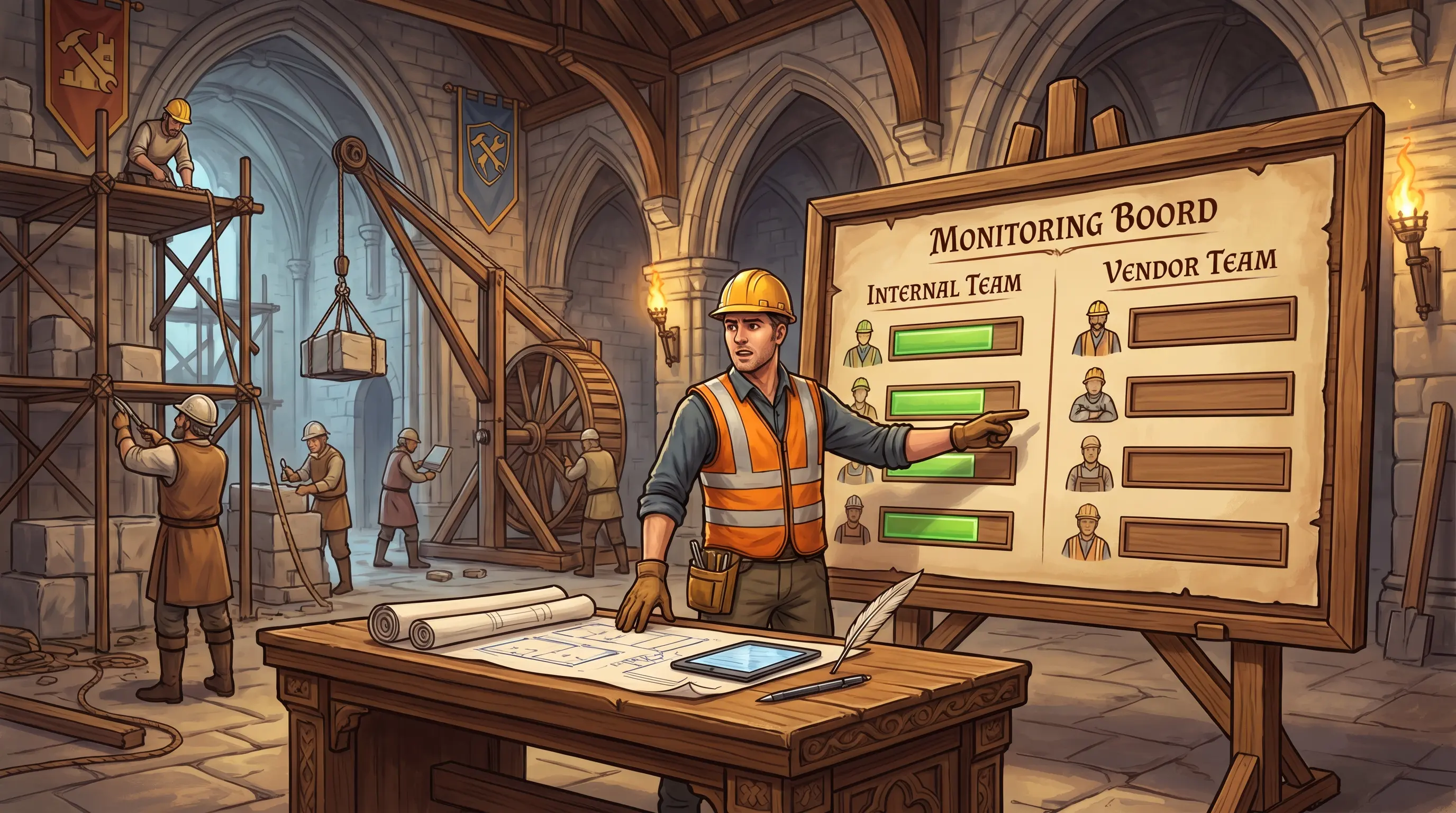
2 columns = 2 teams to monitor. Vendor column blank is an execution control gap.
How it works

Project execution begins when planning is complete and the program manager, coordinating with the PMO, activates the tasks described in project plans and procedures. The execution phase is not passive — it requires active monitoring of production output and quality metrics. Critically, this monitoring must cover both internal team members and external contractors or vendors contributing to the project. A key success factor is integrated oversight across all contributors: requirements, architecture, design, and coding standards must be enforced uniformly whether the contributor is an employee or a third party. Execution also involves ongoing coordination to ensure the project remains aligned with the system requirements and technical architecture established during planning. IS auditors verify that metric coverage extends to all delivery parties, not just internal staff.

🧠 Mnemonic
Activate → Measure (All) → Assure
Execution: Activate planned tasks → Measure ALL contributors (internal + vendor) → Assure quality against standards.
At a glance
🚀

Start Execution

What triggers execution?

  • Planning complete
  • PMO coordination starts
  • Tasks activated per plans
  • Program manager leads
📊

Internal Metrics

What is measured internally?

  • Team production output
  • Quality defect rates
  • Sprint velocity or milestones
  • Requirements traceability
🤝

Vendor Metrics

What is measured from contractors?

  • Same quality metrics as internal
  • Delivery against contract
  • Defect rates from third parties
  • Excluded = audit finding

Quality Assurance

What standards apply to all?

  • Architecture compliance
  • Design standards enforcement
  • Coding standards
  • Integrated oversight required
Try yourself

Meridian's mobile banking app project has entered execution. The program manager reports on internal team velocity weekly but has no metrics for the two vendor teams building the payment gateway. As the IS auditor, what control gap does this represent?

— Pause to recall —
Execution monitoring must cover both internal team metrics and contractor/vendor metrics equally. Vendor metrics are not optional — the gap means a portion of the project is operating without quality or production oversight.

During execution, the program manager and PMO activate the planned tasks and begin monitoring internal team production and quality metrics. Critically, these same metrics must be applied to contractors and vendors — monitoring is not limited to internal resources. A key success factor is integrated oversight: the project team must govern requirements, architecture, design, and coding standards across all contributors, whether employed or contracted. If vendor metrics are excluded, the project has a control blind spot where a significant portion of deliverables are progressing without measurable quality gates.

Why this matters: CISA exam scenarios often show a project with good internal metrics but no vendor oversight. The correct finding is that monitoring controls do not extend to third-party contributors — a scope gap in execution control.
🎯
Exam tip

When an exam scenario describes execution monitoring, check whether vendor coverage is mentioned. If internal metrics exist but vendor metrics are absent, that is the finding — execution monitoring must be comprehensive, not limited to employee contributors.

See also: 3.1.12 3.3.8 3.1.3
Section 3.1.12 Must-know

Project Controlling and Monitoring

By the end of this card, you should be able to
Identify the three primary control dimensions in project monitoring — scope, resource usage, and risk — and explain how change control integrates with these dimensions.
Scenario

Alex Chen reviews the MERIDIA-1 integration project and notices three new API connections that were not in the original scope. The PM confirms they were added verbally during a meeting with Sarah Lin — no change request filed in ServiceNow, no budget adjustment made, no security risk assessment performed. The project is now running 15% over budget. Alex must identify which three dimensions of project controlling were bypassed and determine whether each bypassed dimension produced a separate, reportable control failure.

Project Controlling and Monitoring
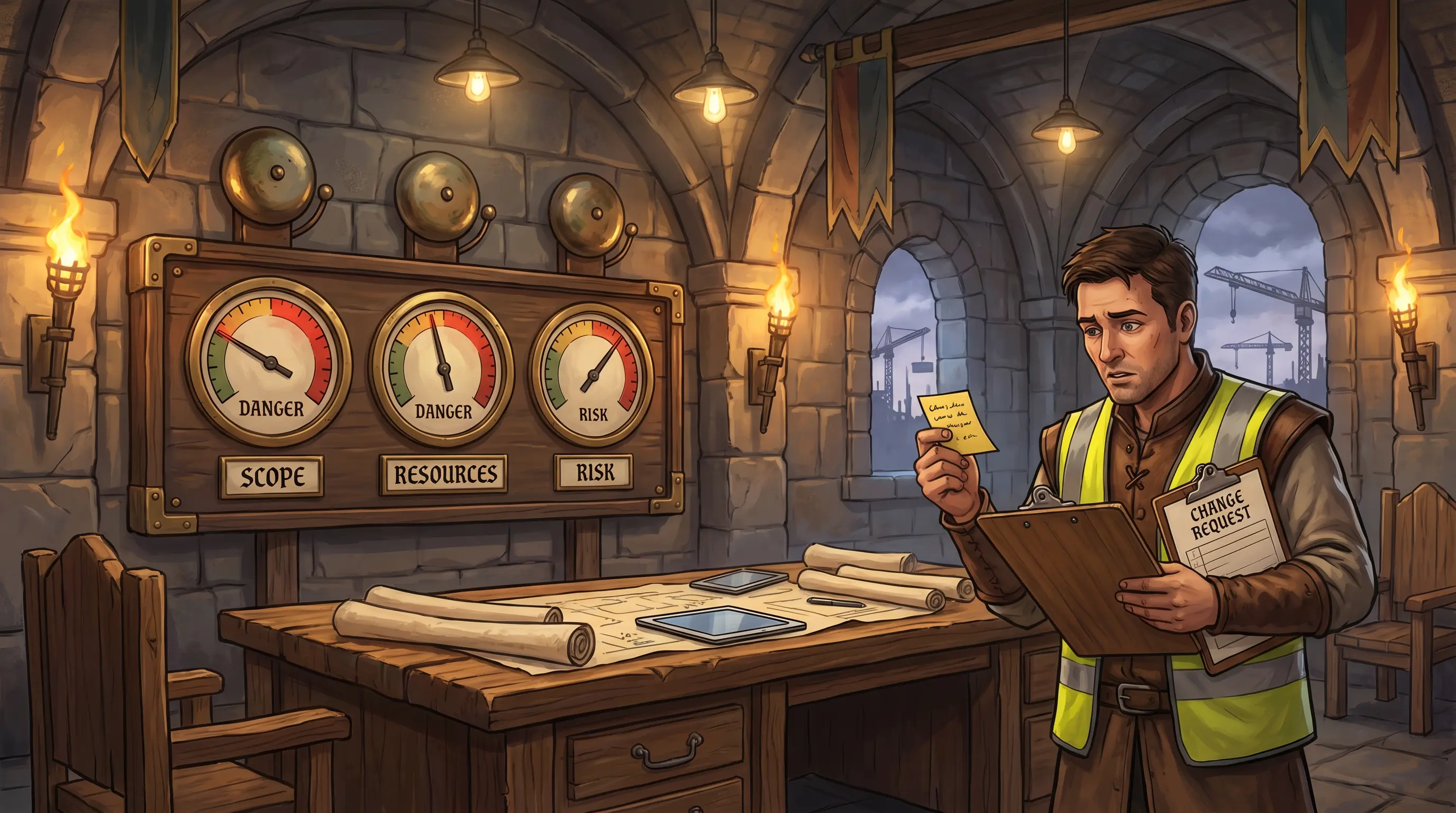
3 gauges in red = scope, resources, and risk all out of control. One verbal change triggered all three.
How it works

Project controlling and monitoring encompasses the ongoing oversight activities that keep a project aligned with its approved parameters. Three primary dimensions require continuous management. Scope management demands that any new requirement be formally documented — typically through a change request — reviewed, approved, and allocated resources before implementation; undocumented changes are a material control failure. Resource usage monitoring tracks actual spending, staffing, and effort against the approved project plan, identifying deviations early enough to correct them. Risk management applies to the project lifecycle continuously: as scope or environment changes, new risks emerge and must be assessed and mitigated. Effective change control integrates all three — a change request triggers scope evaluation, resource re-assessment, and risk analysis before approval.

🧠 Mnemonic
S·R·R — Scope, Resources, Risk
Every change must pass through three filters: Scope approval, Resource allocation, Risk assessment. Missing any one is a monitoring gap.
At a glance
📐

Scope Management

How is scope kept controlled?

  • Formal change request required
  • Documented and approved before work
  • Verbal additions = finding
  • Scope baseline maintained
💼

Resource Usage

How are resources tracked?

  • Actual vs. planned spending
  • Effort and staffing variances
  • Unplanned consumption flagged
  • Re-allocation needs approval
⚠️

Risk Management

How does risk connect to control?

  • Changes trigger risk re-assessment
  • New scope = new risks to evaluate
  • Risk register updated on changes
  • Unassessed risk = control gap
🔄

Change Control

How do the three integrate?

  • Change request initiates all three
  • Scope + resource + risk analyzed together
  • Change board approves holistically
  • ServiceNow / formal log required
Try yourself

A Meridian project is running 15% over budget. The PM says three new requirements were added verbally during build. There was no change request form, no resource re-allocation analysis, and no risk assessment for the additions. As the IS auditor, which three controlling dimensions were bypassed?

— Pause to recall —
All three: Scope management (no documented/approved change), Resource usage control (no resource re-allocation), and Risk management (no risk assessment for scope additions).

Project controlling and monitoring covers three dimensions. Scope management requires that new requirements be formally documented through a change request process and allocated appropriate resources before proceeding; verbal scope additions bypass this control. Resource usage monitoring tracks spending and effort against the approved plan; unplanned scope directly inflates resource consumption. Risk management requires that scope changes be assessed for new or elevated risks before acceptance. All three dimensions interact: an undocumented scope addition circumvents scope control, consumes unplanned resources, and introduces unassessed risk simultaneously. The IS auditor's finding covers all three failures.

Why this matters: Scope creep is the most commonly tested project control failure. The exam expects candidates to identify that verbal scope changes bypass scope control, resource control, AND risk management simultaneously — not just one dimension.
🎯
Exam tip

When an exam scenario mentions verbal scope additions or budget overruns from undocumented changes, the correct finding addresses all three control dimensions — scope, resource, and risk — not just one. Change control is the integration point for all three.

See also: 3.6 3.1.3 4.8.1
Section 3.1.13 Must-know

Project Closing

By the end of this card, you should be able to
Identify the key activities and questions that must be resolved during project closure, including system handover, outstanding issue assignment, and lessons learned documentation.
Scenario

Tom Reyes, Meridian's help desk lead, fields the fourth call this week about the payroll integration system. Each time he escalates to the original dev team — who are confused, since the project was 'closed' six months ago. Alex Chen checks the project file: no formal handover document, no outstanding issue log, no closure notification, and no lessons learned session was held. The project sponsor, Marcus Webb, insists the project is done — 'we had a go-live party.' Alex must identify which specific closure activities were skipped and explain why 'go-live' alone does not constitute project closure.

Project Closing
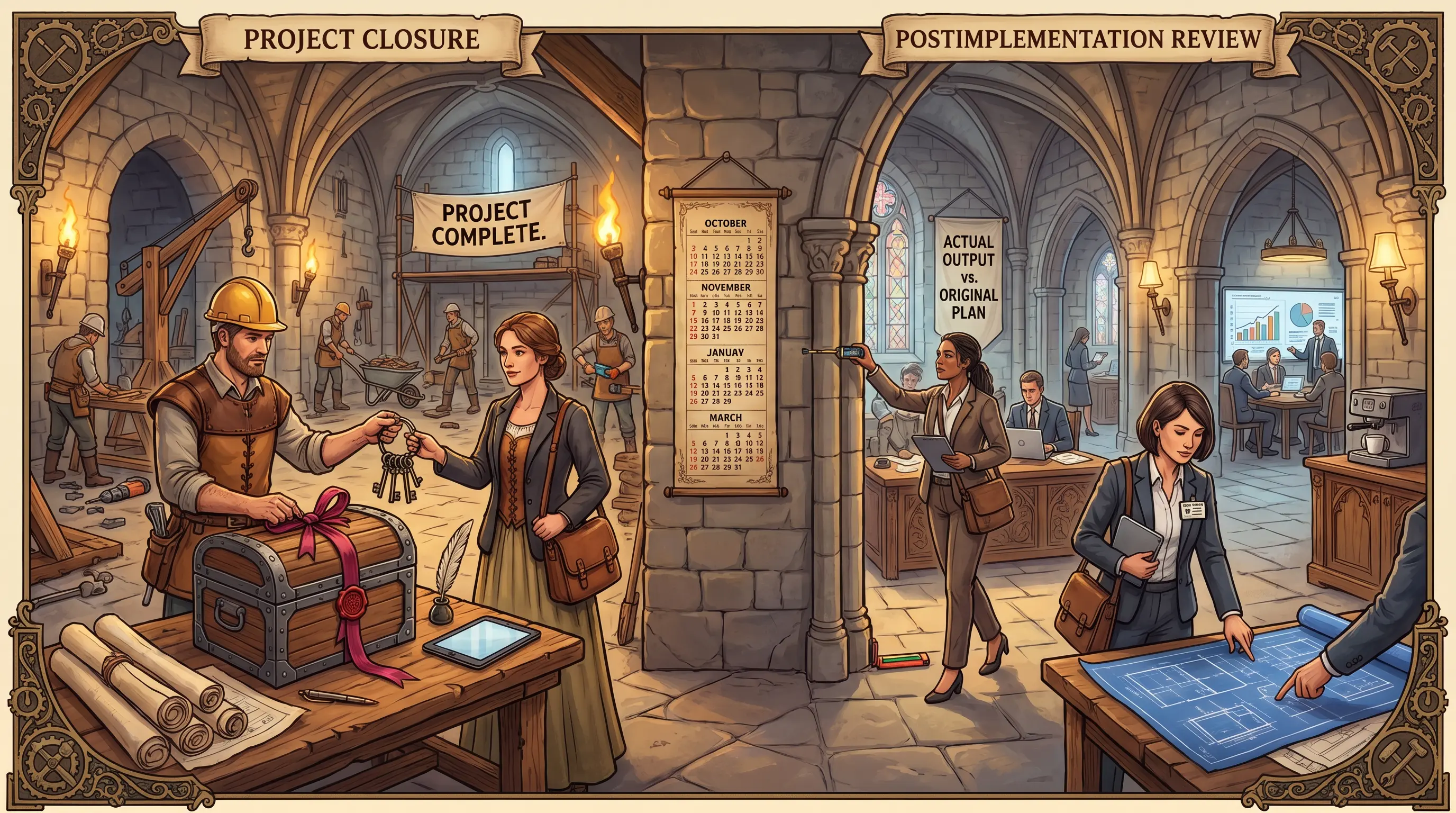
4 closing acts = complete project end. Skip any one and the project lives on as a zombie.
How it works

Project closing is a structured process that transitions a finished project into operational status. The project has a finite life, and at its end, the new or modified system must be formally handed over to users and operational support staff. Any open issues that exist at closure time must be documented and assigned to responsible owners — they cannot simply be abandoned. The project sponsor must confirm that the delivered system meets acceptance criteria before sign-off. The PM issues a formal project closure notification to signal the official end of the project and release of project resources. Finally, lessons learned must be captured to benefit future projects and avoid repeating mistakes. Without formal closure, the project enters an ambiguous state where accountability is unclear and development resources continue to be consumed informally.

🧠 Mnemonic
H-I-C-L
Handover the system, resolve and assign Issues, issue the Closure notification, document Lessons learned.
At a glance
🤝

System Handover

Who receives the system?

  • Users and/or support staff
  • Sponsor accepts delivery
  • Clear operational ownership
  • Training completed
📋

Issue Resolution

What happens to open items?

  • Outstanding issues documented
  • Assigned to named owners
  • Not left floating
  • Cannot abandon at closure
📣

Closure Notification

Who issues and when?

  • PM issues formal notification
  • Signals official project end
  • Resources formally released
  • Sponsor sign-off first
📚

Lessons Learned

Why document for the future?

  • Avoid repeating mistakes
  • Capture best practices
  • Input to future project charters
  • Governance maturity indicator
Try yourself

Meridian's payroll integration project 'completed' six months ago, but the original development team is still fixing issues and the system support staff were never formally handed the system. No closure notification was issued. As the IS auditor, identify the key closure activities that were skipped.

— Pause to recall —
System handover to support staff, resolution or assignment of outstanding issues, formal project closure notification, and lessons learned documentation — all were skipped.

Project closing requires a structured set of activities. The system must be formally handed over to users and/or support staff. Any outstanding issues must be assigned to appropriate owners, not left floating. The project sponsor must confirm the delivered system is acceptable before sign-off. A formal project closure notification must be issued by the PM. Lessons learned must be documented to improve future projects. Without these steps, projects enter a zombie state — technically 'done' but still consuming development team resources and lacking clear operational ownership.

Why this matters: The exam tests recognition that informal project endings create accountability gaps. If development teams are still supporting a system that should be in operations, that is a closure failure, not a support model decision.
🎯
Exam tip

If an exam scenario shows a development team still actively supporting a system after 'project close,' that is a closure failure — specifically missing formal handover. The correct finding is inadequate project closing procedures, not an operational support issue.

See also: 3.8 3.1.14 3.1.7
Section 3.1.14 Must-know

IS Auditor's Role in Project Management

By the end of this card, you should be able to
Describe the IS auditor's role during the systems development life cycle, distinguishing between the auditor's advisory function and independence requirements, and list the key tasks performed.
Scenario

Devon Park flags a ticket: the new customer onboarding portal has no audit trail for user data modifications. Alex Chen is two sprints into fieldwork. The lead developer asks Alex to recommend which specific access control framework to implement — they need a decision by end of day. Priya Rao is not available. Alex must decide: can the IS auditor provide this recommendation and still audit the portal's access controls after go-live, or does accepting the request create a permanent independence impairment?

IS Auditor's Role in Project Management
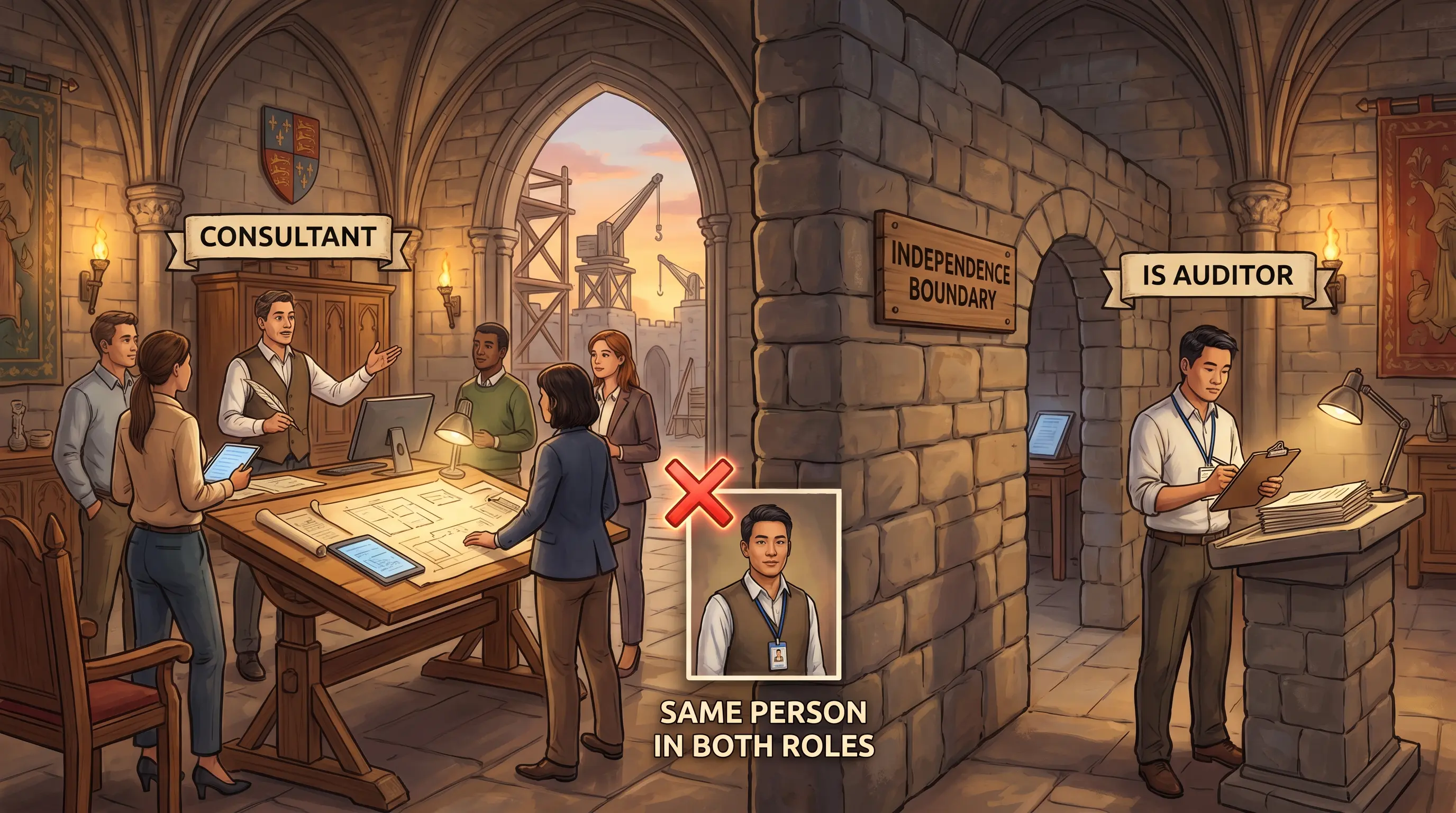
Auditor on the scaffold during construction — not waiting for the ribbon cutting. Flow: Identify control needs → Advise design → Monitor implementation → Report gaps. Advisory only; the builders decide.
How it works

The IS auditor plays an active role throughout the systems development life cycle, not only after a system goes live. This involvement allows the auditor to ensure controls are designed into a system before it is built, rather than retrofitted afterward. The auditor's tasks include: identifying components, objectives, and areas of control need; assessing risk and ranking exposures; consulting authoritative sources to identify mitigating controls; advising on control design and implementation; and monitoring deliverables through periodic documentation reviews. If deficiencies are found, the auditor advises the project team and escalates to senior management when required. A critical constraint is independence: the IS auditor advises but does not make control design decisions. Management retains accountability for implementing or rejecting the recommended controls. Post-implementation review remains an option but is not a substitute for engagement during development.

🧠 Mnemonic
I·A·C·M·R·V — "I Always Check My Reports Vigorously"
I = Identify control areas (meet teams, determine components and requirements); A = Assess risk and rank exposures; C = Consult authoritative references to identify mitigating controls; M = Monitor implementation via periodic documentation reviews; R = Report deficiencies to project team and senior management; V = Verify independence is maintained (auditor advises; management decides).
At a glance
🏗️

Why Involve Auditor Early

Why should the IS auditor engage during development?

  • Controls are cheaper to build in than retrofit
  • Vulnerabilities identified before go-live
  • Prevents control gaps reaching production
  • Aligns with ISACA engagement standards
📋

Key Auditor Tasks

What tasks does the IS auditor perform?

  • Meet development/user teams; identify control areas
  • Assess risk and rank exposures
  • Advise on control design (reference authoritative sources)
  • Periodically review docs; monitor control implementation
⚖️

Advisory vs. Accountability

Who is accountable for implementing controls?

  • Management / development team — not the auditor
  • Auditor advises; management decides
  • Auditor must maintain independence
  • Advisory role ≠ responsibility for design
🚨

Escalation Path

What does the auditor do if controls are missing?

  • Advise project team first
  • Escalate to senior management if unaddressed
  • Document deficiencies in workpapers
  • May recommend project pause or remediation plan
Try yourself

Meridian Corp is midway through building a new customer onboarding portal. The lead developer asks Alex Chen to recommend which specific access control framework to implement. If Alex provides that recommendation, what independence problem does it create for the subsequent audit?

— Pause to recall —
A self-review threat: Alex cannot objectively audit a control Alex helped specify, violating auditor independence under CISA ethics and ISACA Standards 1001–1005. Advising on which framework to implement crosses from advisory into design, creating a permanent independence impairment for that control area.

An IS auditor's role in a project is active and ongoing. Tasks include: meeting with development and user teams to determine system components, objectives, and areas requiring controls; discussing risk and exposures to determine and rank required controls; referencing authoritative sources to identify appropriate controls; evaluating available controls and advising on system design and control implementation; and periodically reviewing documentation and deliverables to monitor whether controls are being implemented as planned. If controls are lacking or the process is disorderly, the auditor advises the project team and senior management. Importantly, the IS auditor must maintain independence — advisory input does not make the auditor responsible for control design decisions.

Why this matters: CISA exams test the distinction between the IS auditor's advisory role and the development team's accountability. The auditor does not design or implement controls; that is management's responsibility. Involvement during development is preferred over post-implementation audit only.
🎯
Exam tip

The most common wrong answer presents the IS auditor as waiting until after implementation to assess controls. CISA expects the auditor to engage during development. A second trap: answering that the auditor 'designs' or 'implements' controls — the auditor advises only. Management retains full accountability. If a question asks when the IS auditor adds the most value, the answer is during development (not during testing or post-go-live).

See also: 3.3.4 3.8.1 1.4.1
Section 3.2 Must-know

Business Case and Feasibility

By the end of this card, you should be able to
Evaluate whether a proposed IT investment justifies its cost by checking the four feasibility dimensions and the quality of the business case.
Scenario

Kenji Tanaka, the project sponsor, fills three emails to Marcus Webb with enthusiasm for the customer analytics platform, and Marcus countersigns with 'approved.' Alex Chen opens the project file at fieldwork: no feasibility study, no economic model, no technical assessment, no operational readiness check, and no legal review for the data-sharing provisions the platform requires. The platform is already live. Eighteen months later the data-sharing restriction surfaces. Alex is asked to determine which feasibility dimension, if assessed, would most clearly have prevented this outcome.

Business Case and Feasibility
4 pillars = 4 feasibility tests. One cracked pillar (Legal) collapses the whole business case.
How it works

Before any significant IT investment, the organization should complete a feasibility study with four independent dimensions. Economic feasibility evaluates whether the investment's financial returns justify the spend through cost-benefit analysis, ROI, NPV, and payback calculations. Technical feasibility confirms that the necessary technology and staff capabilities exist to deliver and sustain the system. Operational feasibility assesses whether users will actually adopt and use the system as intended, including change management and training considerations. Legal feasibility verifies compliance with applicable regulations, licensing terms, privacy requirements, and contractual obligations. The output of this process is a formal business case — a written, executive-signed document summarizing all four dimensions. From an IS auditor's perspective, the absence of any feasibility dimension or the business case document itself is a material control gap.

🧠 Mnemonic
E·T·O·L
Every Thing Operates Legally — the four feasibility dimensions in order: Economic, Technical, Operational, Legal.
At a glance
💰

Economic

Can we afford it and will it pay back?

  • Cost-benefit analysis
  • ROI / NPV / IRR
  • Total cost of ownership
  • Payback period
⚙️

Technical

Can we build and sustain it?

  • Technology readiness
  • Staff skills and capacity
  • Infrastructure compatibility
  • Integration complexity
👥

Operational

Will people actually use it?

  • User acceptance likelihood
  • Process change impact
  • Training requirements
  • Organizational readiness
⚖️

Legal

Will it comply with all obligations?

  • Regulatory compliance
  • Licensing requirements
  • Privacy and data protection
  • Contractual obligations
Try yourself

Meridian's Sales VP endorsed a $1.4M customer analytics platform via email, and Marcus Webb countersigned. No formal study was performed. Eighteen months post-launch, the platform is offline due to a data-sharing restriction Alex Chen identified during a retrospective audit. Which feasibility dimension was never assessed, and what would a complete feasibility study have required?

— Pause to recall —
Legal feasibility. A legal review of the platform's data-sharing provisions would have identified the regulatory restriction before launch and stopped the project or redesigned the data flows. The other three dimensions — Economic, Technical, and Operational — were also unassessed and each represents a separate reportable gap, but only a legal review would have directly caught the specific obligation that took the platform offline.

Legal feasibility is the dimension that would most clearly have prevented this outcome. Legal feasibility asks whether the project will comply with applicable regulations, licensing terms, privacy laws, and contractual obligations — including data-sharing provisions of exactly the kind that grounded Meridian's platform eighteen months after launch. Had a legal review been performed before approval, the data-sharing restriction would have surfaced as a blocking issue, giving the project team the opportunity to either redesign the data flows or halt the investment before significant spend was committed.

The remaining three dimensions were also absent and each constitutes a reportable control gap in its own right. Economic feasibility would have evaluated whether the financial returns justified the $1.4M spend through cost-benefit analysis, ROI, NPV, and payback calculations. Technical feasibility would have confirmed whether the required technology and staff capabilities existed to deliver and sustain the system. Operational feasibility would have assessed whether users would genuinely adopt the platform, including change management and training readiness. Each dimension can independently undermine a project's value, so the absence of any one is a material finding — but only the missing legal review was causally linked to the specific failure described.

Why this matters: A sponsor's enthusiasm is not a substitute for structured analysis. The CISA exam tests recognition that all four dimensions are required and that the absence of a signed business case before initiation is a material control gap.
🎯
Exam tip

Exam distractors usually omit Legal feasibility from the answer choices — always select the option that includes all four dimensions. The project sponsor (not the PM) is accountable for the business case. An executive endorsement email is not a business case.

📰Real World

Kodak engineer Steven Sasson invented the first self-contained digital camera internally in December 1975. Despite this head-start, Kodak's leadership repeatedly chose to prioritise film revenue over digital investment — a choice informed by internal analysis that correctly forecast digital's eventual dominance but recommended managing the transition rather than accelerating it. This strategic suppression of a disruptive technology contributed directly to Kodak's loss of market position and its Chapter 11 bankruptcy filing in January 2012. The case illustrates how organisational incentives can override accurate project feasibility analysis when legacy revenue is at risk.

See also: 3.2.1 3.3 1.3.6
Section 3.2.1 Must-know

IS Auditor's Role in Business Case

By the end of this card, you should be able to
Describe the IS auditor's specific responsibilities when reviewing a business case and feasibility study, including the tests of reasonableness and the implication of consistently missed ROI targets.
Scenario

Priya Rao spreads a five-year portfolio report on the conference table. Of eight IT projects with formal business cases, seven missed their ROI targets. The cases were professional-looking — detailed spreadsheets, risk sections, executive sign-offs. But benefit timelines were consistently too short and adoption rates consistently overstated. Alex Chen must decide: are these seven individual estimation failures, or is there a systemic flaw in how Meridian constructs its business cases?

IS Auditor's Role in Business Case
7 of 8 missed: the finding targets the process, not the projects. Pattern = systemic weakness.
How it works

The IS auditor's role in reviewing a business case goes beyond checking whether one exists. The auditor first evaluates the adequacy of the organization's business case development process — is it consistently applied, formally documented, and subject to independent review? Second, the auditor tests the reasonableness of the specific assumptions and projections within each business case: are benefit estimates grounded in evidence? are cost estimates complete? are timelines realistic? Third, the auditor tracks ROI outcomes across multiple projects over time. When an enterprise consistently fails to meet its projected ROI, the pattern signals a systemic weakness in the system development approach and project management discipline — a process-level finding that transcends any individual project. IS auditors should escalate repeated ROI misses to the appropriate governance body.

🧠 Mnemonic
P-A-T: Process, Assumptions, Track record
IS auditor checks: Process (is it applied consistently?), Assumptions (are they reasonable?), Track record (ROI pattern across projects).
At a glance
🔍

Process Adequacy

Is the process sound?

  • Consistent application enterprise-wide
  • Formally documented methodology
  • Independent review of cases
  • Applied before project initiation
⚖️

Reasonableness Test

Are the numbers credible?

  • Benefit estimates grounded in evidence
  • Cost estimates complete (incl. TCO)
  • Timelines realistic
  • Assumptions documented and defensible
📈

ROI Track Record

What does the pattern say?

  • Multiple missed ROI = systemic gap
  • Not just individual project failure
  • Signals weak SDLC approach
  • Audit finding at process level
Try yourself

An IS auditor at Meridian discovers that over five years, the bank has launched eight IT projects with formal business cases — and only one has met its projected ROI. The other seven are within 60–80% of projected returns. What should the IS auditor conclude about the business case process itself?

— Pause to recall —
Consistently missed ROI targets suggest a systemic weakness in the organization's approach to business case development and project management, not just individual project failures.

An IS auditor reviewing business cases does three things:

  1. evaluates whether the organization's process for developing business cases is adequate and consistently applied
  2. tests the reasonableness of assumptions and projections within specific business cases — are benefit estimates realistic? are costs complete?; and
  3. assesses the ROI track record across multiple projects

If an enterprise consistently fails to achieve its projected ROI, this is an indicator of weaknesses in the system development approach and project management practices, not just bad luck. The auditor should flag this pattern as a systemic finding, not simply note individual project shortfalls.

Why this matters: The CISA exam tests whether auditors look at patterns, not just individual cases. A single missed ROI is a project finding; a pattern of missed ROI is a process finding about the quality of the enterprise's business case framework.
🎯
Exam tip

If an exam scenario shows a pattern of missed ROI across multiple projects, the IS auditor finding targets the business case process and project management methodology — not just individual project management. Pattern recognition is the auditor's key skill here.

See also: 3.2 3.1.7 1.3.6
Section 3.3 Must-know

System Development Methodologies

By the end of this card, you should be able to
Explain what a systems development methodology is and why organizations adopt structured approaches to plan and control IS development.
Scenario

Alex Chen reviews the loan origination module project retrospective. The team had twelve developers, a six-month timeline, and no development methodology. Each developer interpreted requirements independently. No design review was scheduled. Testing was whatever each developer chose to run before committing code. The module launched with three critical defects that required an emergency rollback — two weeks of lost lending capacity. Alex must determine: what does the absence of a formal methodology explain about how these defects occurred, and is 'no methodology' itself a reportable audit finding?

System Development Methodologies
Left vs. right = chaos vs. control. A methodology creates the phases and gates that prevent production defects.
How it works

A systems development methodology is the structured framework an organization uses to plan and control how information systems are designed, built, tested, and deployed. Methodologies emerged because IT systems are complex and the costs of uncontrolled development — defects discovered in production, cost overruns, and failed deployments — are far higher than the cost of discipline during development. A methodology defines the phases of development, assigns responsibilities for each phase's deliverables, establishes quality checkpoints between phases, and provides consistent, repeatable practices across projects. Different methodologies — traditional waterfall, V-model, iterative, Agile — suit different contexts. IS auditors assess whether an organization has adopted a methodology appropriate to its project types, whether it is consistently applied, and whether it includes the controls necessary to detect problems before they reach production.

🧠 Mnemonic
WAVI
Waterfall → Agile → V-model → Iterative — the four SDLC methodology types. Each represents a different level of flexibility and control, from sequential (Waterfall) to adaptive (Agile).
At a glance
🏗️

What it is

What defines a methodology?

  • Structured framework for IS development
  • Defined phases and activities
  • Assigned responsibilities
  • Quality gates between phases
⚠️

Why it matters

What happens without one?

  • Inconsistent development practices
  • No control gates
  • Defects reach production
  • Governance gap finding
🔍

Auditor's View

What does the auditor assess?

  • Methodology exists and is documented
  • Appropriate for project complexity
  • Consistently applied across projects
  • Control points are functioning
📚

Common Types

What methodologies exist?

  • Traditional waterfall
  • V-shaped model
  • Iterative development
  • Agile frameworks
Try yourself

Meridian's development team built a new loan origination module without any documented methodology — developers worked from verbal requirements, no design review was held, and testing was informal. The module launched with critical defects. What does the absence of a systems development methodology explain about this outcome?

— Pause to recall —
Without a methodology, there is no structured plan to control IS development: no defined phases, no quality gates, no defined responsibilities, and no mechanism to catch errors before they reach production.

A systems development methodology is a structured framework that an organization uses to plan and control the development of information systems, software, and business applications. Methodologies exist because system complexity is high and the consequences of uncontrolled development — defects, cost overruns, and missed requirements — are severe. A methodology provides defined phases with documented activities, assigned responsibilities, expected outcomes, and quality gates between phases. Without one, each project team invents its own approach, which increases variability, reduces predictability, and eliminates the control points an IS auditor needs to assess. The absence of a methodology is itself a governance control gap.

Why this matters: The exam expects candidates to recognize that methodology selection is a governance decision, not a technical one. The IS auditor evaluates whether a methodology exists, is appropriate for the project type, and is actually followed.
🎯
Exam tip

The exam does not ask which methodology is 'best' — it asks whether an appropriate methodology was selected, documented, and followed. The IS auditor's finding when no methodology is present is a governance gap, not a technical recommendation.

📰Real World

On August 1, 2012, Knight Capital Group deployed a new equity trading algorithm without removing legacy code that had been dormant for years. The legacy code — triggered unintentionally by a configuration flag during the deployment — began executing erroneous trades at high speed. In 45 minutes, Knight accumulated a $440 million loss and was effectively insolvent by market close. The U.S. Securities and Exchange Commission's 2013 order found that Knight lacked adequate change management procedures: the deployment was not tested against the production environment, there was no automated check to confirm the legacy code was inactive on all eight servers, and one server was missed during the manual deployment. For IS auditors, Knight Capital illustrates the direct cost of bypassing SDLC controls — specifically, the absence of structured deployment procedures, environment parity testing, and a rollback mechanism. An organization claiming a development methodology provides no assurance unless the controls are demonstrably followed at each phase, including at deployment.

See also: 3.3.2 3.3.3 3.5
Section 3.3.1 Good-to-know

Business Application Development

By the end of this card, you should be able to
Distinguish between organization-centric and customer-centric business applications, describe the life cycle phases applicable to both, and identify the drivers that trigger new application development.
Scenario

Sarah Lin presents two new project charters to the steering committee. The first replaces Meridian's manual loan approval queue with an automated workflow system for internal credit analysts. The second gives retail customers a self-service loan application portal available 24/7. Devon Park asks: are these the same type of business application from an audit risk perspective? Alex Chen must classify each system and identify what audit risk dimension changes when the user population shifts from internal staff to external customers.

Business Application Development
2 bays = 2 application types. Customer-facing bay has more guards — higher external risk.
How it works

Business application development spans systems built to support internal operations and those built to serve external customers. Organization-centric applications focus on collecting, processing, and presenting data to help internal users perform business functions — examples include internal workflow tools, reporting systems, and core banking transaction engines. Customer-centric applications are built around direct external user interaction — customers transact, query, or manage their accounts through these systems. Both types share a common life cycle: each phase of development is an incremental step that establishes the foundation for the next, covering design, build, testing, deployment, maintenance, and eventual retirement. Business application development is triggered by problems in existing processes, new regulatory requirements, or the availability of technology that enables superior outcomes. IS auditors assess the control framework against the application type, recognizing that customer-facing systems carry higher external risk.
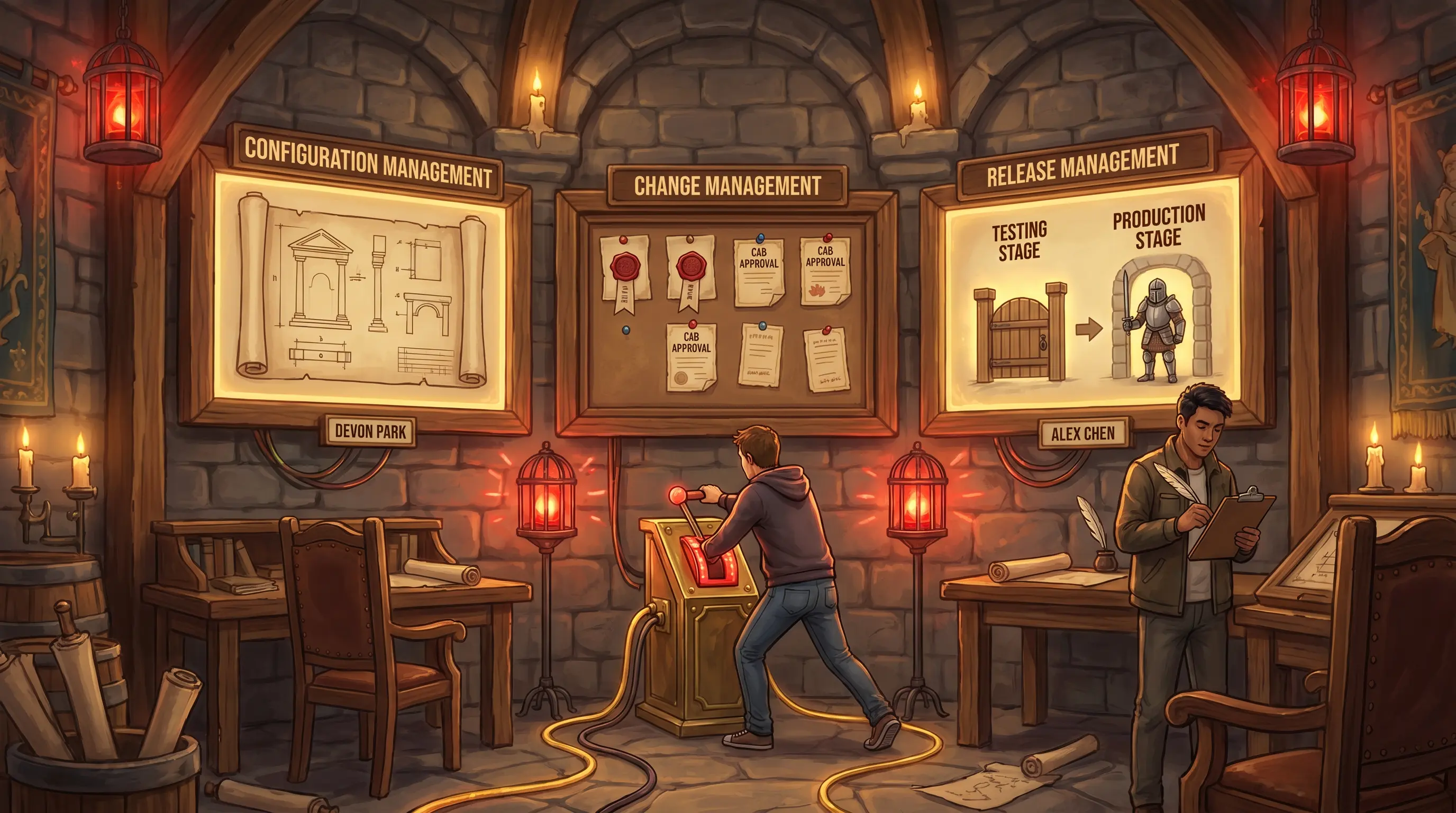
🧠 Mnemonic
O for Inside, C for Outside
Organization-centric = inside users. Customer-centric = outside (external) users. The risk model follows the user population.
At a glance
🏢

Organization-Centric

Who uses it and why?

  • Internal staff as users
  • Collects and processes internal data
  • Supports business functions
  • Examples: ERP, workflow tools
👤

Customer-Centric

Who uses it and why?

  • External customers as users
  • Direct customer interaction
  • Transaction and service delivery
  • Higher external risk exposure
🔄

Life Cycle Phases

What phases does both follow?

  • Design and requirements
  • Build and test
  • Deployment
  • Maintenance and retirement

Development Triggers

What initiates development?

  • Business problem to solve
  • Regulatory requirement
  • Process improvement opportunity
  • Technology-enabled capability
Try yourself

Meridian Corp is building two new systems: one automates internal loan processing workflows for bank staff, and one lets retail customers apply for loans online 24/7. What type of business application is each, and what audit risk difference does the external-facing system introduce?

— Pause to recall —
The internal workflow system is organization-centric (collects and processes data to support internal business functions). The customer-facing loan application is customer-centric (designed to serve external users and enable customer interaction).

Business application development covers systems built to manage organizational operations or to serve external customers. Organization-centric applications collect, process, and present data to support internal business functions — the goal is operational efficiency and data accuracy for internal users. Customer-centric applications are designed around the needs and experience of external users — customers interact directly with these systems to conduct transactions or access services. Both types follow a life cycle process with defined phases covering deployment, maintenance, and retirement, where each phase builds on the previous one. The development triggers — business problem, regulatory requirement, or process improvement opportunity — determine which type is appropriate.

Why this matters: The exam distinguishes application types to establish the user population, the risk profile, and the appropriate control framework. Customer-centric applications carry higher external exposure and typically require stronger input validation, access controls, and availability requirements.
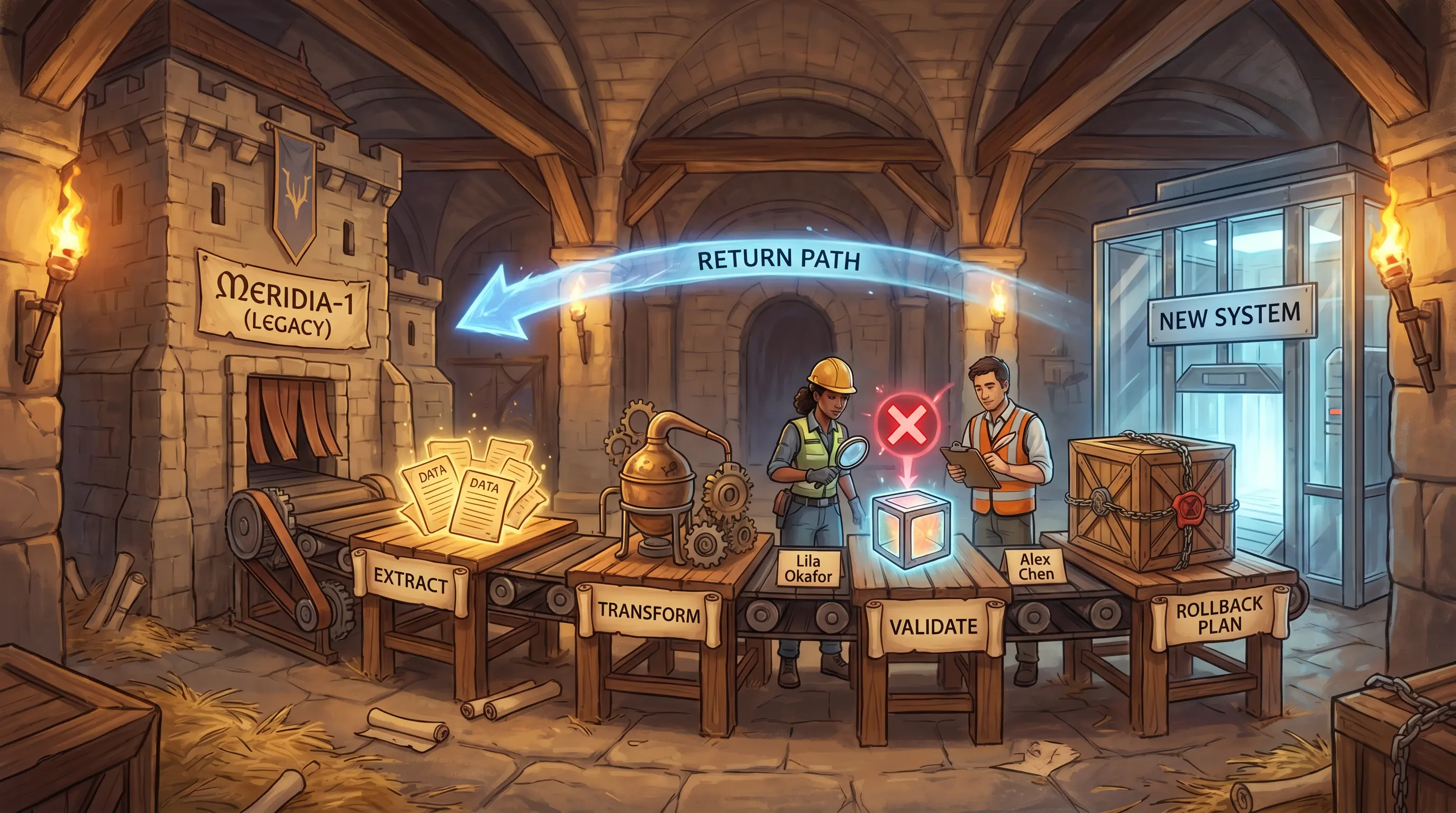
🎯
Exam tip

When an exam scenario describes an internet-facing system, the correct control framework assumes customer-centric risks: stronger input validation, higher availability requirements, and external threat exposure. An internal workflow system follows a different, typically lower-exposure control model.
See also: 3.3.3 3.4.1 5.4.11
Section 3.3.2 Must-know

SDLC Models

By the end of this card, you should be able to
Compare the traditional waterfall, V-shaped, and iterative SDLC models and identify which model is most appropriate given the project's requirement stability and risk tolerance.
Scenario

Priya Rao presents two project proposals to the development governance board. The first: a regulatory capital reporting system where requirements are set by Basel III — stable, documented, and fixed. The second: a mobile banking experience redesign where Meridian knows only that customers are dissatisfied. The board chair asks Alex Chen to recommend which SDLC model fits each project and explain the selection criterion that drives the choice.

SDLC Models
3 construction patterns = 3 SDLC models. Choose based on how stable the blueprint is before you start.
How it works

Several SDLC models provide different structures for organizing system development. The traditional waterfall model sequences development phases linearly — requirements, design, build, test, deploy — with each phase completed before advancing to the next. It suits projects with stable, well-defined requirements unlikely to change during development, because rework is expensive when discovered late. The V-shaped model is a waterfall variant that pairs each development phase with a corresponding test phase planned from the start, improving defect detection and reducing late-stage surprises. The iterative model executes development in repeated cycles, each producing a working increment that stakeholders review. Feedback from each iteration refines the next, making this model suitable for projects with evolving or uncertain requirements. IS auditors assess whether the chosen model creates adequate control points, documentation gates, and traceability between requirements and tested deliverables.

🧠 Mnemonic
W-V-I: Waterfall, V-shape, Iterative
Stable requirements → Waterfall or V-shape. Evolving requirements → Iterative. The requirement stability question decides the model.
At a glance
⬇️

Waterfall

When does it work best?

  • Stable, fixed requirements
  • Sequential phases
  • Each phase complete before next
  • Oldest and most common model

V-Shaped

What does it add over waterfall?

  • Corresponding test for each phase
  • Verification planned upfront
  • Reduces late-stage defects
  • Waterfall variant
🔄

Iterative

When does it work best?

  • Evolving or uncertain requirements
  • Working increment each cycle
  • User feedback drives next cycle
  • Prototype and innovation projects
🔍

Model Selection

How does the auditor evaluate the choice?

  • Requirements stability assessment
  • Risk tolerance of the organization
  • Documentation and control gates
  • Traceability requirements
Try yourself

Meridian is choosing an SDLC model for two projects: (1) a regulatory reporting system with fully defined, stable requirements that cannot change; (2) a customer experience prototype where requirements will evolve as users provide feedback. Which model fits each project, and why?

— Pause to recall —
Waterfall (or V-shaped) fits the stable regulatory system — requirements are fixed and sequential phases work best. Iterative fits the customer experience prototype — evolving requirements benefit from repeated cycles of build-feedback-refine.

The waterfall model executes SDLC phases sequentially, with each phase completed before the next begins. It works best when requirements are stable and unlikely to change — making it suitable for regulatory or compliance systems with fixed specifications. The V-shaped model is a waterfall variant that adds a verification-first orientation: each development phase has a corresponding testing phase planned upfront, reducing defects discovered late. The iterative model works in cycles — each iteration produces a working increment that users can evaluate, and feedback drives the next cycle. This makes it best suited to projects where requirements will evolve or are not fully known upfront, such as prototypes or innovation-driven systems. IS auditors evaluate whether the selected model matches the project's requirement stability and organizational risk tolerance.

Why this matters: The exam tests model selection judgment, not memorization. The key question is always 'how stable are the requirements?' Stable = sequential model. Evolving = iterative model.
🎯
Exam tip

The exam key is requirement stability: stable → sequential model (waterfall or V-shape); changing → iterative. A distractor will suggest waterfall for a project with evolving requirements — this is incorrect and introduces a control risk.

See also: 3.3.3 3.3.5 3.3.4
Section 3.3.3 Must-know

SDLC Phases

By the end of this card, you should be able to
List the six phases of the traditional SDLC in order and state the primary activity and expected output of each phase.
Scenario

Marcus Webb approves a schedule compression for the core banking upgrade: skip one phase and go straight from requirements to coding. Three months later, Alex Chen reviews testing results — 47 defects, many traced to conflicting developer assumptions about architecture. The data migration module assumes a flat-file structure; the reporting module assumes a relational schema. Both assumptions are wrong in different directions. Alex must identify which phase was eliminated and what control it would have provided.

SDLC Phases
6 scaffold platforms = 6 SDLC phases, in order. An empty platform (skipped Design) means the build has no blueprint.
How it works

The traditional SDLC organizes system development into six sequential phases, each with defined activities, responsibilities, and outputs that serve as inputs to the next phase. Phase 1, Feasibility Study, determines whether the project should proceed based on economic, technical, operational, and legal viability. Phase 2, Requirements, gathers and documents what the system must do — the authoritative specification that all subsequent work traces back to. Phase 3, Design, translates requirements into technical architecture, database schemas, user interface specifications, and processing logic — the blueprint the development team will build from. Phase 4, Development, implements the design through programming and unit testing. Phase 5, Testing, verifies system functionality, integration, and compliance with requirements. Phase 6, Implementation, deploys the tested system to production following change control procedures. IS auditors use this phase structure to identify which controls should exist at each stage and to detect when phases were combined, skipped, or inadequately executed.

🧠 Mnemonic
F-R-D-D-T-I
Fran Runs Designs, Developers Test It. Feasibility, Requirements, Design, Development, Testing, Implementation — in sequence.
At a glance
🔍

Feasibility Study

Should the project proceed?

  • Economic/technical/operational/legal
  • Go/no-go decision gate
  • Business case output
  • Phase 1
📋

Requirements

What must the system do?

  • User and system requirements
  • Requirements specification document
  • Traceability baseline
  • Phase 2
📐

Design

How will it be built?

  • Technical architecture
  • Database and UI design
  • Processing specifications
  • Phase 3 — blueprint
🔨

Development → Testing → Implementation

What are the final three phases?

  • Dev: Build per design specs (Phase 4)
  • Testing: Verify against requirements (Phase 5)
  • Implementation: Deploy via change control (Phase 6)
  • Each phase = a control checkpoint
Try yourself

Meridian's core banking upgrade jumped from requirements directly to coding to save schedule time. Three months later, 47 defects are traced to developers making independent design decisions. Which SDLC phase was skipped, and what specific control does it provide that prevents this type of defect?

— Pause to recall —
The Design phase was skipped. It translates requirements into technical architecture and specifications — the blueprint for coding. Skipping it means developers interpret requirements individually, producing inconsistent code and undetectable scope drift.

The traditional SDLC has six phases in sequence. Phase 1: Feasibility Study — determine strategic fit and economic, technical, operational, and legal viability. Phase 2: Requirements — gather and document what the system must do, producing the requirements specification. Phase 3: Design — translate requirements into technical architecture, database design, screen layouts, and processing specifications; the blueprint that guides coding. Phase 4: Development/Programming — build the system according to the design specifications. Phase 5: Testing — verify that the system functions as specified and meets requirements. Phase 6: Implementation — deploy the tested system into production according to change control procedures. Skipping the Design phase removes the control point that ensures developers are all building to the same blueprint.

Why this matters: The exam tests phase sequencing and phase purpose. Questions often present a scenario where a phase was skipped and ask for the risk consequence. Design skipped = inconsistent development. Testing skipped = unvalidated production deployment.
🎯
Exam tip

Phase sequencing questions are common. If an exam scenario skips Design, the risk is inconsistent development. If Testing is skipped, unvalidated code enters production. If Implementation bypasses change control, unauthorized changes enter production. Each phase skip has a specific risk consequence.

See also: 3.3.2 3.5 3.3.4
Section 3.3.4 Must-know

IS Auditor's Role in SDLC Project

By the end of this card, you should be able to
Describe what an IS auditor does at each SDLC phase and explain why the auditor must remain independent when later conducting a postimplementation review.
Scenario

Janet Holloway calls Alex Chen into his office. The payment system project team has asked for an IS auditor to join their design sessions and recommend specific controls. Alex is available and enthusiastic about the assignment. Before Alex accepts, Janet raises a question: if Alex participates in designing the controls now, what happens to the independence of Alex's subsequent audit of those controls at go-live? Alex must determine whether accepting the design assignment is permissible.

IS Auditor's Role in SDLC Project
Two separate roles: Advisor designs, Auditor reviews. Cross the wall = lose independence forever.
How it works

An IS auditor participates in SDLC projects by analyzing the risks inherent in each development phase and verifying that cost-effective controls are in place to mitigate those risks. The auditor obtains and reviews documentation at each phase gate — requirements, design specifications, test plans, implementation procedures — to confirm that controls are functioning. A critical limitation governs this participation: the IS auditor must not design or recommend the controls being reviewed, because doing so creates a self-review threat. If an auditor consults with the project team during development, they cannot independently audit the completed system, because they would be evaluating their own recommendations. Additionally, IS auditors should avoid recommending controls whose administration cost exceeds the value of the risk they address — cost-effectiveness is a core audit principle. Maintaining independence throughout the SDLC engagement is not optional; it is a professional and ethical requirement.

🧠 Mnemonic
Review, Don't Design; Audit, Don't Advise
IS auditor in SDLC: Reviews risks and controls at each phase gate. Does NOT design controls (or loses independence). Does NOT advise during development (or cannot audit the result).
At a glance
⚠️

Risk Analysis per Phase

What does auditor analyze?

  • Inherent risks at each SDLC phase
  • Adequacy of controls to mitigate risks
  • Cost-effectiveness of controls
  • Phase documentation completeness
🔍

Phase Gate Review

What does auditor review?

  • Requirements specifications
  • Design documents
  • Test plans and results
  • Implementation procedures
🏛️

Independence Rule

What creates impairment?

  • Designing controls = self-review threat
  • Consulting on development = impairment
  • Cannot audit what you advised on
  • Independence is non-negotiable
💰

Cost-Effectiveness

What makes a control inappropriate?

  • Control cost > risk cost
  • Disproportionate overhead
  • Controls must not exceed the risk
  • Caution against over-controlling
Try yourself

Meridian asks its IS auditor to both consult on the design of controls for the new payment system and later audit the implementation. What is the problem with this arrangement?

— Pause to recall —
The auditor loses independence. An IS auditor who consults on control design cannot objectively audit the same work — this creates a self-review threat that violates audit independence.

Throughout an SDLC project, an IS auditor analyzes the risks inherent in each phase, evaluates whether cost-effective controls are in place, and reviews documentation at each phase gate. However, there are strict limits on the auditor's involvement. If an IS auditor consults with the project team during development — designing controls, reviewing designs, or making recommendations — they cannot later perform the postimplementation audit on that same system. This is because auditing your own recommendations creates a self-review threat that destroys objectivity. The auditor's value lies precisely in their independence from the development process. Recommending controls that cost more than the risk they mitigate is a separate failure — controls must be cost-effective.

Why this matters: Independence is one of the most-tested CISA exam concepts. Any scenario where an auditor reviewed, designed, or recommended something during development disqualifies that auditor from the subsequent audit of the same system.
🎯
Exam tip

If an exam scenario says an auditor 'assisted in designing controls' during development, that auditor cannot perform the postimplementation review. The correct answer always preserves independence by assigning a different auditor — or confirms that the consulting auditor is disqualified from the subsequent audit.

See also: 3.1.14 3.8.1 1.4.1
Section 3.3.5 Good-to-know

Software Development Methods

By the end of this card, you should be able to
Compare object-oriented, component-based, and Agile software development methods, and explain that method selection is independent of project organizational structure.
Scenario

Devon Park's development team uses two-week Agile sprints but codes primarily in object-oriented Java. A new team member argues at the planning meeting that switching to component-based development requires abandoning Agile. Alex Chen, sitting in as the audit observer, must evaluate: is the new team member's reasoning correct, and what distinction between organizational model and development method resolves the confusion?

Software Development Methods
2 boards = 2 independent choices. Any coding method pairs with any organizational model.
How it works

Software development methods describe the technical approach used to design and build software systems, distinct from how the project team organizes its work. Object-oriented development structures software as classes and objects that encapsulate data and behavior — promoting reuse, modularity, and easier maintenance. Component-based development assembles applications from pre-built, independently deployable components, accelerating delivery and ensuring consistency across systems. Agile development is an iterative, incremental approach that delivers working software in short cycles and adapts to changing requirements through continuous collaboration. A critical distinction: the selection of a software development method is generally independent of the project organizational model. An Agile project may use object-oriented, component-based, or procedural coding approaches. IS auditors assess whether the chosen development method is appropriate for the application's complexity, maintainability requirements, and team capabilities.

🧠 Mnemonic
Method ≠ Model
Development Method (how code is built: OO, component, Agile coding) is NOT the same as Organizational Model (how the project is run: waterfall, Agile sprints, matrix). Choose each independently.
At a glance
🧩

Object-Oriented

How is it structured?

  • Classes and objects
  • Encapsulates data and behavior
  • Promotes reuse
  • Modularity and easier maintenance
🔧

Component-Based

How is it built?

  • Pre-built reusable components
  • Assembled rather than built from scratch
  • Faster delivery
  • Consistent across systems
🔄

Agile

How does it adapt?

  • Iterative and incremental
  • Short delivery cycles (sprints)
  • Continuous stakeholder collaboration
  • Adapts to changing requirements

Method vs. Model

What is independent?

  • Development method ≠ org model
  • Agile sprints can use any coding method
  • Waterfall projects can be OO
  • IS auditor verifies appropriateness of both
Try yourself

Meridian's development team uses Agile sprints to organize their work. A business analyst argues that this means they must use an object-oriented programming approach. As the IS auditor, what is wrong with this reasoning?

— Pause to recall —
The selection of a software development method (OO, component-based, Agile) is independent of the project organizational model. Agile describes how work is organized; object-oriented describes how software is designed and coded. They are separate choices.

Software development methods describe how software is designed and constructed — distinct from how the project itself is organized. Object-oriented development builds systems from classes and objects that encapsulate data and behavior, enabling reuse and encapsulation. Component-based development assembles applications from pre-built, reusable components, reducing build time and increasing consistency. Agile is an iterative, incremental approach emphasizing collaboration, working software in short cycles, and adaptation to change. The key point: an Agile project can use object-oriented, component-based, or any other coding approach. The organizational model (Agile sprints, waterfall phases) and the development method (OO, components) are two separate, independently selected dimensions.

Why this matters: The CISA exam tests the distinction between project organizational structure and software development method. These are separate choices. Confusing them is a common error.
🎯
Exam tip

The exam often pairs Agile with object-oriented as if they are a required combination. They are not. Agile describes project execution cadence; OO describes code structure. Each is chosen independently based on different criteria.

See also: 3.3.2 3.3.3 3.3.6
Section 3.3.6 Good-to-know

System Development Tools and Productivity Aids

By the end of this card, you should be able to
Identify the primary system development tools — CASE, code generators, and 4GLs — and describe how each aids the development process and what risks each introduces.
Scenario

Lila Okafor shows Alex Chen the new development environment: a CASE tool that generates entity-relationship diagrams from database schemas, a code generator that produces boilerplate API handlers from those diagrams, and a 4GL reporting interface that business analysts use to query MERIDIA-1 directly. Alex asks who controls access to the 4GL. Lila admits any analyst can run any query. Alex must classify each productivity aid and identify the specific audit risk the unrestricted 4GL access represents.

System Development Tools and Productivity Aids
3 productivity benches, 3 different risks. The 4GL bench has no lock — that's the finding.
How it works

System development tools and productivity aids reduce the manual effort required to build, document, and test software. CASE (Computer-Aided Software Engineering) applications assist developers in collecting, organizing, and visualizing application, system, and program-level data — including requirements models, data flow diagrams, and entity-relationship diagrams. Code generators take structured specifications or models and automatically produce source code, reducing programming time and variability. Fourth-generation languages (4GLs) allow users to interact with systems using near-natural-language syntax, making database querying and report generation accessible to non-programmers. Each tool category introduces distinct audit risks. Generated code may contain errors that developers assume are correct and do not review. 4GLs can expose sensitive data if access to the query environment is not tightly controlled by role. IS auditors assess whether these tools are covered by access control policies, version management, and output quality review processes.

🧠 Mnemonic
CASE-CG-4GL: Collects, Codes, Queries
CASE Collects and organizes development artifacts. Code Generators auto-Code from models. 4GLs let users Query in near-English. Each carries its own control risk.
At a glance
🖥️

CASE Tools

What do CASE tools do?

  • Collect and organize dev artifacts
  • Model requirements and data flows
  • May generate code/documentation
  • Risk: model errors propagate to output
⚙️

Code Generators

What risk does auto-generation carry?

  • Produces code from specs/models
  • Reduces manual coding effort
  • Risk: generated code may have errors
  • Developers may not review output
💬

4GL

What is the key access risk?

  • Near-English query syntax
  • Non-programmers can query data
  • Productivity gain
  • Risk: unrestricted data access if uncontrolled
🔍

Audit Controls

What does the auditor check?

  • Access control to all tool environments
  • Version management of tool outputs
  • Review process for generated code
  • 4GL query authorization scope
Try yourself

Meridian's development team uses a visual design tool that automatically produces program code from their process diagrams, and a reporting tool that lets business analysts write queries in near-English syntax. What categories of productivity aid are these, and what audit risk does each carry?

— Pause to recall —
The diagram-to-code tool is a CASE tool or code generator. The near-English query tool is a 4GL. Both reduce manual coding effort but introduce risks: CASE/generator output may contain errors developers don't review; 4GL queries may bypass access controls if not governed.

System development productivity tools fall into three categories. CASE (Computer-Aided Software Engineering) tools assist in collecting, organizing, and presenting development artifacts — requirements, data models, process flows — and may generate code or documentation. Code generators take higher-level specifications or models and produce source code automatically, reducing manual coding effort but requiring auditors to verify the generated code's quality and completeness. Fourth-generation languages (4GLs) allow non-programmers to write queries, reports, or procedures in near-English syntax — improving productivity but creating risk if access to 4GL environments is not controlled, since users may access data beyond their authorization. All three tools should be evaluated for access control, version control, and output quality.

Why this matters: The exam tests understanding of these tools primarily from a risk and control perspective. 4GLs are the highest-risk in access control; code generators are the highest-risk for unreviewed output; CASE tools create risks in documentation completeness and model accuracy.
🎯
Exam tip

4GL access control is the most-tested point in this topic. If a scenario says business analysts or non-developers can run 4GL queries against production data without access restrictions, that is the finding — not the use of 4GL itself.

See also: 3.3.5 3.4.1 4.6.2
Section 3.3.7 Good-to-know

Infrastructure Development/Acquisition Practices

By the end of this card, you should be able to
Evaluate the criteria an organization must apply when selecting IT infrastructure architecture, and explain why a formal, reasoned selection process is required rather than a purely price-driven decision.
Scenario

Sarah Lin holds up a vendor quote for hyperconverged appliances, highlighted in green: cheapest per rack unit in the market. Alex Chen sits across from Devon Park and works through the selection checklist. Two of nine criteria fail. Sarah argues that the price savings justify accepting the gaps. Alex must determine what a formal selection process would require beyond price and articulate why a price-only decision is not adequate for infrastructure acquisition.

Infrastructure Development/Acquisition Practices
Nine criteria on the assessment table — price is only one column. Red seals = failed criteria. Formal analysis, not lowest-bid selection.
How it works

IT infrastructure acquisition decisions have consequences far beyond initial purchase price. They determine operational procedures, training requirements, installation complexity, and total cost of ownership for the life of the asset. Because enterprise requirements conflict — high availability, zero data loss, legacy hardware compatibility, services-based architecture, and location-independent secure access cannot all be optimized on a single platform simultaneously — a formal, reasoned selection process is required. The selection must evaluate alignment with enterprise standards, appropriate security and privacy controls, integration with existing systems, relevance to industry trends, operational flexibility for future business needs, capacity for projected growth, security architecture for information and storage, day-to-day cost-effectiveness, hardware and software standardization, and overall ROI, cost transparency, and operational efficiency. An IS auditor reviews whether this multi-criteria analysis was documented and approved before a procurement decision was made.

🧠 Mnemonic
T·O·F (Technical, Operational, Financial) — three facets, nine criteria. Top-3 sub-acronym: A·S·C (Alignment, Security, Cost-effectiveness).
Technical (3): Alignment with enterprise ICT standards; Security & privacy at appropriate levels; Integration with current IT systems. Operational (4): IT industry Trends; Future operational Flexibility for business processes; Growth capacity without major upgrades; Standardized hardware & software. Financial (2): Cost-effective day-to-day operations; Maximize ROI, cost transparency & operational efficiency. A·S·C shortcut — the 3 highest-exam-weight criteria: Alignment (enterprise standards), Security (& privacy), Cost-effectiveness (day-to-day operations and TCO).
At a glance
⚙️

Technical (T)

What technical criteria must be evaluated?

  • Alignment with enterprise ICT standards ★ (A)
  • Security and privacy at appropriate levels ★ (S)
  • Integration with current IT systems
[factory]

Operational (O)

What operational criteria matter?

  • Consider IT industry trends
  • Future operational flexibility for business processes
  • Growth capacity without major upgrades
  • Standardized hardware and software
[money]

Financial (F)

What financial criteria apply?

  • Cost-effective day-to-day operations ★ (C)
  • Maximize ROI, cost transparency, and operational efficiency
Try yourself

Meridian Corp's Sarah Lin wants to buy a hyperconverged infrastructure appliance based on the vendor's promotional pricing. Alex Chen is asked to evaluate the procurement approach. What criteria should a formal physical architecture selection process address that a price-only decision cannot?

— Pause to recall —
Infrastructure selection must address alignment, security/privacy, integration, industry trends, future flexibility, growth capacity, security architecture, cost-effective operations, hardware/software standardization, and ROI/cost transparency. Price alone is insufficient because conflicting requirements — such as availability, zero data loss, and legacy compatibility — mean no single platform satisfies all needs equally.

Physical architecture decisions are not merely economic — they determine operational procedures, training needs, installation approaches, and total cost of ownership (TCO) downstream. Conflicting requirements (high availability, zero data loss, legacy hardware compatibility, secure data access independent of location, services-based architecture) ensure no single platform excels on all dimensions. A formal, reasoned selection must evaluate: alignment with enterprise ICT standards; appropriate security and privacy levels; integration with current IT systems; consideration of IT industry trends; future operational flexibility for business processes; capacity for projected growth without major upgrades; information security and secure storage architecture; cost-effective day-to-day operations; standardized hardware and software; and maximized ROI, cost transparency, and operational efficiency.

Why this matters: CISA exams test that infrastructure acquisition requires a formal multi-criteria evaluation, not a price comparison. The exam also tests that TCO and downstream operational impact — not just acquisition cost — must factor into the decision.
🎯
Exam tip

Three priorities anchor exam questions on this topic: Alignment, Security, and TCO/cost-effectiveness (A·S·C) — these appear most frequently in CISA scenario questions and carry the highest exam weight. The other six (Integration, Trends, Flexibility, Growth, Standardization, ROI) are second-tier: know them but expect the exam to probe whether you can distinguish cost-effectiveness from ROI transparency, and whether you recognize that infrastructure selection must always use a formal multi-criteria process — never price alone. A common trap: selecting 'lowest cost' or 'best vendor reputation' as the primary criterion. Another trap: confusing acquisition cost with TCO — total cost of ownership includes operational support, training, upgrades, and integration. If a question describes a price-only decision, mark it as a control deficiency.

See also: 3.3.8 3.3.9 3.2
Section 3.3.8 Must-know

Hardware/Software Acquisition

By the end of this card, you should be able to
Describe the vendor selection process for hardware and software acquisitions, explain the role of the RFP/ITT, and identify the IS auditor's key evaluation points.
Scenario

Sarah Lin announces to the steering committee that she has selected a new firewall vendor — a firm she has worked with at her previous employer. No RFP was issued. No evaluation criteria were defined. No competing proposals were reviewed. Alex Chen is asked to assess whether the procurement was adequate. Meridian's policy requires an RFP and a minimum of three proposals for purchases above $50K. The firewall contract is $180K. Alex must identify which specific procurement controls were bypassed and determine whether a conflict-of-interest issue should also be reported.

Hardware/Software Acquisition
4 procurement stations = competitive control. The shortcut arrow bypasses all four — that's the finding.
How it works

Hardware and software acquisition should follow a structured procurement process that protects the organization from bias, overpricing, and technical mismatch. The process begins with defining detailed specifications that describe the usage, tasks, and technical requirements the equipment or software must fulfill. These specifications are distributed to potential vendors through a formal solicitation: a Request for Proposal (RFP) or Invitation to Tender (ITT). Vendors respond with proposals that are evaluated against pre-defined, weighted criteria covering technical capability, cost, vendor stability, and support quality. A selection committee reviews the scored proposals and documents its decision rationale. IS auditors verify that this process was followed — that requirements were formally defined, that competition was solicited, that selection was criterion-based and documented, and that the chosen vendor was evaluated independently without conflicts of interest.

🧠 Mnemonic
Define → Solicit → Evaluate → Select
Four steps: Define requirements → Solicit via RFP/ITT → Evaluate proposals against criteria → Select with documented rationale. Skipping any step is a procurement control failure.
At a glance
📋

Define Requirements

What must be documented first?

  • Usage, tasks, and technical requirements
  • As complete as possible
  • Forms basis for evaluation criteria
  • Prevents scope creep in evaluation
📤

Issue RFP/ITT

How are vendors solicited?

  • Request for Proposal (RFP)
  • Invitation to Tender (ITT)
  • Competitive solicitation required
  • Minimum vendors required by policy
⚖️

Evaluate Proposals

How are proposals assessed?

  • Pre-defined weighted criteria
  • Technical fit assessment
  • Cost and TCO analysis
  • Vendor reliability and support

Select Vendor

What makes selection valid?

  • Committee-based decision
  • Documented rationale
  • Conflicts of interest disclosed
  • Single-source requires justification
Try yourself

Meridian's IT team purchased a new network security appliance from a vendor without issuing an RFP or formally evaluating the vendor against defined criteria. The vendor was the CIO's personal preference. As the IS auditor, what procurement controls were bypassed?

— Pause to recall —
The team bypassed: specification of requirements, formal solicitation (RFP/ITT), structured proposal evaluation against criteria, and independent vendor selection. The CIO's personal preference replaced a controlled, documented process.

Hardware and software acquisition requires a structured procurement process. First, the project team develops detailed specifications defining usage, tasks, and requirements for the equipment or software needed. These are distributed to vendors through a Request for Proposal (RFP) or Invitation to Tender (ITT). Vendors submit proposals, which are evaluated against the pre-defined criteria — technical fit, cost, vendor reliability, support model. A selection committee reviews the proposals and makes a documented choice. When a CIO makes a solo selection based on personal preference, they bypass: specification rigor, competitive solicitation, structured evaluation, and documented decision-making. Each bypass is an audit finding because they eliminate the checks that protect against bias, overpricing, and technical mismatch.

Why this matters: Vendor selection is a procurement control area. The CISA exam tests whether candidates recognize that single-sourced, unevaluated acquisitions bypass competitive controls — and that the audit finding targets the process failure, not the product quality.
🎯
Exam tip

If an exam scenario describes a vendor selected without an RFP or based on a personal relationship, the correct finding targets the procurement process — not necessarily the selected product. The risk is bias and lack of competitive assurance, regardless of whether the product is technically sound.

See also: 3.3.9 3.3.7 3.2.1
Section 3.3.9 Must-know

System Software Acquisition

By the end of this card, you should be able to
Identify the key considerations for selecting system software and distinguish among the four acquisition cases available to an organization.
Scenario

Devon Park sends Alex Chen a one-page vendor quote for a fraud detection SaaS platform. Alex checks the project folder: no feasibility study, no compatibility assessment, no security evaluation. Priya Rao reviews the ten required selection criteria. 'SaaS is still a software acquisition,' she tells Alex. 'The process doesn't change just because someone else hosts it.' Alex must identify the four acquisition cases that should have been considered and determine which of the ten selection criteria the SaaS option failed.

System Software Acquisition
Four acquisition flasks — same evaluation checklist for all. The auditor checks all ten criteria rows, including the SaaS flask.
How it works

System software acquisition requires a structured decision process covering both business and technical dimensions. IT management must be aware of hardware and software capabilities that can improve business processes, and must maintain plans for migrating to newer, more effective systems over time. When selecting new system software, the feasibility study must address: business, functional, and technical needs; cost and benefits; obsolescence risk; compatibility with existing systems; security; demands on current staff; training and hiring requirements; future growth needs; performance impacts; and whether open-source or proprietary code is appropriate. Four acquisition cases exist: buying off-the-shelf software that requires no customization; buying vendor software and customizing it; contracting a vendor to develop software to specification; and subscribing to a cloud-based SaaS offering. SaaS is generally suitable for generic processes. Regardless of case, the feasibility study must document the rationale. SaaS is a form of outsourcing — the same outsourcing governance principles apply, including right-to-audit clauses, service delivery monitoring, and contractual data protection requirements. An IS auditor confirms this documentation exists and covers all required dimensions.

🧠 Mnemonic
OCDS
Off-the-shelf → Customized → Developed-to-spec → SaaS — the four system software acquisition cases.
At a glance
🛒

4 Acquisition Cases

What are the four software acquisition cases?

  • Off-the-shelf — generic, no customization
  • Vendor product customized to fit processes
  • Vendor develops software to specification
  • SaaS — cloud-delivered, generic processes
📋

Business & Technical Criteria

What selection criteria must be evaluated?

  • Business, functional, and technical needs
  • Cost and benefit analysis
  • Compatibility with existing systems
  • Open-source vs. proprietary code
⚠️

Risk Criteria

What risk factors must the study address?

  • Obsolescence risk
  • Security requirements
  • Demands on existing staff
  • Impact on system and network performance
🔍

Auditor Check

What does the IS auditor verify?

  • Feasibility study exists and is documented
  • All 10 criteria dimensions are addressed
  • SaaS deployments are not exempt from the study
  • IT management has migration plans for aging software
Try yourself

Meridian Corp needs a new fraud detection engine. The project team is debating between buying a vendor product as-is, buying one and customizing it, contracting the vendor to build something bespoke, or subscribing to a cloud service. Name the four system software acquisition cases and identify which one has the highest ongoing audit concern for data residency.

— Pause to recall —
Four cases: (1) off-the-shelf with no customization, (2) vendor product customized for the organization, (3) software developed by the vendor to spec, (4) SaaS cloud service. SaaS carries the highest ongoing audit concern for data residency because organizational data is transmitted to and stored on vendor infrastructure, potentially crossing geographic and jurisdictional borders where data sovereignty laws apply. The RFP must include explicit vendor security requirements covering data protection, confidentiality, integrity, and compliance with applicable laws and regulations.

System software selection requires analysis of both business and technical factors. The four acquisition cases are:

  1. off-the-shelf software for generic processes requiring no customization
  2. vendor software customized to fit specific business processes
  3. software fully developed by a vendor to the organization's specifications; and
  4. software delivered as a service via the cloud (SaaS), generally suited to generic processes

Of the four cases, SaaS carries the highest ongoing audit concern for data residency. In a SaaS deployment, organizational data is transmitted to and processed on vendor-managed infrastructure that may reside in multiple geographic locations. This exposes the organization to data sovereignty and residency risks: applicable laws and regulations may differ across jurisdictions, data may be subject to foreign government access, and contractual protections must explicitly address where data is stored and how it is protected. The CISA manual directly identifies vendor security requirements as most applicable to SaaS and notes that the RFP must require the vendor to demonstrate compliance with applicable laws, regulations, and contractual requirements — including confidentiality, integrity, and availability of enterprise data. The contract must also include data protection and compliance clauses and a right to ongoing audit. For the other three cases (off-the-shelf, customized, and vendor-developed), data typically remains within the organization's own infrastructure, limiting cross-border residency exposure. Selection criteria that the feasibility study must address include: business, functional, and technical needs; cost and benefits; obsolescence risk; compatibility with existing systems; security; demands on existing staff; training and hiring requirements; future growth needs; impact on system and network performance; and whether open-source or proprietary code is appropriate. IT management must also maintain short- and long-term plans for migrating to newer, more efficient operating systems.

Why this matters: The CISA exam tests that all selection decisions — including SaaS — require a documented feasibility study with multi-dimensional criteria. Candidates often forget obsolescence risk and open-source vs. proprietary as required evaluation criteria.
🎯
Exam tip

A common exam trap is treating SaaS as exempt from feasibility study requirements — it is not. The four cases differ in who builds and hosts the software, but the evaluation process is the same for all four. A second trap: selecting 'compatibility' as the only required criterion; CISA expects all ten dimensions including obsolescence and open-source/proprietary considerations. Wrong answers often describe approval based on cost alone or vendor reputation alone.

Section 3.4 Must-know

Control Identification and Design

By the end of this card, you should be able to
Explain the three control points in a business application — input, processing, output — and identify what types of evidence IS auditors use to verify each.
Scenario

Alex Chen reviews the monthly reconciliation for Meridian's loan portfolio. A $45,000 credit appears on an account with a negative principal balance — mathematically impossible. Alex traces backward through the I-P-O chain: the input edit rule had an off-by-one error and passed negative values; processing logic did not validate business rules for negative principals; the output reconciliation ran without a control total. Alex must identify at which control point the error should have been caught first and what evidence would confirm that control was operating.

Control Identification and Design
3 control stations = input, processing, output. A defect that passes all three means all three failed.
How it works

Control identification and design for business applications focuses on three sequential control points through which data flows: input, processing, and output. Input controls are the first line of defense, ensuring that only authorized, complete, accurate, and valid data enters the system. They include edit tests that check field format and range, completeness checks that flag missing required fields, and authorization checks that verify the source of input. Processing controls govern how the system transforms input data into results, using mechanisms like batch totals, run-to-run reconciliation, and exception reports to detect errors introduced during computation. Output controls ensure that the results delivered to users are correctly formatted, complete, and securely delivered. IS auditors verify the existence and operation of controls at all three points by examining reports, transaction logs, exception records, and audit trails — the physical evidence that controls are functioning as designed.

🧠 Mnemonic
I-P-O: In, Process, Out
Three control points in sequence: Input (valid data in), Processing (correct transformation), Output (accurate results out). Evidence at each: logs, totals, reports.
At a glance
📥

Input Controls

What enters the system correctly?

  • Edit tests (format, range, type)
  • Completeness checks
  • Authorization verification
  • Duplicate detection
⚙️

Processing Controls

What ensures correct transformation?

  • Batch totals and run-to-run checks
  • Business rule validation
  • Exception reporting
  • Reconciliation during processing
📤

Output Controls

What ensures correct delivery?

  • Output reconciliation
  • Report review and sign-off
  • Secure and formatted delivery
  • Distribution controls
🔍

Auditor Evidence

How does auditor verify each layer?

  • Reports and system logs
  • Exception reports
  • Audit trails
  • Reconciliation records
Try yourself

Meridian's loan origination system allowed a payment record with a negative principal balance to pass through all three control layers and generate a borrower credit. As the IS auditor, which of the three control points should have caught this error, and what type of evidence would confirm each was operating?

— Pause to recall —
Input controls (edit check/validation on principal balance field) should have caught it at entry. Processing controls (business logic validation) should have caught it during calculation. Output controls (reconciliation/report review) should have caught it before delivery. Evidence: reports, logs, and audit trails for each layer.

Control identification in business applications covers three sequential control points. Input controls ensure that only authorized, complete, accurate, and valid data enters the system — through edit tests, validation rules, and completeness checks. Processing controls ensure that the system's logic correctly transforms input data — through batch totals, reconciliation, and exception reporting. Output controls ensure that the results delivered to users are accurate, complete, and properly secured. IS auditors verify each layer using documentary evidence: reports generated by the system, transaction logs, exception reports, reconciliation records, and audit trails. The combination of all three creates a layered defense — if input controls fail, processing controls serve as a second line, and output controls as a third.

Why this matters: The exam uses scenarios where errors propagate through all three layers, expecting candidates to identify which layer should have caught the error and what evidence should exist to prove control operation.
🎯
Exam tip

When an exam question asks where a data error should have been caught, trace the error through all three layers: input (was it a validation failure?), processing (did logic fail to check business rules?), output (was reconciliation skipped?). The finding belongs at the first layer that failed.

See also: 3.4.1 3.4.2 3.5.3
Section 3.4.1 Must-know

Application Controls

By the end of this card, you should be able to
Define application controls and identify the types of controls covering input, processing, and output functions, with emphasis on batch totaling and exception handling.
Scenario

Tom Reyes flags an alert in Meridian's wire transfer system: the opening batch total of 2,000 wires totaling $4.2M does not match the closing total after processing — it reads $4,188,000. Tom calls Lila Okafor. Lila must identify what application control generated this alert, which of the four application control types it represents, and what the batch total discrepancy requires the operations team to do next.

Application Controls
Gate DOWN = batch rejected. A total mismatch means investigate before anything proceeds.
How it works

Application controls are automated and manual controls embedded within application systems to ensure the authorization, accuracy, and completeness of data throughout input, processing, and output. Edit tests validate individual data fields at entry — checking format, type, length, and permissible ranges, and rejecting records that fail validation. Batch totals provide a control mechanism for high-volume processing: a control total (record count, financial sum, or hash value) is computed on input data before processing and compared to the output total after processing; any discrepancy indicates a problem requiring investigation before the batch can proceed. Reconciliations compare control totals across related systems or time points to detect accumulated errors. Exception reporting flags records outside defined parameters for separate human review and disposition. Automated controls reduce reliance on manual review but must themselves be subject to change management — any change to an automated control is a significant audit event.

🧠 Mnemonic
E-B-R-E: Every Batch Requires Examination
Edit tests, Batch totals, Reconciliations, Exception reporting — the four core application control types. A batch total discrepancy requires examination before any correction.
At a glance
✏️

Edit Tests

What do they validate?

  • Field format and data type
  • Range and reasonableness checks
  • Mandatory field completeness
  • At input time — first gate
🔢

Batch Totals

What is the correct response to a discrepancy?

  • Compare pre- vs. post-processing totals
  • Record count, financial total, hash total
  • Discrepancy → reject and investigate
  • Never correct without investigation
🔄

Reconciliations

What do they compare?

  • Related control totals across systems
  • Same data at different time points
  • Subsidiary ledger vs. control account
  • Periodic reconciliation required
⚠️

Exception Reporting

What triggers an exception?

  • Record falls outside defined parameters
  • Flagged for separate human review
  • Must be investigated not ignored
  • Exception log is audit evidence
Try yourself

Meridian processes 2,000 daily wire transfer records in a batch. Before processing, a total of all transfer amounts is computed. After processing, a second total differs by $12,000. What application control just detected the discrepancy, and what category of application control does it belong to?

— Pause to recall —
A batch total (hash total or financial total) detected the discrepancy. The batch must be rejected, not corrected — processing continues only after the source of the discrepancy is identified and authorized.

Application controls govern input, processing, and output functions to ensure only complete, accurate, and valid data is processed. Edit tests check individual fields for format, range, type, and validity at input time. Batch totals compare aggregate values (record counts, financial totals) computed before and after processing to detect any loss, duplication, or corruption during the run. When a batch total discrepancy is found, the batch is flagged and held — not corrected by the operator — until the source is identified and an authorized resolution is applied. Reconciliations compare related control totals across systems or time periods. Exception reporting identifies and flags records that fall outside defined parameters for separate review.

Why this matters: Batch totals are a foundational application control. The exam tests the correct response to a batch total discrepancy: reject and investigate, never correct and continue. Any correction without investigation is a control override.
🎯
Exam tip

When an exam scenario describes a batch total discrepancy, the correct auditor response is always 'reject the batch and investigate' — never 'correct and reprocess.' Any scenario where an operator corrects a batch total discrepancy without investigation is a control failure.

See also: 3.4 3.4.2 3.5.3
Section 3.4.2 Must-know

Output Controls

By the end of this card, you should be able to
Identify the key output control mechanisms — secure form logging, report balancing, distribution controls, and report retention — and explain what each protects.
Scenario

Alex Chen walks the floor of Meridian's accounts payable area during a physical walkthrough. Blank check stock sits in an unlocked tray on the shared printer in an open office. Three accounts payable clerks printed checks today — no log was completed. The afternoon distribution pile includes check runs mixed with routine reports, delivered to desks without a signature requirement. At the end of the day, unused check stock is placed in a standard recycling bin. Alex must identify four distinct output control failures present in this walkthrough and name the control each failure represents.

Output Controls
4 output stations = secure, balanced, authorized, disposed. Any station skipped creates a vulnerability.
How it works

Output controls provide assurance that data delivered to users is presented accurately, distributed to authorized recipients, and handled securely throughout its lifecycle. Negotiable, sensitive, or critical forms — including blank checks, certificates, and regulated documents — must be logged in a form log, stored in a secured location, and regularly reconciled against on-hand inventory; discrepancies must be investigated immediately. Report balancing compares output report totals against control totals established during processing to verify accuracy before distribution. Distribution controls ensure outputs reach only intended, authorized recipients — tracked by name or identification code, often with signature confirmation. Retention controls define how long output records must be kept and in what format. Disposal controls require that sensitive outputs be destroyed securely — shredded or incinerated — rather than placed in general recycling. IS auditors verify all four mechanisms as part of output control testing.

🧠 Mnemonic
S-B-D-R: Secure, Balance, Distribute, Retain
Output controls: Secure forms (log and lock), Balance reports (compare to control totals), Distribute to authorized recipients only, Retain per policy and Dispose securely.
At a glance
🔒

Secure Form Logging

What makes negotiable forms safe?

  • Form log completed for each use
  • Stored in locked/secured location
  • Regular inventory reconciliation
  • Discrepancies investigated immediately
⚖️

Report Balancing

How is report accuracy verified?

  • Output totals vs. control totals
  • Compared before distribution
  • Discrepancy stops distribution
  • Confirms processing integrity
📬

Distribution Controls

Who receives outputs?

  • Authorized recipients only
  • Tracked by name/ID
  • Signature confirmation where needed
  • Misdistribution = security breach
🗑️

Retention and Disposal

How are outputs handled at end-of-life?

  • Retention periods per policy
  • Secure destruction (shredding)
  • Not recycled or discarded openly
  • Disposal log for sensitive items
Try yourself

Meridian's accounts payable team prints blank check stock on a shared printer. The printer is in an open office. Checks are distributed via internal mail without tracking. After printing, check stock is recycled in a standard bin. As the IS auditor, identify four output control failures.

— Pause to recall —
Four failures: (1) Negotiable forms not logged and secured (check stock accessible), (2) No distribution controls (untracked internal mail), (3) No secure storage of unused stock, (4) Improper disposal (recycling without destruction).

Output controls provide assurance that system outputs — particularly sensitive, negotiable, or critical items — are presented, formatted, distributed, and disposed of correctly. Negotiable forms like blank checks must be logged in a form log, stored in a secure location, and reconciled regularly against inventory. Reports must be balanced against known control totals before distribution. Distribution must ensure outputs reach only authorized recipients — tracking by name, employee ID, or other identifier. Sensitive outputs must be disposed of properly — shredded, not recycled. Each control failure in the scenario is independently reportable.

Why this matters: Output controls are the final line of defense after data has been processed. The exam tests specific output control types, especially around negotiable documents. Blank check stock is the classic high-risk output.
🎯
Exam tip

Blank check stock is the highest-risk output control scenario on the exam. Any finding that involves unlogged, unsecured, or improperly disposed check stock is a material control gap. The form log and locked storage are both required — either one missing is a reportable finding.

See also: 3.4 3.4.1 3.5.5
Section 3.5 Must-know

System Readiness and Implementation Testing

By the end of this card, you should be able to
Explain the purpose of implementation testing, describe what must be in place before testing begins, and identify what testing provides to project stakeholders.
Scenario

Two days before the customer portal goes live, Alex Chen asks to review the test documentation. The project manager hands over a folder with 14 handwritten test cases — no test IDs, no requirement references, no sign-off signatures. The portal has 340 documented requirements. Alex asks which requirements were tested. Silence. The project manager insists testing was 'real.' Alex must determine which three testing prerequisites are absent and whether the testing that did occur is auditable.

System Readiness and Implementation Testing
3 prerequisites before the gate opens. One empty box = implementation testing not valid.
How it works

Implementation testing is integral to ensuring that a system works as intended before it enters production. Three prerequisites must be in place before testing begins. First, a testing methodology appropriate to the system's type, complexity, and risk must be selected and documented. Second, test plans must be developed that are fully traceable to requirements — each test case must reference the requirement it validates, creating evidence that all requirements have been tested and that testing coverage is complete. Traceable to requirements means traceable to the requirements specification document produced in the SDLC requirements phase — not to general business intent. Third, all resources required to execute testing must be in place: competent test staff, representative test environments, controlled test data, and adequate tooling. Completed testing provides stakeholders with evidence-based confidence that the system operates as specified and that the benefits promised in the business case can be achieved. Without proper testing prerequisites, what passes for 'testing' is activity without assurance.

🧠 Mnemonic
M-T-R: Method, Traceable plans, Resources
Testing prerequisites: Method selected → Test plans Traceable to requirements → Resources in place. All three before a single test runs.
At a glance
📐

Testing Methodology

What must be chosen first?

  • Appropriate to system type and risk
  • Selected early in SDLC
  • Documented and approved
  • Drives test plan structure
🔗

Requirements Traceability

Why must tests trace to requirements?

  • Every requirement must be tested
  • Every test references a requirement
  • Gaps in traceability = untested requirements
  • IS auditor's key evidence check
🧰

Essential Resources

What resources must be in place?

  • Skilled testing staff
  • Representative test environment
  • Controlled test data
  • Adequate tools and time

Outcome

What does testing provide?

  • Evidence-based stakeholder confidence
  • System operates as specified
  • Benefits realization is achievable
  • Production gate is justified
Try yourself

Meridian's new customer portal is about to launch. The project manager reports that testing was completed, but the IS auditor cannot find a test plan, cannot trace any test case to a requirement, and the testing team was assembled two days before launch. What three implementation testing prerequisites are missing?

— Pause to recall —
Three prerequisites missing: (1) A documented testing methodology selected early in the SDLC, (2) Test plans fully traceable to requirements, (3) Essential resources — including a competent, adequately sized testing team — acquired in time.

Implementation testing has three prerequisites before execution begins. First, an appropriate testing methodology must be selected — the choice depends on the system type, risk level, and project approach. Second, test plans must be developed that are fully traceable to requirements — every test case must map to a specific documented requirement, ensuring that all requirements are tested and no untested requirements reach production. Third, essential resources must be acquired in time, including skilled testers, test environments, test data, and tools. When testing is crammed into two days with an ad-hoc team and no traceability to requirements, testing is not a quality gate — it is a theater. The IS auditor's finding: testing controls are not operating.

Why this matters: The CISA exam frequently presents scenarios where testing 'happened' but lacks the characteristics of effective control. Requirements traceability is the most important — it ensures testing coverage, not just activity.
🎯
Exam tip

Requirements traceability is the exam's favorite testing control gap. If a scenario describes testing that occurred but cannot be traced to requirements, the finding is inadequate test planning — not insufficient testing time. Traceability proves coverage; time proves only activity.

📰Real World

The Boeing 737 MAX Maneuvering Characteristics Augmentation System (MCAS) underwent inadequate failure mode testing: Boeing's engineers raised concerns internally about single-sensor reliance, but MCAS was not classified as safety-critical — a decision that reduced FAA scrutiny. Two MCAS-triggered crashes — Lion Air Flight 610 (October 2018, 189 deaths) and Ethiopian Airlines Flight 302 (March 2019, 157 deaths) — killed 346 people in total. The House Transportation and Infrastructure Committee's September 2020 investigation confirmed that testing had not adequately covered the scenario of a single angle-of-attack sensor failure, and that Boeing concealed relevant test data from the FAA during certification.

See also: 3.5.1 3.5.2 3.3.3
Section 3.5.1 Must-know

Testing Classifications

By the end of this card, you should be able to
Identify the primary testing types — unit, integration, system, acceptance, and regression — and describe what each verifies.
Scenario

Devon Park's development team delivers the new fee calculation module. Lila Okafor runs unit tests on the module — it passes in isolation. Integration testing with the payment engine follows — the interface works. System testing of the complete app proceeds without incident. Kenji Tanaka, the project sponsor, has his team run acceptance testing — business users approve. Go-live is tomorrow and the schedule is tight. The test lead asks Devon whether they can skip the final test type to make the deadline. Devon must decide: which test type has not been run, what does it check, and what risk does skipping it create?

Testing Classifications
5 test stations, ascending scope. Regression at the end protects everything that was already built.
How it works

Software testing is classified by the scope of what is being verified. Unit testing is the most granular — it tests an individual program module in isolation, using test cases derived from the module's control structure to confirm it performs according to specification. Integration testing evaluates combinations of components — whether hardware and software interfaces, or module-to-module connections — work correctly when assembled together. System testing evaluates the complete, integrated system against its overall requirements to verify end-to-end functionality. User acceptance testing (UAT) is performed by business users to validate that the system meets their needs and that the organization is ready to operate it. Regression testing verifies that changes made to an existing system have not inadvertently broken previously functioning capabilities — this test type applies to every change, from minor bug fixes to major feature additions. IS auditors verify that all applicable test types were executed, documented, and signed off before implementation.

🧠 Mnemonic
U-I-S-A-R: Units, Integrations, Systems, Acceptance, Regression
Unit → Integration → System → Acceptance → Regression. Testing scope grows wider at each level. Regression runs last to protect what already worked.
At a glance
🔬

Unit

What is tested in isolation?

  • Individual program or module
  • Internal control structure
  • Test cases from design specs
  • Narrowest scope
🔗

Integration

What interactions are tested?

  • Component-to-component interfaces
  • HW/SW interface validation
  • Module communication
  • Cross-system data flows
🖥️

System

What is verified end-to-end?

  • Complete integrated system
  • Against overall requirements
  • End-to-end functional flows
  • Broadest functional scope

Acceptance + Regression

Who validates and what is protected?

  • UAT: user validates business needs
  • Regression: old functions still work
  • Both required for any change
  • Regression most commonly skipped
Try yourself

Meridian adds a new fee calculation module to its mobile banking app. What type of testing verifies the module itself in isolation, what type verifies it works with the existing payment engine, what type verifies the complete app, what type verifies business users can accept it, and what type verifies nothing existing was broken?

— Pause to recall —
Unit = module in isolation. Integration = module with payment engine. System = complete app end-to-end. Acceptance = business user validation. Regression = no existing functions broken.

Five primary test classifications apply to software changes. Unit testing tests an individual program or module in isolation using test cases based on the program's control structure — confirming internal operation matches specification. Integration testing evaluates how components interact — hardware, software, or module combinations — verifying that interfaces work correctly across units. System testing evaluates the complete, integrated system against overall requirements. User acceptance testing (UAT) validates that the system meets user needs and business requirements from the user's perspective. Regression testing verifies that changes to an existing system have not broken previously working functionality — it is the safety net for every change, no matter how small.

Why this matters: Regression testing is the most frequently missed test type in exam scenarios. Any change to an existing system should trigger regression testing. If a scenario describes a 'small' change followed by an unexpected production failure, the missed control is regression testing.
🎯
Exam tip

Regression testing is the exam's most common omission scenario. If a story describes a production failure after a 'minor' update, and the update did not include regression testing, that is the finding. Regression testing applies to ALL changes, not just major ones.

See also: 3.5 3.5.2 3.3.3
Section 3.5.2 Must-know

Software Testing

By the end of this card, you should be able to
Describe the components of a test plan, explain the categorization of deficiencies found during testing, and identify how severity levels guide prioritization.
Scenario

Alex Chen reviews Meridian's software testing results for the online banking app. The test log shows 23 defects — mostly low or medium severity. Entry 17 catches Alex's eye: 'App crashes when user has more than 50 transactions in view.' Severity logged: low. The test lead explains the decision: 'It only happens at high transaction counts — rare edge case.' Alex pulls the customer data: 34% of active accounts have more than 50 transactions. Alex must decide whether to accept the test team's severity classification or escalate it, and on what grounds.

Software Testing
4 severity bins — scroll goes in the right one. Business impact decides the bin, not difficulty.
How it works

Software testing is structured around test plans that define scope, methodology, and quality standards before testing begins. A test plan identifies which portions of the system will be tested and establishes categories for the types of deficiencies that may surface: actual system defects (bugs), gaps in requirements or design specifications that make requirements untestable, and errors in the test cases themselves. For each defect found during testing, the tester assigns a severity level based on the impact on system operation and the business priority of the affected function. Severity levels guide the prioritization of fixes — critical defects must be resolved before implementation proceeds; lower-severity defects may be deferred with documented risk acceptance. IS auditors review test documentation to verify that severity criteria are objective and consistently applied, that all defect categories are being captured, and that critical-severity defects were resolved before production deployment.

🧠 Mnemonic
Plan → Find → Classify → Prioritize
Test plan defines scope → Testing finds deficiencies → Classify by category and severity → Prioritize fixes by severity level. IS auditor verifies each step.
At a glance
📋

Test Plan Components

What does a test plan contain?

  • System portions to be tested
  • Deficiency category definitions
  • Severity level definitions
  • Business priority criteria
🐛

Deficiency Categories

What types of issues can be found?

  • System defects (bugs)
  • Incomplete requirements/designs
  • Test case errors
  • Missing specifications
🎯

Severity Classification

What determines severity?

  • Impact on system operation
  • Business priority of the function
  • Objective criteria in test plan
  • Tester assigns; auditor verifies

Resolution Prioritization

How do severity levels direct action?

  • Critical = must fix before launch
  • High = fix before launch
  • Medium/Low = may defer with risk acceptance
  • Misclassification = audit finding
Try yourself

Meridian's testing team finds a defect that causes the online banking app to crash when a customer views an account with more than 50 transactions. The team logs it as 'low severity' and moves on. As the IS auditor reviewing the test results, what is wrong with this classification?

— Pause to recall —
Severity reflects impact and business priority. A crash affecting customers viewing active accounts is high severity — it directly impairs a critical business function. Misclassifying it as low allows a critical defect to go unresolved before launch.

A test plan identifies the portions of the system to be tested and categorizes the types of deficiencies that may be found. Deficiency categories include system defects (actual software bugs), incomplete requirements or design specifications, and errors in the test case itself. Each defect is assigned a severity level based on the impact on the system's operation and the business priority of the affected function. The tester determines the severity, but that determination must be based on objective criteria defined in the test plan — not subjective judgment. A crash on a high-volume customer function is a critical or high severity defect regardless of its infrequency. Misclassification of severity is a testing quality control failure that IS auditors must flag.

Why this matters: The CISA exam tests severity classification judgment. The key question is always 'what is the business impact?' A defect that crashes a customer-facing system is always high severity regardless of frequency or complexity of reproduction.
🎯
Exam tip

Business impact is the determinant of severity — not complexity or frequency of reproduction. An exam scenario where a crash on a critical customer function is classified as low severity is always a finding about the severity classification process, not the bug itself.

See also: 3.5.1 3.5 3.5.4
Section 3.5.3 Must-know

Data Integrity Testing

By the end of this card, you should be able to
Define data integrity testing, identify its four quality dimensions — accuracy, completeness, consistency, and authorization — and explain the role of referential integrity in relational databases.
Scenario

Lila Okafor runs Meridian's year-end data quality assessment on MERIDIA-1. Her referential integrity query returns 847 loan records where the customer ID no longer exists in the customer table — customer records were deleted without cascading the deletion or checking loan dependencies. Alex Chen reviews the results and must classify the finding: which of the four data integrity dimensions is violated, and what type of testing, if included in the SDLC, would have detected this condition before go-live?

Data Integrity Testing
4 integrity dimensions: accuracy, completeness, consistency, authorization. The broken link (referential integrity) appears at consistency.
How it works

Data integrity testing is a set of substantive tests that examines the accuracy, completeness, consistency, and authorization of data currently stored in a system. Accuracy testing verifies that stored values are correct relative to their source. Completeness testing checks that no required data fields or records are missing. Consistency testing verifies that related data across tables, files, or systems agrees — a key consistency test for relational databases is referential integrity, which confirms that every foreign key in a child table points to a valid primary key in a parent table. Authorization testing verifies that data was created or modified only by authorized users following approved processes. Data integrity tests are classified as substantive because they evaluate the data itself, not just the controls. When data integrity failures are found, IS auditors look upstream to identify which input or processing controls failed to prevent the problem.

🧠 Mnemonic
A·C·C·A — Four integrity tests
Accuracy (correct values), Completeness (no missing data), Consistency (data agrees across tables — including referential integrity), Authorization (authorized source). Two Cs in the middle — order matters: Completeness first (was every transaction recorded?), Consistency second (do referential rules hold?). Don’t swap them.
At a glance
🎯

Accuracy

Are stored values correct?

  • Values match source documents
  • No data corruption
  • Correct transformations applied
  • Vouching technique used

Completeness

Is all required data present?

  • No missing required fields
  • No orphaned records
  • All required transactions captured
  • Missing data = processing gap
🔗

Consistency

Does data agree across tables?

  • Related tables in agreement
  • Referential integrity enforced
  • Foreign key → valid primary key
  • Cross-system reconciliation
🔐

Authorization

Was data entered properly?

  • Only authorized users created/modified data
  • Proper approval process followed
  • Segregation of duties respected
  • Unauthorized changes = access control finding
Try yourself

Meridian's database contains loan records where the customer ID in the loan table references a customer record that no longer exists. What data integrity concept is violated, and what type of testing would have caught it?

— Pause to recall —
Referential integrity is violated — a foreign key references a non-existent parent record. Data integrity testing (specifically referential integrity testing) would have caught it by verifying that all foreign key relationships in the relational database are valid.

Data integrity testing is a category of substantive testing that examines data currently held in a system across four dimensions: accuracy (values are correct), completeness (no required data is missing), consistency (data matches across related tables and systems), and authorization (data was entered by authorized users following proper process). Referential integrity is a specific consistency test for relational databases — it verifies that every foreign key value in a child table references a valid primary key in the parent table. A loan referencing a deleted customer violates referential integrity. IS auditors use data integrity testing to detect input and processing control failures that have allowed bad data to accumulate in the system over time.

Why this matters: Data integrity findings are often symptoms of control failures, not just data quality issues. Referential integrity violations indicate that database constraints were either not enforced or bypassed. Both are control findings.
🎯
Exam tip

Referential integrity is a specific type of consistency test for relational databases. If an exam scenario describes a child record referencing a non-existent parent record, the answer is always referential integrity violation — not a general data accuracy issue.

See also: 3.4 3.5.2 3.7.1
Section 3.5.4 Must-know

Application Systems Testing

By the end of this card, you should be able to
Identify the three methods for testing application controls — test data, parallel simulation, and integrated test facility — and describe the purpose and risk of each.
Scenario

Alex Chen needs to verify that Meridian's interest calculation engine correctly handles edge cases — zero-rate loans, negative-rate inputs, and loan amounts at the system maximum. Lila Okafor presents three options: use a test copy of MERIDIA-1 with fabricated transactions, build a parallel calculation model in a spreadsheet and compare outputs, or embed test transactions in the live system via a special module that tags and segregates them. The CFO is concerned about any approach that touches the production system. Alex must identify the three testing techniques and determine which one addresses the CFO's concern while still testing against real production logic.

Application Systems Testing
3 testing methods: test environment, parallel check, or live system via ITF. ITF requires the reversal step.
How it works

Testing the effectiveness of application controls involves selecting methods appropriate to the control type and risk level. The test data method creates a set of controlled transactions — covering both valid inputs and boundary or invalid cases — and processes them through the application, verifying that the system accepts valid inputs and correctly rejects or handles invalid ones. Parallel simulation builds an independent replica of the application's processing logic, runs the same input data through both the application and the simulation, and compares outputs; discrepancies identify control failures. The Integrated Test Facility (ITF) creates a fictitious entity within the live production system and routes test transactions to it, enabling continuous testing in the real environment. ITF is the most powerful technique but carries production risk: test transactions must be reversed before financial reporting, or they will contaminate live financial totals. IS auditors choose the method based on the application environment, risk tolerance, and need for live-system validation.

🧠 Mnemonic
T-P-I: Test, Parallel, Integrated
Test Data = test environment with crafted transactions. Parallel = independent logic replication for comparison. Integrated = live system via fictitious entity (ITF). Risk increases from T → P → I.
At a glance
🧪

Test Data Method

How are controls tested?

  • Crafted valid and invalid transactions
  • Run in test/non-production environment
  • Verify accept/reject behavior
  • Safest method — no production risk
🔄

Parallel Simulation

How is logic verified independently?

  • Auditor replicates processing logic
  • Same input data, two systems
  • Compare outputs for discrepancies
  • Finds logic errors, not just rejections
🏭

ITF

What makes ITF unique and risky?

  • Fictitious entity in live production
  • Test transactions in real system
  • No contamination of real accounts
  • Must reverse before financial reporting
⚖️

Method Selection

What drives method choice?

  • Environment (test vs. production)
  • Risk tolerance
  • Need for continuous testing
  • Control type being tested
Try yourself

Meridian's auditor wants to verify that the interest calculation module correctly rejects transactions with negative interest rates. What are the three techniques for testing application controls, and which one allows the auditor to introduce test transactions into a live production system without contaminating real data?

— Pause to recall —
Three techniques: Test Data (controlled transactions in a test environment), Parallel Simulation (auditor re-creates the logic and compares outputs), and Integrated Test Facility (ITF — a fictitious entity in the live system that absorbs test transactions without contaminating real data).

IS auditors test application controls using three primary techniques. The test data method submits carefully crafted transactions — both valid and invalid — through the application in a test environment, then verifies that the system accepts valid inputs and rejects invalid ones as designed. Parallel simulation has the auditor independently reproduce the application's processing logic and compare results against the live system's output. Any discrepancy indicates a control failure. The Integrated Test Facility (ITF) embeds a fictitious entity (a dummy account, subsidiary, or cost center) within the live production system; test transactions are posted to this entity and results are examined without touching real data. ITF allows continuous audit testing in production but requires careful management to prevent ITF transactions from appearing in real financial totals.

Why this matters: ITF is the highest-risk technique because it runs in production. The exam tests whether candidates can identify that ITF test transactions must be removed (reversed) from live data before financial reporting — otherwise, fictitious transactions contaminate real totals.
🎯
Exam tip

The ITF exam trap: if test transactions are NOT reversed from the live system before reporting, ITF creates fictitious data in financial totals — this is the most common ITF-related finding. The reversal step is mandatory and must be controlled.

See also: 3.5.1 3.5.2 3.5.3
Section 3.5.5 Must-know

System Implementation

By the end of this card, you should be able to
Identify the IS auditor's verification activities at system implementation and explain why change control sign-offs must precede deployment.
Scenario

The transaction monitoring system goes live on Friday. On Monday, Alex Chen reviews the change management system — no pre-implementation approval tickets are in a 'Closed' state. The implementation team opened the change ticket after go-live to document what they did. The operations team received the system manual on Sunday evening — three days after cutover. Alex must identify the two implementation control failures and determine which one creates the greater audit risk.

System Implementation
4 implementation gates must all be green. Pushing through with one red = unauthorized deployment.
How it works

System implementation begins only after the testing phase concludes successfully and formal sign-offs have been obtained. The IS auditor's implementation review covers four areas. First, pre-implementation sign-offs: the auditor verifies that all required approvals — from change management, business owners, security, and operations — were obtained and documented before deployment, not after. Second, scheduling and parameter review: the auditor reviews the production run schedule, system parameters, and configuration to confirm they match what was tested and approved. Third, documentation completeness: all user guides, technical specifications, and operating procedures must be complete, accurate, and available to operations staff at the time of deployment. Fourth, support structure readiness: help desk staff and operations personnel must be trained and prepared to support the system from day one. An IS auditor who discovers that any of these four elements was absent at go-live documents an implementation control failure.

🧠 Mnemonic
S-P-D-S: Sign-offs, Parameters, Documentation, Support
Four implementation checks: Sign-offs before go-live, Parameters match tested config, Documentation complete at launch, Support staff ready on day one.
At a glance

Pre-Implementation Sign-offs

What approvals must precede go-live?

  • Change management approval
  • Business owner acceptance
  • Security sign-off
  • Must be obtained BEFORE deployment
⚙️

Scheduling and Parameters

What does the auditor review?

  • Production run schedule procedures
  • System parameter settings
  • Match to tested configuration
  • Deviations require justification
📚

Documentation Completeness

When must docs be ready?

  • Before go-live, not after
  • User guides, tech specs, procedures
  • Accurate and internally consistent
  • Ops team must have access at launch
🛎️

Support Structure Readiness

Who must be prepared?

  • Help desk trained on new system
  • Operations staff ready on day one
  • Escalation paths documented
  • Training completed pre-launch
Try yourself

Meridian's new transaction monitoring system went live last Friday. The IS auditor discovers that the implementation was conducted without the required IT change management sign-offs, and the operations team received the system documentation three days after go-live. What two implementation control failures does this represent?

— Pause to recall —
Two failures: (1) Implementation without required pre-implementation sign-offs — the system should only go live after all change management approvals. (2) Incomplete documentation at go-live — system documentation must be complete and available to operations staff before, not after, implementation.

Implementation is initiated only after successful testing and appropriate sign-offs. The IS auditor verifies that required approvals were obtained before deployment — from change management, security, business owners, and operations. The auditor also reviews the programmed scheduling procedures and system parameters used in production, confirming they match the tested configuration. All system documentation — user guides, technical specifications, operating procedures — must be complete and verified for accuracy and consistency before go-live. The support structure — help desk staff, operations personnel — must be trained and ready. When implementation proceeds without sign-offs or with incomplete documentation, the organization has deployed an uncontrolled change, and the risk of operational failure is unmitigated.

Why this matters: The CISA exam tests implementation controls primarily through the sign-off sequence. Implementation must follow testing, and testing must be formally signed off. Bypassing the sign-off chain is an unauthorized change, regardless of whether the product is technically ready.
🎯
Exam tip

The most common implementation finding: approvals obtained after go-live to 'document what happened.' This is unauthorized change management. Approvals must precede implementation — post-fact documentation is not a control.

See also: 3.6 3.6.1 3.7.2
Section 3.6 Must-know

Implementation Configuration and Release Management

By the end of this card, you should be able to
Explain why rigorous configuration, change, and release management processes are essential for complex IT systems and identify what each process controls.
Scenario

Devon Park receives a vendor advisory on a Monday: a firmware vulnerability affects three Meridian routers. His team patches the routers on Tuesday without a ServiceNow ticket, without testing in the lab environment, and without notifying the change advisory board. On Wednesday morning, the routers crash during morning trade settlement — the firmware update changed a timing parameter incompatible with Meridian's trading system. Alex Chen is asked to identify which three processes Devon's team bypassed and which one of the three would specifically have caught the parameter conflict before production.

Implementation Configuration and Release Management
3 panels = 3 processes. Bypassing all three simultaneously is how one patch causes an outage.
How it works

Complex IT systems require three integrated management processes to maintain integrity and availability. Configuration management maintains a formal record of the attributes of every IT component — hardware, software, firmware, and network connectivity — and controls changes to those attributes through documented baselines and change authorizations. Change management governs the lifecycle of every proposed modification to IT components: formal request, risk assessment, approval by an appropriate authority (such as a change advisory board), tracked implementation, and post-change verification. Release management controls how tested and approved changes are packaged, deployed, and activated in the production environment — requiring that changes be validated in a non-production environment before live deployment. The three processes are interdependent: a change that bypasses configuration management leaves no record of what changed; a change that bypasses release management may introduce untested code into production. IS auditors assess all three processes as a unified IT change control framework.

🧠 Mnemonic
C-C-R: Configure, Control, Release
Configuration management records what exists. Change management controls what changes. Release management governs how changes go live. All three required for every change.
At a glance
📐

Configuration Management

What does it maintain?

  • Attributes of all IT components
  • HW, SW, firmware, network
  • Formal baseline records
  • Authorized changes only
📋

Change Management

How is a change authorized?

  • Formal change request (ticket)
  • Risk assessment performed
  • CAB or appropriate approval
  • Post-change verification
🚀

Release Management

How is a change deployed?

  • Tested in non-production first
  • Packaged release procedure
  • Controlled activation in production
  • Rollback plan required
🔗

Interconnection

How do the three relate?

  • Configuration → what is authorized
  • Change → what is approved
  • Release → what is tested before go-live
  • All three bypass = max risk
Try yourself

Meridian's network team applied a firmware update to three routers on Tuesday without a change ticket and without testing. The update caused a two-hour outage during trade settlement. As the IS auditor, which three processes were bypassed, and which one specifically would have caught the timing parameter incompatibility before production deployment?

— Pause to recall —
Configuration management (undocumented change to component attributes), change management (no change ticket, no approval), and release management (no release procedure followed). Proper adherence would have required testing the firmware in a non-production environment before deployment.

Effective management of complex IT systems requires three integrated processes. Configuration management controls the attributes of IT components — hardware, software, firmware, and network connectivity — maintaining a baseline record of what is deployed and authorizing changes to it. Change management requires that any modification be formally requested, documented, assessed for risk, approved by the appropriate authority, and tracked through the change lifecycle. Release management governs the testing and controlled deployment of changes into the production environment — ensuring changes are tested in a non-production environment before go-live. All three were bypassed in the Meridian scenario: the firmware change modified a controlled configuration attribute (configuration management); no change ticket was raised (change management); and the change was deployed directly to production without staging or testing (release management).

Why this matters: The exam treats configuration, change, and release management as three distinct but interconnected controls. Each can fail independently. An unauthorized firmware change without a ticket is a change management failure; deploying it without testing is a release management failure.
🎯
Exam tip

The exam distinguishes these three processes. Configuration management = what is documented. Change management = what is approved. Release management = what is tested before production. A scenario can fail one, two, or all three independently — identify each failure separately.

📰Real World

The Knight Capital trading loss of August 2012 was triggered by a change management failure: a manual software deployment to eight servers missed one server, leaving it running legacy 'Power Peg' code that had been dormant since 2003. A flag reused in the new deployment activated the obsolete logic, which entered an infinite loop generating child orders without confirmation of fill. Knight had no automated deployment verification, no written deployment checklist, no rollback plan, and no automated circuit-breaker linked to capital thresholds. Within 45 minutes of market open, the system had executed approximately 4 million trades across 154 stocks, resulting in a pre-tax loss of approximately $460 million (initial press reports cited $440 million; the SEC-confirmed figure is ~$460 million). Knight Capital was effectively destroyed as an independent firm within weeks.

See also: 3.6.1 3.5.5 4.8.1
Section 3.6.1 Must-know

Configuration Management

By the end of this card, you should be able to
Describe the components of a configuration management system — configuration items, baselines, change control groups — and explain why regulatory requirements increasingly mandate this level of control.
Scenario

A third-party penetration tester hands Maya Vargas a report: fourteen servers in Meridian's DMZ are running firmware versions with known critical vulnerabilities. Maya asks operations: when were these versions installed? Nobody can say. There is no configuration management system — versions are tracked in individual engineers' notes. Alex Chen steps into the room. The security team wants to patch immediately, but Alex must first determine what four configuration management components are missing and which one is the prerequisite to knowing what to patch.

Configuration Management
4 configuration management pillars: items, baselines, change group, audit trail. Missing any one = unknown system state.
How it works

Configuration management is the systematic practice of identifying, recording, and controlling the attributes of IT components throughout their lifecycle. Configuration items are the individual components under management — any hardware, software, firmware, or documentation element that must be controlled — each assigned a unique identifier and version record. Baselines are formally approved snapshots of system or component states at specific milestones, providing a stable reference for all subsequent changes and a baseline from which deviations can be detected. The change control group (CCG) or change advisory board is the governance body responsible for reviewing and approving all maintenance requests before work begins, ensuring changes are assessed for risk and properly authorized. The audit trail is a complete, tamper-evident record of all changes to each configuration item — who changed it, when, what was changed, and under what authority. Many regulatory frameworks, including SOX and PCI-DSS, now mandate configuration management systems because they provide the documented control and repeatability that compliance programs require.

🧠 Mnemonic
CI-B-CCG-AT
Config Items (what is controlled), Baselines (known-good state), Change Control Group (approves changes), Audit Trail (records every change). Four pillars of configuration management.
At a glance
🏷️

Configuration Items (CIs)

What is under management?

  • Hardware components
  • Software and firmware versions
  • Documentation
  • Each has unique ID and version
📐

Baselines

What is a baseline?

  • Formally approved system snapshot
  • Reference for all subsequent changes
  • Known-good state
  • Deviation from baseline = finding
👥

Change Control Group

Who approves changes?

  • Reviews maintenance requests
  • Approves before implementation
  • Cross-functional governance body
  • Also called change advisory board
📜

Audit Trail

What does the audit trail provide?

  • Complete change history per CI
  • Who/what/when/why for each change
  • Enables incident reconstruction
  • Tamper-evident record required
Try yourself

Meridian's operations team cannot determine what version of the firewall firmware is deployed across 47 network segments because there is no configuration management system. A security assessment recommends immediate patching, but the team does not know what the current state is. As the IS auditor, what four configuration management components are missing?

— Pause to recall —
Missing: (1) Configuration item records (no inventory of component versions), (2) Established baselines (no known-good state to reference), (3) Change control group (no authority reviewing modifications), (4) Audit trail (no record of what changed and when).

A configuration management system (CMS) maintains control over IT components through four elements. Configuration Items (CIs) are the individual components under management — hardware, software, firmware, and documentation — each with a unique identifier and version record. Baselines are formally approved snapshots of a system or component at a specific point in time, providing a reference point for all subsequent changes. The Change Control Group (CCG) — sometimes called a change advisory board — is the governance body that reviews and approves maintenance requests and configuration changes before they are implemented. The audit trail captures a complete history of changes to each CI, enabling reconstruction of the system state at any point in time. Without a CMS, the organization cannot know its current state, cannot approve changes consistently, and cannot reconstruct events when failures occur.

Why this matters: Configuration management is increasingly mandated by regulators (SOX, PCI-DSS, banking regulators) precisely because it provides the documented, repeatable control that auditors and regulators require. The exam tests recognition that this is a regulatory compliance control as much as an operational one.
🎯
Exam tip

The regulatory angle is important: configuration management is not just best practice — it is increasingly mandated by SOX, PCI-DSS, and banking regulators. If an exam scenario describes an organization that 'cannot determine its current system state,' the finding is the absence of a configuration management system, not a change management failure.

See also: 3.6 4.8.1 3.7.4
Section 3.7 Must-know

System Migration, Infrastructure

By the end of this card, you should be able to
Explain the risks of deploying new systems in organizations that depend on data from legacy systems, and identify the key controls required for a migration scenario.
Scenario

Lila Okafor leads the MERIDIA-1 to cloud migration. Ninety thousand loan records must move from COBOL flat files into a relational PostgreSQL schema. Lila's team maps fields, translates date formats, and converts numeric types. The migration is complete — technically. Management wants to cancel the post-migration validation run to save 48 hours and hit the deadline. Alex Chen is asked to advise: what specific data integrity risks does skipping validation create, and is this a decision the IS auditor should flag before go-live?

System Migration, Infrastructure
4 migration stages: extract, transform, validate, rollback ready. Skipping validate sends bad data to production.
How it works

System migration is the process of moving data from a source system to a replacement target system. Modern applications tend to be more comprehensive and integrated than the legacy systems they replace, and organizations increasingly rely on data warehouses and analytical models that require clean, well-structured data. Migration risk is high because source and target systems often differ in field formats, file and database structures, coding schemes, and hardware platforms. A migration requires careful extraction of source data, formal transformation to match target system specifications, and controlled loading into the new environment. Post-migration integrity validation is essential: it verifies that all records were transferred, that values were correctly transformed, and that referential integrity in the target database is intact. A rollback plan provides a documented, tested path back to the source system if migration validation reveals unacceptable data quality or if the go-live fails. IS auditors treat the absence of either the integrity validation or the rollback plan as a material migration control gap.

🧠 Mnemonic
Extract → Transform → Validate → Rollback Ready
Migration sequence: Extract from source, Transform to target format, Validate integrity after load, Rollback plan prepared before go-live. Each step is a control gate.
At a glance
📤

Data Extraction

What must be confirmed at extraction?

  • Complete record set extracted
  • Source data quality baseline
  • Extraction log for traceability
  • No data left behind
🔄

Format/Structure Transformation

What risks occur during transformation?

  • Field format mismatches (text/numeric)
  • Database structure differences
  • Coding scheme translation errors
  • Date and encoding conversion issues

Integrity Validation

What must be verified after load?

  • Record count matches source
  • Values correctly transformed
  • Referential integrity intact
  • Mandatory before go-live

Rollback Plan

Why is rollback mandatory?

  • Recovery path if migration fails
  • Return to source system without data loss
  • Must be tested, not just documented
  • Absent rollback = all-or-nothing risk
Try yourself

Meridian is replacing its loan origination system with a modern cloud application. Data from MERIDIA-1 (COBOL-era flat files) must move into a relational database structure. The migration team skips post-migration integrity validation to meet the deadline. What specific risks does this create?

— Pause to recall —
Without integrity validation after migration, corrupted data, misaligned field mappings, lost records, or incorrectly transformed values will not be detected — the organization will operate on bad data it believes is good.

System migration involves extracting data from a source system, transforming it to match the target's format, coding, and structure, and loading it into the new system. The risks are significant: field format mismatches (e.g., a number stored as text in the source becomes a computation error in the target), structural differences (flat file to relational database requiring referential integrity), and coding scheme translations (character encoding, date formats). Post-migration integrity validation verifies that all records were transferred, that values were correctly transformed, and that referential relationships are intact. Without it, corrupted or incomplete data enters production invisibly. The rollback plan ensures that if the migration fails or validation reveals unacceptable data quality, the organization can return to the old system without data loss.

Why this matters: Data migration failures are permanent if not caught before go-live. The exam tests whether candidates understand that migration is not just a technical step — it is a controlled process with defined integrity checkpoints and a mandatory rollback option.
🎯
Exam tip

Two migration controls the exam tests most: post-migration validation (verifies data integrity after load) and the rollback plan (tested path back to the source system). Skipping validation means bad data enters production silently; skipping rollback means there is no recovery option.

📰Real World

In April 2018, TSB Bank migrated 1.3 billion customer records from Lloyds Banking Group's IT platform to a new system (Proteo4UK) built by its Spanish parent Sabadell. Despite the data migration itself completing, the platform experienced immediate technical failures: approximately 1.9 million of TSB's 5.4 million online and mobile banking customers were locked out of their accounts, some for several weeks. IBM's preliminary report — released by the Treasury Select Committee — found that performance testing had not provided adequate evidence of capacity and that no rigorous go-live criteria had been applied. TSB's former CIO was later fined £81,620 by the PRA. TSB itself was fined a combined £48.65 million by the FCA and PRA in December 2022.

See also: 3.7.1 3.7.2 3.5.3
Section 3.7.1 Must-know

Data Migration

By the end of this card, you should be able to
Define data conversion/porting and identify the specific technical triggers that require a formal migration process, including format, structure, and platform differences.
Scenario

Lila Okafor presents the MERIDIA-1 migration scope to Alex Chen. MERIDIA-1 stores account IDs as ten-character text strings with leading zeros; the new system expects four-byte integers. Monetary amounts are in binary-coded decimal; the new system uses IEEE 754 floating-point. The database moves from VSAM flat files to a PostgreSQL relational schema. Alex must classify the conversion requirements: what type of process is needed for each mismatch, and how many distinct conversion categories does this migration require?

Data Migration
3 conversion types: format, structure, platform. Each requires its own documented mapping rule.
How it works

Data conversion — also known as data porting — is the formal process of transforming data from a source system's format into a format compatible with a target system. A conversion is required when source and target systems differ in any of three ways. Field format differences occur when the source and target use different data types or representations for the same value — for example, a number stored as text in the source that must be an integer in the target, or a binary-coded decimal amount that must become a floating-point value. Database structure differences arise when the target uses a fundamentally different data organization — moving from flat files or VSAM structures to relational database tables requires creating primary and foreign key relationships that did not exist in the source. Platform differences occur when source and target run on different hardware or operating systems, sometimes requiring byte-order translation or character encoding conversion. IS auditors verify that a data model mapping document covers all three difference types, that conversion logic was tested with representative data before migration, and that post-conversion validation confirms data accuracy and completeness.

🧠 Mnemonic
F-S-P: Format, Structure, Platform
Three conversion triggers: Field Format (data type mismatches), Structure (flat file to relational), Platform (different hardware/OS). Each requires a documented conversion rule.
At a glance
🔢

Field Format Differences

What causes format conversion?

  • Text vs. integer storage
  • BCD vs. floating-point
  • Different field sizes
  • Date format translations
🗄️

Database Structure Differences

What triggers structural conversion?

  • Flat files to relational tables
  • VSAM to relational schema
  • New keys and relationships required
  • Referential integrity must be established
💻

Platform Differences

What hardware/OS factors apply?

  • Different hardware architectures
  • Byte-order (endianness) translation
  • Character encoding conversion
  • OS-specific file format differences
🔍

Conversion Controls

What must the auditor verify?

  • Data model mapping documented
  • Conversion rules tested
  • Post-conversion validation completed
  • All three conversion types addressed
Try yourself

Meridian is migrating from a legacy flat-file system to a relational database. Source data stores account numbers as text strings; the target expects integers. Source files use binary-coded decimal for amounts; the target uses floating-point. What type of process is required and what categories of conversion are needed?

— Pause to recall —
A formal data conversion (data porting) process is required. Two conversion categories are needed: field format conversion (text-to-integer for account numbers, BCD-to-floating-point for amounts) and database structure conversion (flat file to relational).

Data conversion — also called data porting — is required whenever source and target systems differ in field formats, field sizes, file or database structures, or coding schemes. Format conversions include changes in data type (text to numeric, BCD to floating point, binary representations). Structure conversions involve moving from flat files to relational databases, from virtual storage access method (VSAM) files to table-based schemas, or from one database platform to another. Platform conversions occur when source and target run on different hardware or operating systems, often requiring byte-order (endianness) translations. Each conversion type carries specific risks of data loss or corruption. IS auditors verify that a formal data model mapping was created, that all conversion rules were documented and tested, and that post-conversion validation was completed.

Why this matters: Field format and structure mismatches are the most common sources of data corruption in migrations. The exam tests whether candidates can identify the specific conversion type given a technical description — format, structure, or platform.
🎯
Exam tip

When an exam question describes a number stored as text in the source needing to be an integer in the target, the answer is always 'field format conversion.' When a flat file moves to a relational database, the answer is 'structural conversion.' These are distinct — identify which applies in the scenario.

See also: 3.7 3.5.3 3.7.2
Section 3.7.2 Must-know

Changeover (Go-Live or Cutover)

By the end of this card, you should be able to
Compare the four changeover techniques — direct cutover, parallel running, phased, and pilot — and identify the risk-benefit trade-off of each.
Scenario

Sarah Lin proposes a direct cutover for MERIDIA-1's replacement on a Sunday night. Marcus Webb asks about fallback — there is no budget for parallel running. Devon Park proposes a phased approach, starting with retail branches. Maya Vargas suggests a pilot with a fictitious entity. The risk committee asks Alex Chen to identify all four changeover approaches by name, explain the primary risk trade-off of each, and advise which approach creates the least reversibility if problems emerge.

Changeover (Go-Live or Cutover)
4 cutover approaches: from highest risk (direct) to lowest risk (parallel). Choose by system criticality.
How it works

Changeover refers to the technique used to transition users from a legacy system to its replacement. Four approaches exist, each offering different risk and cost profiles. Direct cutover — also called big bang — switches all users and functions to the new system simultaneously at a defined moment; it is the simplest and least costly approach but offers no fallback path if failures occur at go-live. Parallel running operates both the old and new systems simultaneously for a defined period, comparing outputs for consistency until confidence is sufficient to decommission the old system; it provides maximum safety but at high cost and operational complexity. Phased implementation deploys the new system incrementally — by module, geography, or user group — limiting the impact of any failure to the deployed segment. Pilot deployment activates the complete new system for a limited, representative group of real users, gathering operational experience before full rollout. IS auditors assess whether the selected changeover technique is appropriate for the system's criticality, the organization's risk tolerance, and the quality of testing completed.

🧠 Mnemonic
D-P-Ph-Pi: Direct, Parallel, Phased, Pilot
Direct cutover = all-or-nothing switch (highest risk, lowest cost). Parallel = both systems live simultaneously (lowest risk, highest cost). Phased = deploy by module or location incrementally. Pilot = limited real-user deployment before full rollout. Risk decreases left to right.
At a glance

Direct Cutover

What makes it risky?

  • All-or-nothing switch
  • No fallback if failure occurs
  • Lowest cost, highest risk
  • Appropriate only for low-criticality systems
🔄

Parallel Running

Why is it safest?

  • Both systems live simultaneously
  • Outputs compared before cut
  • Lowest risk, highest cost
  • Can revert to old system if needed
📊

Phased

How does it limit risk?

  • Deploy by module/location/user group
  • Failure contained to deployed segment
  • Remaining users still on old system
  • Medium risk and cost
🧪

Pilot

What does a pilot validate?

  • Real users, limited scope
  • Full new system functionality tested
  • Issues found before full rollout
  • Operational experience gathered
Try yourself

Meridian is replacing its core banking system. The CIO wants a direct cutover to save money. The CFO wants to run both systems simultaneously until confident. Risk management wants to start with one branch only. The auditor recommends testing with a fictitious entity first. Name all four approaches and explain the key trade-off in choosing direct cutover.

— Pause to recall —
Direct cutover (immediate switch), Parallel running (both systems live simultaneously), Phased (one module or location at a time), Pilot (limited real-user deployment before full rollout). Direct cutover's trade-off: lowest cost, highest risk — no fallback if the new system fails at go-live.

Changeover is the technique used to shift users from an existing system to its replacement. Direct cutover (big bang) switches completely at a defined point — all users, all functions, simultaneously. It is fastest and cheapest but offers no fallback: if the new system fails at go-live, operations halt. Parallel running operates both old and new systems simultaneously, comparing outputs until confidence is established — highest cost and operational effort, but lowest risk. Phased implementation deploys by module, location, or user group, reducing the blast radius of any failure. Pilot deploys the complete new system to a limited real user group, gathering operational data before full rollout. IS auditors evaluate whether the chosen approach is appropriate for the system's criticality and the organization's risk tolerance.

Why this matters: The CISA exam tests risk-benefit analysis of changeover techniques. Direct cutover is the highest-risk approach. Parallel running is the lowest-risk but highest-cost. The exam often presents a high-criticality system using direct cutover — the correct answer identifies this as an inappropriate risk choice.
🎯
Exam tip

For critical systems like core banking, direct cutover is almost always the wrong choice on a CISA exam unless there is a tested rollback plan. The examiner's favored pattern: CIO prefers direct cutover for cost savings; correct IS auditor response identifies the unacceptable risk and recommends parallel running or phased approach.

See also: 3.7 3.5.5 3.7.3
Section 3.7.3 Must-know

System Change Procedures and the Program Migration Process

By the end of this card, you should be able to
Describe the IS auditor's review of change control procedures, including what to examine on the change control log and how emergency change procedures are assessed.
Scenario

A weekend incident report lands on Alex Chen's desk Monday morning: someone patched a stored procedure in MERIDIA-1 using an emergency logon ID. There is a ServiceNow ticket — opened after the fact. Alex must now determine: given the change was made without pre-authorization, what specific items on the change control log would need to be present for any change to be considered adequately controlled, and which of those items are missing here?

System Change Procedures and the Program Migration Process
Every change ticket needs an authorization seal. Broken seal = emergency change without approval — the auditor's most common finding in this section.
How it works

After a system is implemented and stabilized, it enters a maintenance phase that lasts until retirement. All changes during this phase — whether routine enhancements or emergency corrections — must be governed by a formal change control process. The IS auditor evaluates whether a methodology exists for authorizing, prioritizing, and tracking change requests; whether emergency procedures are documented in operations manuals; whether the change control log captures all changes and their resolution; whether security access controls restrict modification of production source and executable modules; and whether emergency logon IDs are secured and their use monitored. When sampling the change log, the auditor verifies that each change has corresponding documentation, was implemented as documented, and was adequately tested. Emergency changes receive heightened scrutiny because they bypass normal approval steps — the auditor checks that retroactive authorization and documentation occurred. User satisfaction with change turnaround is in audit scope as a leading indicator of process fitness for purpose: if users routinely experience slow or costly changes, the change management process may lack adequate capacity or prioritization controls. Source and executable code integrity controls prevent unauthorized modifications from reaching production.

🧠 Mnemonic
M·E·C·P·E — "ME CaPE" (what the auditor wears to the change control review)
M = Methodology exists for authorizing, prioritizing, and tracking change requests; E = Emergency change procedures documented in operations manuals; C = Change control log confirms all changes were resolved; P = Production security — adequate access restrictions over source and executable modules; E = Emergency logon IDs are secured and their use monitored.
At a glance

Change Authorization

What authorization controls should exist?

  • Formal methodology for authorizing change requests
  • Prioritization and tracking mechanism
  • Change control as a formal procedure for users and developers
  • Change control log showing all changes resolved
📋

Change Log Review

What does the auditor check on the change log?

  • Changes resulted in updated program/operations documents
  • Changes were implemented as documented
  • Current documentation reflects the changed environment
  • Test plans and results exist for each change
🔒

Production Security

What security controls protect production code?

  • Access restrictions over production source code
  • Access restrictions over production executable modules
  • Emergency logon IDs are secured and logged
  • Code integrity procedures prevent unauthorized changes
🚨

Emergency Changes

What controls apply to emergency changes?

  • Emergency procedures documented in operations manuals
  • Retroactive authorization required after emergency fix
  • Emergency logon IDs have restricted, logged access
  • Post-change documentation and testing still required
Try yourself

Alex Chen is reviewing Meridian Corp's change management process after a production incident. A developer patched the MERIDIA-1 core banking module over the weekend without a formal change request. What specific items on the change control log would confirm that a given change was adequately controlled?

— Pause to recall —
Alex should verify: a formal methodology for authorizing, prioritizing, and tracking change requests; emergency change procedures documented in operations manuals; a change control log showing all changes were resolved; adequate security over production source and executable modules; and procedures for emergency logon IDs.

A formal change management process is required for both routine and emergency changes. The IS auditor examines whether: a methodology exists for authorizing, prioritizing, and tracking changes; emergency change procedures are addressed in operations manuals; change control is a formal procedure for both users and development groups; the change control log confirms all changes were resolved; user satisfaction with turnaround and cost of changes is monitored; security access over production source and executable modules is adequate; and emergency logon IDs are secured. When sampling the change log, the auditor checks that changes resulted in appropriate documentation (program and operations documents), changes were implemented as documented, current documentation reflects the changed environment, test plans and results exist, and executable and source code integrity is maintained.

Why this matters: CISA exams frequently test emergency change procedures as a control weakness. Unauthorized or undocumented changes to production — especially using emergency logon IDs — represent a significant integrity risk. The change control log is the primary evidence the auditor examines.
🎯
Exam tip

The exam frequently presents a scenario where an emergency change was made without prior approval — the correct audit response is to verify retroactive authorization and confirm documentation was completed after the fact, not to recommend blocking all emergency changes. A common wrong answer is 'emergency changes do not require documentation.' Another trap: the change control log should show all changes were resolved — an open entry on the log with no resolution is itself a finding. Adequate security over production source code is separate from executable code — both must be controlled.

See also: 3.6 3.6.1 4.8.1
Section 3.7.4 Must-know

System Software Implementation

By the end of this card, you should be able to
Explain the process of implementing system software — including configuration identification, non-production testing, and the certification and accreditation requirement — and identify what certifies a system for production.
Scenario

Devon Park's team needs to deploy an OS patch across 200 production servers. The vendor's release notes show successful testing in their lab. Devon's team does a quick test on two servers and schedules immediate production deployment. Alex Chen asks for the certification documentation and the accreditation memo. There are none. Devon argues the vendor's testing is equivalent. Alex must determine what step was bypassed and explain the distinction between the two activities that Devon's team conflated with 'testing.'

System Software Implementation
3 stages: configure, test, certify + accredit. Vendor testing never substitutes for the C&A gate.
How it works

System software implementation involves more than simply installing or updating software. The process begins with identifying the features, configuration options, and security controls to apply — establishing a standard configuration baseline that will be deployed consistently across the enterprise. Next, the software must be tested in a non-production environment that replicates production conditions, verifying that it functions correctly and that security controls operate as intended without relying solely on the vendor's testing. The final and most critical step is certification and accreditation. Certification is the process by which an independent assessor performs a comprehensive security evaluation of the software configuration against the organization's defined security requirements, producing an evidence-based assessment of the system's security posture. Accreditation is the formal management decision — based on that certification evidence — to authorize the software for production operation, explicitly accepting any residual risk. IS auditors verify that both steps occurred before production deployment. A vendor's release notes or internal team testing do not substitute for organizational certification and accreditation.

🧠 Mnemonic
Configure → Test → Certify and Accredit
System software flow: Configure (features and security baseline) → Test in non-production → Certify (independent assessment) and Accredit (management authorization for production).
At a glance
📐

Configuration Identification

What is established first?

  • Feature selection for deployment
  • Standard configuration template
  • Security controls to apply
  • Enterprise-wide consistency
🧪

Non-Production Testing

Where is testing done?

  • Non-production environment
  • Mirror production as closely as possible
  • Vendor testing is NOT sufficient
  • Verify functionality + security
📋

Certification

What does certification assess?

  • Independent comprehensive security assessment
  • Against organizational requirements
  • Documents security posture
  • Performed by assessor, not vendor

Accreditation

What does accreditation authorize?

  • Formal management decision
  • Authorizes production operation
  • Based on certification evidence
  • Explicit acceptance of residual risk
Try yourself

Meridian's operations team deployed an OS update directly to production servers after a brief local test, without a formal security assessment or management authorization. What step in system software implementation was bypassed, and what is the distinction between the two sub-activities that compose it?

— Pause to recall —
Certification and accreditation (C&A) was bypassed. Certification involves an independent comprehensive security assessment of the OS configuration against defined requirements. Accreditation is the formal management decision to authorize the system for production based on acceptable risk.

System software implementation follows three steps. First, configuration and feature identification: the organization determines which features, configuration options, and security controls to enable — establishing a standard configuration template. Second, non-production testing: the software is tested in a non-production environment that mirrors production as closely as possible, verifying functionality and security under representative conditions. Third, certification and accreditation: an independent assessor performs a comprehensive evaluation of the software against the organization's security requirements; based on that assessment, management formally accredits the system — authorizing it for production operation with documented acceptance of residual risk. Skipping certification and accreditation means deploying software whose security characteristics have not been independently validated.

Why this matters: The CISA exam treats certification and accreditation as a mandatory gate for system software deployment. Certification = the assessment. Accreditation = the authorization. Both are required. A vendor's own testing does not substitute for organizational C&A.
🎯
Exam tip

Certification = the security assessment (independent). Accreditation = the management decision (authorize for production). The CISA exam never accepts a vendor's own testing as a substitute for organizational C&A. Both steps are required, in that order.

See also: 3.7.5 3.6.1 3.3.4
Section 3.7.5 Must-know

Certification/Accreditation

By the end of this card, you should be able to
Distinguish between certification and accreditation in the context of IS security, and explain what responsibilities a senior official accepts by granting accreditation.
Scenario

Devon Park delivers a thirty-page controls assessment of the new online banking module to Janet Holloway's board room — every management, operational, and technical control evaluated against the bank's security standards. 'That's the technical assessment,' Devon says. 'Now you decide whether we go live.' Janet reviews the residual risk register. Some risks are above Meridian's stated risk appetite. Alex Chen is in the room observing: Janet must decide whether to sign the authorization memo knowing the residual risk level, and Alex must understand what accountability Janet accepts by doing so.

Certification/Accreditation
Two-stage flow: Certification (assessor's codex) → Accreditation (senior official's sealed authorization). The senior official's signature accepts the residual risk — non-delegable.
How it works

Certification is a comprehensive assessment performed by an independent assessor against defined standards, policies, and security requirements. The assessor determines whether controls are correctly implemented, operating as intended, and producing the desired security outcomes. The certification results update the system security plan and provide the factual basis for the next step. Accreditation is the formal management decision — issued by a senior official — to authorize an IS to operate and to explicitly accept the risk to the enterprise's operations, assets, or individuals. Accreditation functions as a quality-control mechanism that drives managers and technical staff to implement the most effective controls given mission requirements and technical, operational, and cost/schedule constraints. The critical accountability principle: by signing the accreditation decision, the senior official accepts personal responsibility for the system's security and for any adverse consequences of a breach. Responsibility and accountability are core principles that characterize accreditation.

🧠 Mnemonic
C then A
Certification (assessor checks controls) comes first, then Accreditation (senior official accepts risk and authorizes operation). C → A, never reversed.
At a glance
🔬

Certification

What is certification?

  • Comprehensive assessment by an assessor
  • Evaluates management, operational, and technical controls
  • Determines controls are correctly implemented and effective
  • Results update the system security plan
📜

Accreditation

What is accreditation?

  • Official management decision by a senior official
  • Authorizes the IS to operate
  • Explicitly accepts risk to the enterprise's operations, assets or individuals
  • Based on certification results and updated security plan
⚖️

Accountability Principle

What accountability does the accrediting official accept?

  • Full responsibility for system security
  • Accountability for adverse impact from a breach
  • Accepts risk to enterprise's operations, assets or individuals
  • Responsibility and accountability are core to accreditation

Quality Control Role

How does accreditation serve as quality control?

  • Challenges managers to implement effective controls
  • Balances mission requirements against constraints
  • Drives technical staff to address security gaps
  • Creates an accountable decision record
Try yourself

Devon Park has completed a comprehensive controls assessment of Meridian's new online banking module. Janet Holloway must now decide whether to authorize the system to operate. What is Janet doing, how does it differ from what Devon did, and what accountability does Janet personally accept by signing the memo?

— Pause to recall —
Devon performed certification — a comprehensive technical and operational controls assessment against defined standards. Janet will grant accreditation — the official management decision to authorize operation and explicitly accept residual risk. By accrediting, Janet accepts full accountability for any adverse impact if a breach occurs.

Certification is performed by an assessor who comprehensively evaluates management, operational, and technical controls in an IS against defined standards, policies, and requirements. The goal is to determine whether controls are correctly implemented, operating as intended, and producing the desired security outcomes. Certification results are used to reassess risk and update the system security plan, providing the factual basis for an accreditation decision. Accreditation is the official management decision — made by a senior official — to authorize operation of an IS and explicitly accept the risk to the enterprise's operations, assets or individuals. Security accreditation is a form of quality control that challenges managers and technical staff to implement the most effective controls given mission requirements and constraints. By accrediting, the senior official becomes fully accountable for any adverse impact resulting from a security breach.

Why this matters: CISA exams test that certification is technical (by an assessor) and accreditation is managerial (by a senior official). Candidates confuse the two directions. Accountability is the defining feature of accreditation — the senior official cannot delegate the residual risk acceptance.
🎯
Exam tip

The most common exam mistake is reversing certification and accreditation: certification is the technical assessment by an evaluator; accreditation is the management authorization by a senior official. A second trap: candidates choose answers suggesting accreditation can be delegated to a technical team — it cannot, because the senior official personally accepts residual risk. If an exam scenario describes a system that has been assessed but not formally authorized to operate, the gap is missing accreditation, not missing certification.

See also: 3.7.4 3.8 1.4.1
Section 3.8 Must-know

Postimplementation Review

By the end of this card, you should be able to
Explain the purpose and timing of a postimplementation review, distinguish it from project closure, and identify what the review evaluates.
Scenario

Janet Holloway initiates the postimplementation review of Meridian's digital payments platform in October — seven months after the project closed. The project manager, defensive, says the system was reviewed at closure and everything was signed off. Janet begins to explain the distinction. Alex Chen is in the room and must evaluate the project manager's argument: is closure review equivalent to a postimplementation review, and if not, what specific questions does a PIR address that project closure cannot?

Postimplementation Review
2 distinct events: Closure seals the project. PIR audits the outcome months later in real operation.
How it works

A postimplementation review (PIR) is a formal evaluation conducted after a system has been operating in production for a sufficient period — typically several weeks to several months — to generate meaningful operational data. The PIR is distinct from project closure: closure formally ends the project, documents whether project objectives were met, captures lessons learned, and releases resources. The PIR, by contrast, evaluates whether the implemented system is delivering its intended business benefits in actual operation, whether new control gaps have emerged in production that were not identified during development, and whether the organization's processes and staff are effectively using the system as designed. The PIR's findings directly inform future project governance — repeated PIR shortfalls indicate systemic weaknesses in the development and delivery process. IS auditors conducting PIRs must be independent of the original system development process; an auditor who participated in development cannot objectively evaluate the same system.

🧠 Mnemonic
Closure ends the project; PIR audits the outcome
Project Closure = did the project finish? (at delivery). Postimplementation Review = does the system work as promised? (months later, in production).
At a glance
📦

Project Closure

What does closure assess?

  • Project objectives were met or excused
  • Lessons learned documented
  • Resources formally released
  • Happens at project end
📅

PIR Timing

When does PIR occur?

  • Weeks to months after go-live
  • After operational data exists
  • Not at project closure
  • When production patterns visible
🔍

PIR Scope

What does the PIR evaluate?

  • Actual vs. promised benefits
  • Production control effectiveness
  • Adoption and operational performance
  • Control gaps not visible in development
🏛️

Independence Requirement

Who can conduct the PIR?

  • Must be independent of development
  • Cannot audit what you helped build
  • Separate from project team reviewers
  • Independence = objectivity
Try yourself

Meridian's digital payments platform closed its project file in March. In October — seven months later — the IS auditor initiates a postimplementation review. A project manager argues the system was already reviewed at closure. What is wrong with this argument?

— Pause to recall —
Project closure and postimplementation review are distinct events. Closure happens at project end; the postimplementation review happens weeks or months later, after the system has been operating in production, and evaluates whether the system delivers its intended benefits in practice — not just whether the project was delivered.

Project closure formally ends the project: it documents whether objectives were met, captures lessons learned, and releases project resources. A postimplementation review is a separate process conducted after the system has been operating in production long enough to generate meaningful data — typically several weeks to months post-launch. The PIR evaluates actual operational performance against original objectives, assesses whether promised benefits have materialized, and identifies control gaps discovered in production that were not visible during development. The two processes address fundamentally different questions: closure asks 'did the project finish?'; PIR asks 'does the system work as promised in real conditions?' IS auditors conducting PIRs must be independent of the original development process.

Why this matters: The PIR is one of the most commonly tested CISA topics. The exam expects candidates to distinguish PIR from closure on purpose, timing, and scope. PIR is the operational validation that closure cannot perform because the system was not yet in production.
🎯
Exam tip

The exam frequently presents the PIR as happening 'too soon' or being confused with closure. The correct answer always places the PIR weeks or months after go-live, conducted by someone independent of the development process, focused on operational benefits — not project delivery.

📰Real World

NASA's project lifecycle mandates post-flight assessment reviews after human spaceflight missions, and lessons-learned documentation after all missions. The Columbia Accident Investigation Board (CAIB), reporting in August 2003, found that the same organisational and cultural failures identified by the 1986 Rogers Commission after Challenger had persisted — or re-emerged — at NASA in the intervening 17 years. The CAIB stated explicitly: 'The Board found that dangerous aspects of NASA's 1986 culture, identified by the Rogers Commission, remained.' Board member and former astronaut Sally Ride noted 'echoes of Challenger' in the Columbia failure. The case demonstrates that conducting post-implementation reviews creates no assurance value unless corrective actions are mandated, resourced, and tracked through to closure.

See also: 3.1.13 3.8.1 3.1.7
Section 3.8.1 Must-know

IS Auditor's Role in Postimplementation Review

By the end of this card, you should be able to
Describe the IS auditor's specific focus during a postimplementation review — control aspects of the SDLC — and explain why consulting involvement during development bars the auditor from the PIR.
Scenario

Alex Chen spent three months advising the loan system development team on database encryption controls. When the system goes live, Janet Holloway considers assigning Alex to lead the postimplementation review — Alex knows the system better than anyone. Priya Rao objects. Before Janet decides, Alex must assess: what specific independence problem does this assignment create, and is there any condition under which the same auditor who advised on controls could independently review those controls post-implementation?

IS Auditor's Role in Postimplementation Review
PIR requires independence + control focus. The consulting auditor (left) is barred; the independent auditor (right) reviews SDLC controls.
How it works

An IS auditor performing a postimplementation review must be independent of the system development process. This independence requirement is categorical: if an IS auditor consulted with or assisted the project team during development — advising on controls, reviewing designs, or making recommendations — that auditor cannot perform the PIR on the same system. The self-review threat created by evaluating one's own prior work eliminates the objectivity the review requires. The IS auditor's PIR differs in focus from the internal project team's self-assessment: the IS auditor concentrates on the control aspects of the SDLC and implementation rather than on functionality or user satisfaction. The auditor evaluates whether controls were appropriately designed at each development phase, whether they were implemented as designed, and whether they are operating effectively in the production environment. Evidence collected during the PIR — test results, configuration records, transaction logs, access control reports — forms the basis of the auditor's conclusions. All audit involvement in the development process must be documented, and those who were involved must be excluded from the PIR engagement team.

🧠 Mnemonic
Independent + Control-Focused = Valid PIR
A valid PIR requires: Independence (not involved in development) + Control focus (SDLC controls, not functionality). Both conditions required simultaneously.
At a glance
🏛️

Independence Requirement

Who cannot conduct the PIR?

  • Anyone who consulted during development
  • Advisors on control design
  • Self-review threat is absolute
  • Different auditor must be assigned
🔍

Control Focus

What does the IS auditor review?

  • SDLC control design adequacy
  • Implementation control operation
  • Control effectiveness in production
  • NOT user satisfaction or functionality
📋

Evidence Collection

What evidence supports findings?

  • Test results and sign-offs
  • Configuration and access records
  • Transaction logs and audit trails
  • Phase gate documentation
⚖️

Difference from Project Team Review

How does IS auditor PIR differ?

  • Control-oriented, not functional
  • Independent, not internal team
  • Evidence-based, not self-assessment
  • Longer timeframe — post-stabilization
Try yourself

An IS auditor at Meridian helped the development team choose a data encryption approach during the loan system build. Now that the system is live, the audit director proposes assigning the same auditor to conduct the postimplementation review. What independence problem does this create, and is there any condition under which the same auditor could conduct the PIR?

— Pause to recall —
The auditor who consulted on development cannot perform the PIR — they are reviewing their own work, which destroys independence. The audit director must assign a different, independent auditor to conduct the PIR.

IS auditors conducting PIRs must be independent of the system development process. An auditor who consulted with or advised the project team during development — even on a limited topic like encryption — cannot objectively review the completed system. This creates a self-review threat: the auditor would be evaluating recommendations they made. Unlike internal project team reviews, the IS auditor's PIR focuses specifically on control aspects of the SDLC and implementation — not system functionality per se, but whether controls were adequately designed, implemented, and are operating effectively in production. The IS auditor's PIR is control-oriented and independence-dependent. If the auditor was involved in development, a different auditor must be assigned.

Why this matters: Independence and the PIR control focus are the two most-tested points in this section. CISA exam scenarios almost always either (1) name an auditor who was involved in development and ask if they can do the PIR, or (2) present a PIR that focused on functionality instead of controls — both are findings.
🎯
Exam tip

Two exam traps for PIR: (1) An auditor who consulted during development cannot do the PIR — always a disqualifying impairment. (2) A PIR that focuses on 'user adoption' or 'functionality' is not an IS auditor's PIR — the IS auditor focuses on SDLC and implementation controls. Both traps appear regularly.

See also: 3.8 3.3.4 3.1.14
Use ← / → to navigate